Let material descriptions guide the decision
UniqueYou has silk, cashmere and wool categories, but material composition varies by product. Read each product description and care information before treating a category name as a complete specification. Silk may appeal when you want a smooth-looking scarf that folds into a compact accent. Cashmere is often considered for a softer, more enveloping feel, while wool can be worth considering for a scarf worn with outerwear. The right choice depends on the individual piece, its dimensions, your comfort and how you intend to use it.
Also think about the maintenance you will realistically do. A scarf that requires more careful handling may be an excellent choice for occasional wear but less convenient for a hurried weekday. If you carry a backpack, spend time in a busy kitchen, or routinely take layers on and off, consider where the fabric will rub or catch. Nothing about a material name alone guarantees that a particular scarf will suit your skin, weather or cleaning routine. Looking at composition, finish and care together makes for a calmer decision.
Understand the brand without overcomplicating the choice
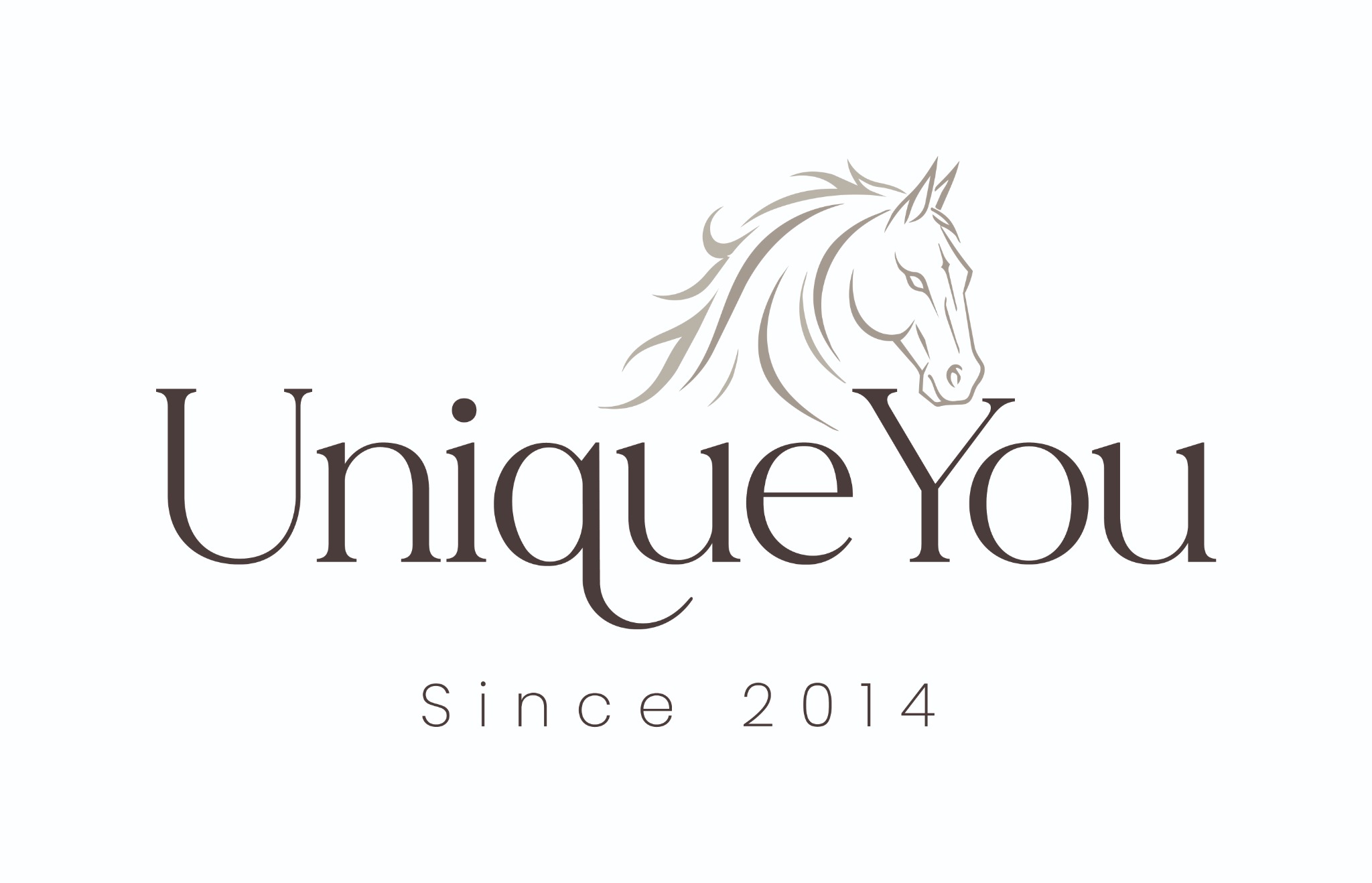
UniqueYou began with scarves and clothing in 2014. Its history includes a pause and a return after the domain was recovered, so its founding date should not be read as a claim of uninterrupted trading. The original identity uses a brown wordmark with a horse motif and the words Since 2014; a neutral taupe palette fits the understated, wardrobe-friendly approach. Those details can help you recognize the brand, but they are not substitutes for examining the scarf you are considering.
The useful promise here is a point of view, not a claim that one accessory will transform your life. UniqueYou presents elegant, accessible accessories as companions to a woman’s existing wardrobe. Compare the shape, color, stated composition and care of an individual piece with what you already own. Decide whether it meets a genuine need, such as adding a lighter neck accent, making a familiar coat feel more considered, or providing a wrap for occasions when you want shoulder coverage. Buying less, but choosing with a purpose, works especially well when closet space is limited.
Find the regional and language version that suits you
UniqueYou has 20 regional domains, 21 regional-language versions and 16 distinct languages. Countries can share a language: German serves both Germany and Austria, for example, while Dutch serves Belgium and the Netherlands. The United Arab Emirates accounts for two versions on one regional domain: Arabic at the root and English at /en. The guide below identifies each destination language before its links. Use the local collection as a starting point, then check the details of any individual item you like.
Poland — Polish
For the Polish-language destination, start with the regional UniqueYou home — UniqueYou. It is the broad starting point if you want to compare shapes before settling on a fabric.
To look at the silk-scarf collection in Polish, use the local term for silk scarves — jedwabne chusty UniqueYou. Consider how a compact scarf would work with an open collar or a plain jacket.
Germany — German
The German-language destination for Germany begins at the regional UniqueYou home — UniqueYou. Check the item details if you are deciding between a close-fitting neck scarf and a larger layer.
For a brown-scarf direction, the German local term leads to the relevant collection — braun schal UniqueYou. Brown can echo leather shoes or add warmth to a cooler-colored coat.
Czechia — Czech
For Czechia, the Czech-language UniqueYou home provides the regional starting point — UniqueYou. Think first about the collars and necklines you wear most often.
The Czech local term for a silk neck scarf points to that collection — hedvábný šátek na krk UniqueYou. A smaller neck piece can change a simple shirt without requiring another garment.
Spain — Spanish
The Spanish-language UniqueYou home for Spain is the place to begin a broader comparison — UniqueYou. If a soft-looking, substantial scarf interests you, the Spanish local term for a cashmere scarf leads to that collection — bufanda de cachemira UniqueYou.
For another shape, the Spanish-language wool-shawl collection is available under the brand name — UniqueYou. Compare dimensions as well as material descriptions before deciding which would suit your outerwear.
France — French
The French-language UniqueYou home is a general starting point for France — UniqueYou. For a lighter-looking scarf, the French local term takes you to the relevant collection — echarpe fine UniqueYou.
The French-language scarf collection is also linked under the brand name — UniqueYou. A slim accent and a more generous scarf serve different purposes, so consider the outfits you want to wear each with.
Hungary — Hungarian
For Hungary, begin at the Hungarian-language UniqueYou home — UniqueYou. A shawl may be useful if your wardrobe includes simple dresses or tops that you like to wear with shoulder coverage.
The Hungarian local term for an elegant stole leads to that collection — elegáns stóla UniqueYou. Look at the individual dimensions to judge whether the shape suits an occasion you have in mind.
Italy — Italian
The Italian-language UniqueYou home for Italy offers the broad starting point — UniqueYou. The Italian local term for a cashmere shawl leads to its collection — scialle cachemire UniqueYou.
If color matters more than material for your next outfit, the Italian-language red-scarf collection is linked under the brand name — UniqueYou. Hold a strong shade against the coats you already wear before choosing.
Romania — Romanian
Romania’s Romanian-language UniqueYou home is the regional starting point — UniqueYou. The Romanian local term for a women’s cotton headscarf leads to the corresponding collection — batic din bumbac damă UniqueYou.
For a broader look at scarves, the Romanian-language collection is linked under the brand name — UniqueYou. Compare each item’s shape and stated composition rather than assuming every scarf will feel or fold alike.
Slovakia — Slovak
For the Slovak-language destination in Slovakia, start at the regional UniqueYou home — UniqueYou. Decide whether you want a scarf primarily for a coat or for an indoor outfit.
The Slovak local term for a women’s cashmere shawl leads to that collection — kašmírový šál dámský UniqueYou. Size and care details can help you decide whether an individual piece fits your routine.
Finland — Finnish
Finland’s Finnish-language UniqueYou home offers the regional overview — UniqueYou. A large shoulder scarf is a different wardrobe tool from a small neck accent, so identify which you would actually use.
The Finnish local search phrase for an online selection of large shoulder scarves leads to that collection — isot huivit harteille verkkokauppa UniqueYou. Check the listed dimensions before picturing how much coverage a particular piece provides.
Sweden — Swedish
For Sweden, the Swedish-language UniqueYou home is the broad starting point — UniqueYou. The Swedish local term for a women’s silk scarf leads to that collection — scarf siden dam UniqueYou.
A different option is the Swedish-language black-scarf collection, linked under the brand name — UniqueYou. Black can be an easy companion to a patterned coat, though fabric and shape still affect the overall look.
Denmark — Danish
The Danish-language UniqueYou home for Denmark provides an overview — UniqueYou. The Danish local term for a large women’s scarf leads to a collection worth considering when shoulder coverage is the goal — stort tørklæde til damer UniqueYou.
The Danish-language cashmere neck-scarf collection is linked under the brand name — UniqueYou. Compare a broad layer with a neck-focused one before choosing a piece for daily use.
Belgium — Dutch
Belgium’s destination here is in Dutch; its regional UniqueYou home is the starting point — UniqueYou. A striped scarf can introduce a pattern while repeating colors already in your wardrobe.
The Dutch local term for a striped scarf leads to that collection — streepjes sjaal UniqueYou. Check which stripe colors connect with your usual coat, bag or knitwear.
Austria — German
Austria has a German-language UniqueYou home of its own — UniqueYou. The German local term for women’s scarves leads to a collection for exploring smaller or more versatile accents — tücher damen UniqueYou.
The Austrian German-language wool-scarf collection is linked under the brand name — UniqueYou. An everyday coat and a more formal jacket may call for different widths, so look at each item separately.
Netherlands — Dutch
For the Netherlands, start at the Dutch-language UniqueYou home — UniqueYou. If you are looking for a quiet neutral, the Dutch local term for a beige women’s scarf leads to its collection — beige sjaal dames UniqueYou.
Beige can sit comfortably alongside navy, brown or black, but its exact tone matters. Compare the item’s color with clothes you wear regularly, not just with an outfit you might buy later.
United States — English
The United States English-language UniqueYou home provides the regional starting point — UniqueYou. For a compact accent, the English term for a square neck scarf leads to its collection — square neck scarf UniqueYou.
If you need a different kind of layer, the English-language wool-scarf collection is linked under the brand name — UniqueYou. Review dimensions and composition for the specific piece you are considering.
United Arab Emirates — Arabic
The United Arab Emirates has an Arabic-language version at the regional root. Its UniqueYou home is linked here — UniqueYou. This is the Arabic destination, distinct from the English version below.
For the Arabic-language cashmere-shawl collection, follow the brand-name link — UniqueYou. Consider the individual shawl’s size and care requirements alongside the outfits you would pair it with.
United Arab Emirates — English
The English-language version for the United Arab Emirates is at /en rather than the Arabic root. To reach that English destination, use the English local search phrase for a silk-scarf shop — silk scarf shop UniqueYou.
This link leads to the English-language starting point, not a promise that every item has the same composition. From there, check individual descriptions and compare them with the scarves you already own.
Ireland — English
Ireland’s English-language UniqueYou home is the regional starting point — UniqueYou. If your immediate need is a scarf to wear with a winter coat, the English local phrase leads to the winter-scarf collection — scarf winter UniqueYou.
Think about whether the scarf will sit inside the coat collar or over it. That small styling choice can help you judge the width and length you would find convenient.
United Kingdom — English
For the United Kingdom, begin at the English-language UniqueYou home — UniqueYou. The English local term for a shoulder-covering shawl leads to that collection — shawl UniqueYou.
For a smaller neck accent, the English-language neckerchief collection is linked under the brand name — UniqueYou. These shapes answer different needs; choose the one that works with clothes you already reach for.
Portugal — Portuguese
Portugal’s Portuguese-language UniqueYou home provides the regional overview — UniqueYou. The Portuguese local term for cashmere scarves leads to the corresponding collection — cachecóis de caxemira UniqueYou.
Before selecting a scarf for yourself or as a gift, check the individual item’s size, composition and care information. A considered choice is easier to use than a piece chosen only for its category name.
A well-chosen scarf takes up little space but can give familiar clothes another way to work. Start with your wardrobe, choose a shape with a purpose, and let the individual item’s details guide the final decision.
 Flexible Furniture