Start with the room you actually use
In a small room, a new wall color sits close to almost everything else: the floor, shelves, curtains and furniture. A shade that looks warm on a sample card may feel cooler on a larger surface, or seem different once the lamps are on. Testing paint in the room is a simple way to avoid choosing from a color card alone.
Before buying samples, note when and how you use the space. A room that serves as an office by day and a guest room at night needs to look comfortable under both daylight and lamps. Notice which walls receive direct light, which corners stay dim, and whether nearby rooms are visible through an open doorway. These observations will help you decide where to test, not just which colors to try.
Limit your first round to two or three serious contenders. If you are working with a tight budget, narrowing the options before buying sample pots saves paint and makes comparisons easier. Keep the existing floor and large furnishings in mind; replacing them is usually a bigger project than changing a wall color.
Make samples large enough to judge
A tiny swatch can be hard to read against a whole wall. Follow the sample paint’s directions and apply enough coats to show the color properly. One option is to paint separate pieces of sturdy card or board, leaving an unpainted border so each sample is easy to handle. You can move these around without covering several walls in test patches. Hold them flat against the wall rather than judging them on a table.
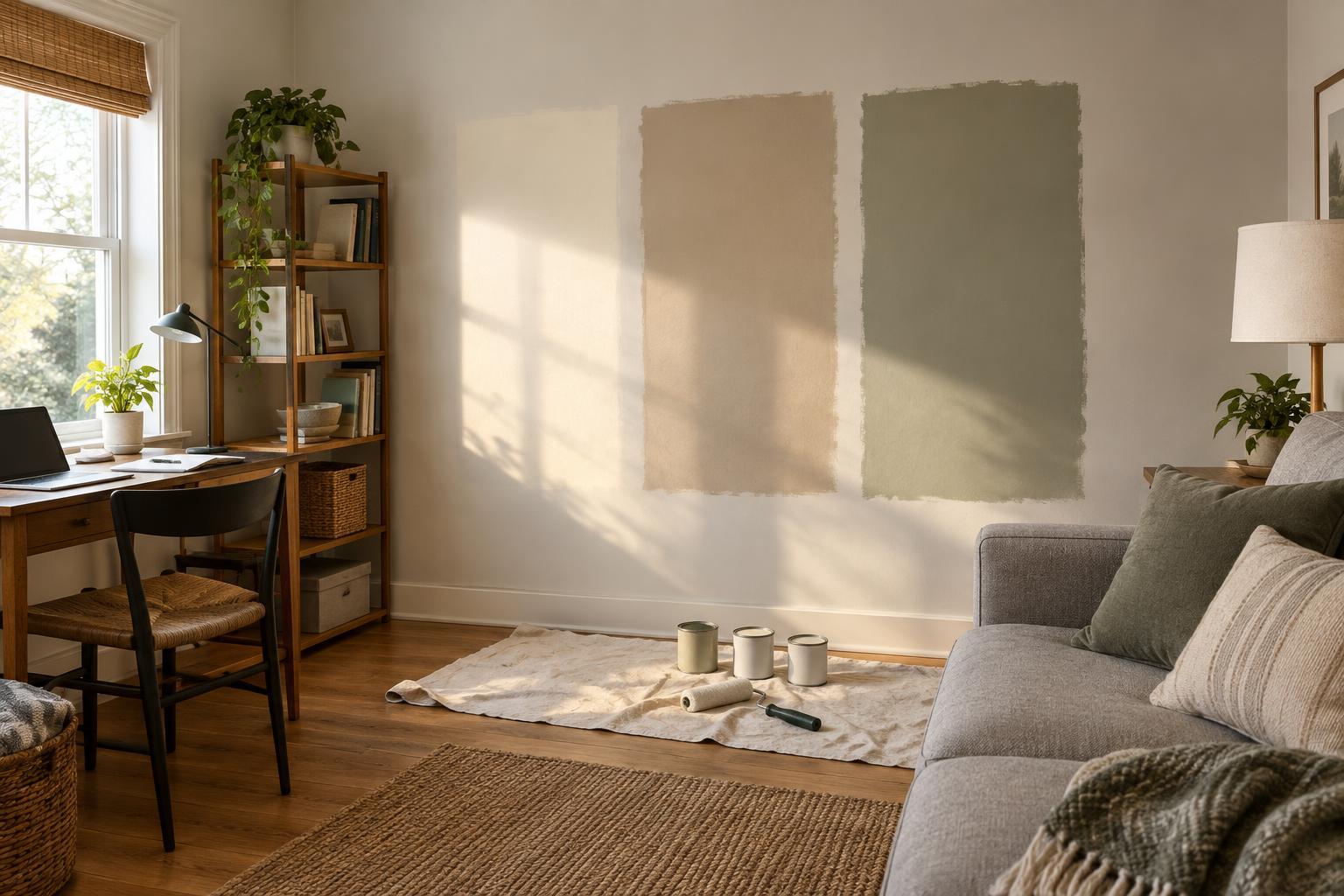
If you prefer to paint directly on the wall, choose places you can see during normal use. Try a spot near a window and another farther from it. Leave space between colors so they do not visually blend together, and let the samples dry before making comparisons. A wet patch may not represent its finished appearance.
Check the paint finish as well as the color. A glossier finish tends to show reflections more clearly than a flatter one, which can change how the wall looks beside a window or lamp. If the final paint will have a different finish from your sample, treat the test as a guide to color rather than an exact preview.
Look at each color through a normal day
Revisit your samples at several points: in the morning, around the middle of the day and after the lights you normally use are switched on. You do not need to stare at them continuously. A quick look while you make coffee, sit at your desk or settle in for the evening can reveal more than one long comparison session. Notice whether a color still feels pleasant in the conditions that matter most to you.
Move painted boards to different walls and hold them near the things that will stay in the room. A pale color might appear warmer beside a wood floor and cooler next to a gray sofa. Compare it near your curtains, bedding or work surface, especially if those items occupy much of the space. Check from the doorway too: in a compact home, the view into the room can matter as much as the view from inside it.
Artificial light deserves its own check. A color you like in daylight may look different under a desk lamp or overhead fixture. Use your usual bulbs and lighting setup for the test rather than changing them just to flatter one sample. If you plan to change the lighting as part of the project, test again once the new setup is in place.
Choose for the whole room, not one perfect moment
It is tempting to pick the color that looks best in a single photograph or at the sunniest time of day. Instead, ask which option works well enough across the room’s everyday conditions. A small space does not have to be painted white or another pale shade to feel comfortable. The useful choice is the one you enjoy alongside your furniture, flooring and lighting.
Write a few plain notes on each sample: “good by the desk,” “too cool at night,” or “works with the curtains.” If two colors seem close, leave the boards up for another day rather than buying the full amount immediately. When you decide, check the paint label for coverage guidance and measure the surfaces you intend to paint before purchasing. That final pause can help you buy a sensible amount and feel more confident about the color you will live with.