Start with what others can see and hear
You do not need a separate office to make a shared room more private. Start by sitting in your usual work spot and looking around as someone else would. Can a housemate see your screen while walking past? Are client names visible on a notebook or whiteboard? Can a call be heard from the next room? These observations give you a more useful starting point than buying storage or rearranging everything at once.
Make a short list of the situations that matter in your home: a housemate using the room, visitors arriving unexpectedly, or children reaching the table. Then choose one change for each situation. A screen that faces a wall, a closed folder and a reliable place to take calls may do more than a complicated setup you will not use every day. Follow any workplace rules for handling information; home habits should support those rules, not replace them.
Place the screen with passing traffic in mind
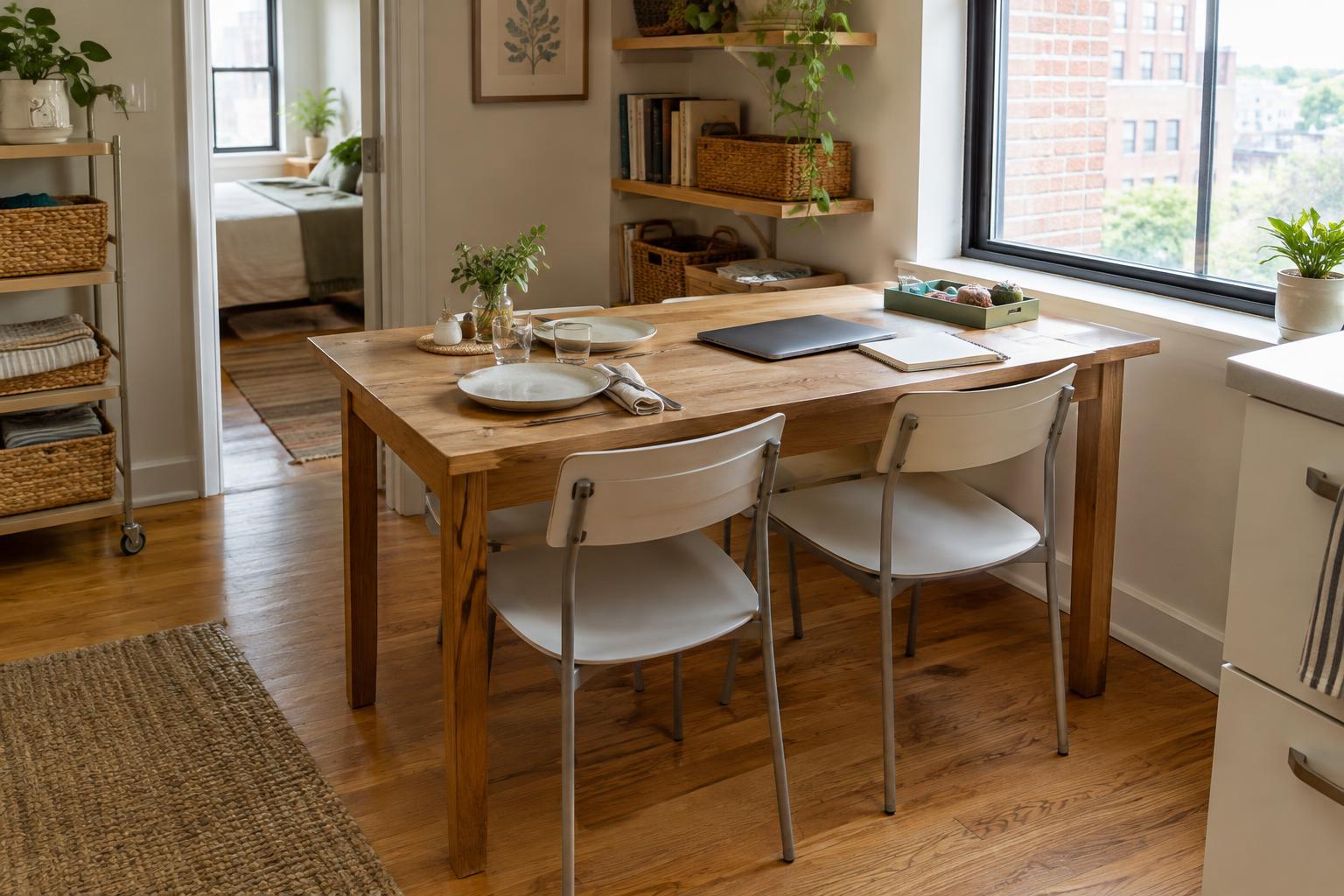
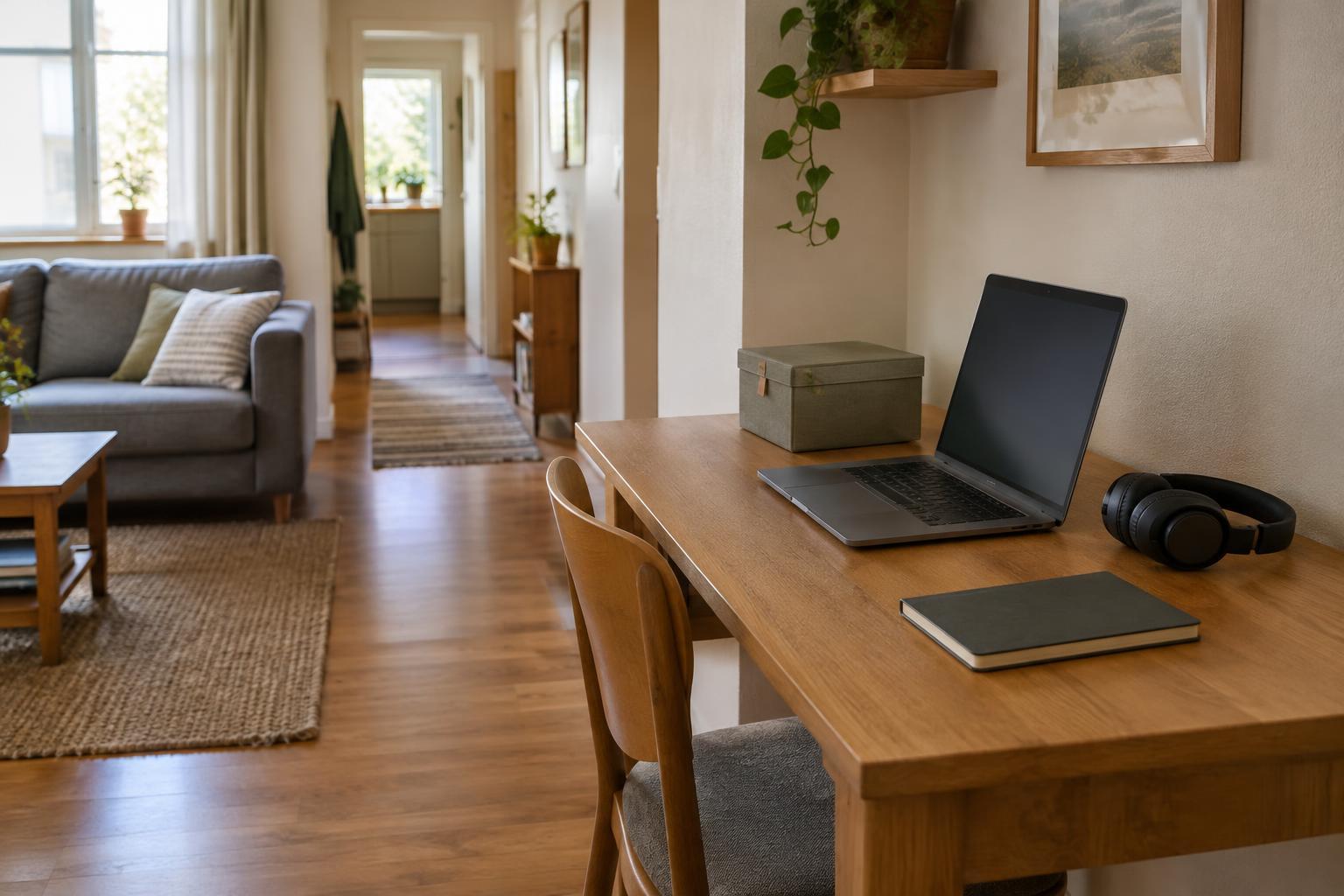
Where possible, position your screen so people entering the room see its back or side rather than its contents. Test the arrangement from the doorway and the seats other people use. If you work at a dining table, even changing which side you sit on can help. Keep the screen at a comfortable viewing distance, and avoid a position that forces you to twist your neck just to hide it.
Lock your device whenever you step away, including for a quick interruption. Turn off unnecessary on-screen notification previews if messages might appear while others are nearby. A privacy screen may reduce visibility from some angles, but its effect varies with the display and lighting, so check it in your own room before relying on it. If you are moving furniture to create a better work spot, Transport i organizacja · Przeprowadzka z Planem offers another place to browse for moving and organization ideas.
Make a plan for calls before they happen
For calls involving information you should not share at home, choose the quietest available place and tell housemates when you need it, if that is practical. Headphones can keep other speakers' voices from filling the room, but they do not stop someone nearby from hearing your side. If privacy is uncertain, ask whether the conversation can be moved to a more suitable time or place rather than assuming a closed door is enough.
Use a consistent pre-call check: close unrelated windows, check what you are about to share and remove visible notes from the camera view. Share a single window rather than your entire screen when the meeting tool allows it and that meets your work requirements. Keep a neutral background ready, but remember that a tidy image is not the same thing as a private conversation.
Give papers and devices a definite home
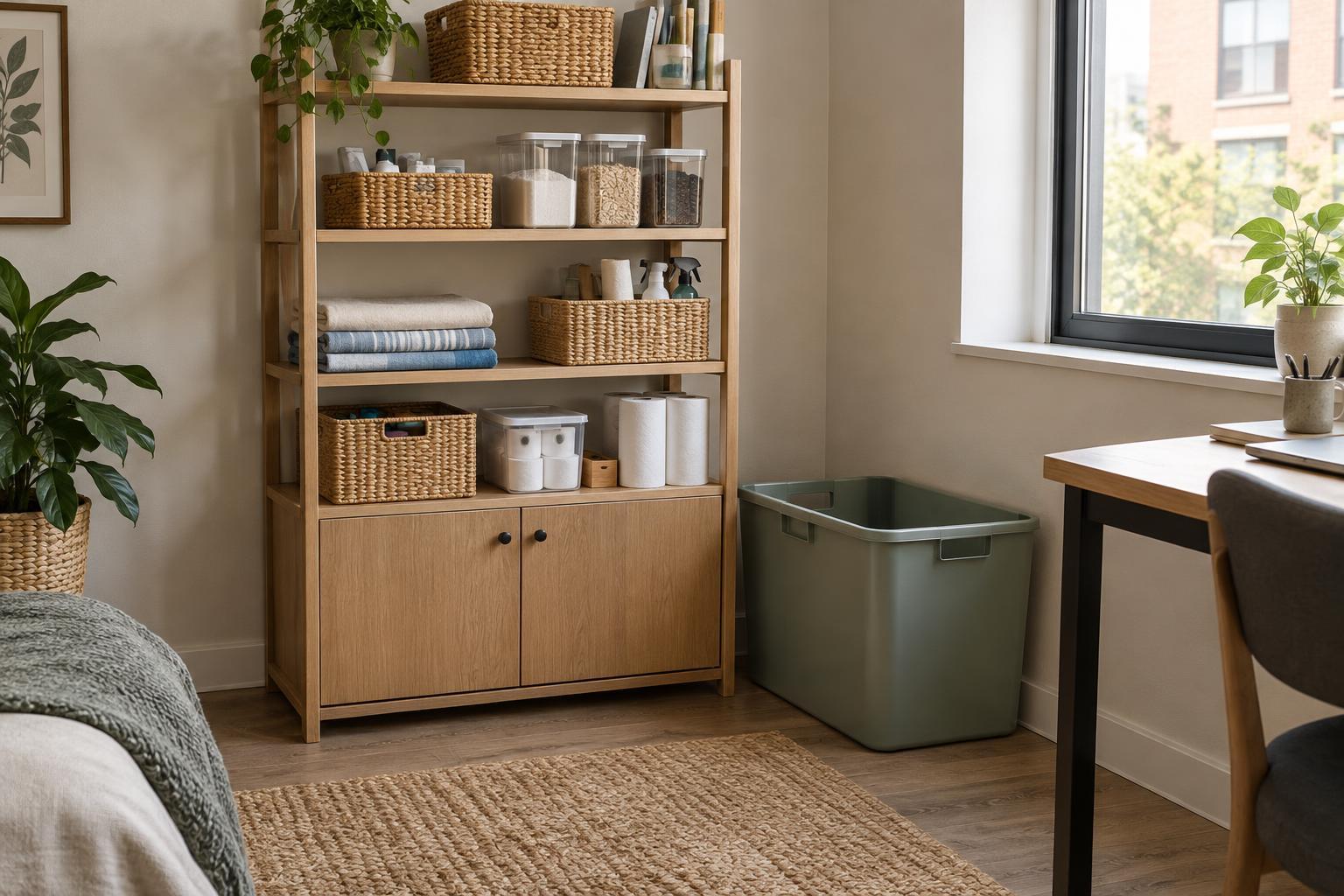
A compact workspace is easier to manage when work items have a landing place that is not the table. A lidded box, drawer or portable file holder can hold everyday supplies; documents that need more protection should be stored according to your workplace's requirements. Label storage by task rather than leaving piles out as reminders. Put the items you use daily near the top so packing away takes minutes, not a full reorganization.
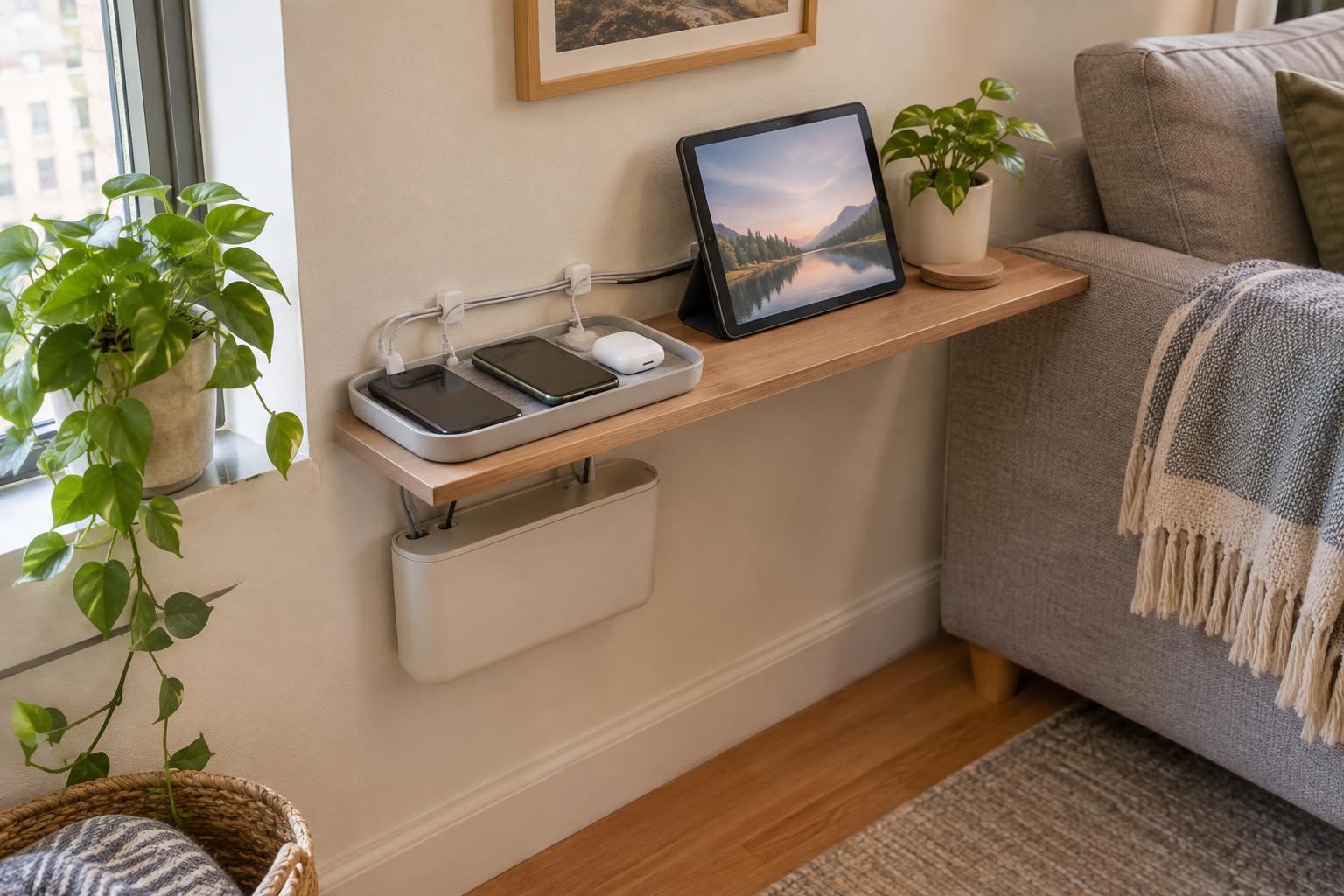
Sort papers regularly into items to keep, act on or dispose of through an appropriate method. Do not leave documents with sensitive details in an open recycling bin. If you are clearing a room to make space for work, browse Porządki i selekcja rzeczy · Przeprowadzka z Planem for more household sorting ideas. Keep chargers and other accessories together too, so you are not tempted to leave a work device unattended while looking for them.
Use a short end-of-day check
A repeatable closing routine is more dependable than trying to remember every loose item. Before leaving the workspace, save your work, lock or shut down devices as appropriate, put papers in their designated place and check the table and nearby surfaces. If you use a shared computer, follow your workplace's device and account rules rather than assuming separate browser tabs keep work private.
Make the routine easy enough to follow on a busy day. A small tray can collect pens and headphones; a folder can hold notes until you sort them. Once the room is back in household use, take a final look from the doorway. This check helps you catch the notebook or notification you might miss from your chair. If your workspace setup is part of a larger move or household reorganization, Przeprowadzka z Planem is another destination to browse for related ideas.