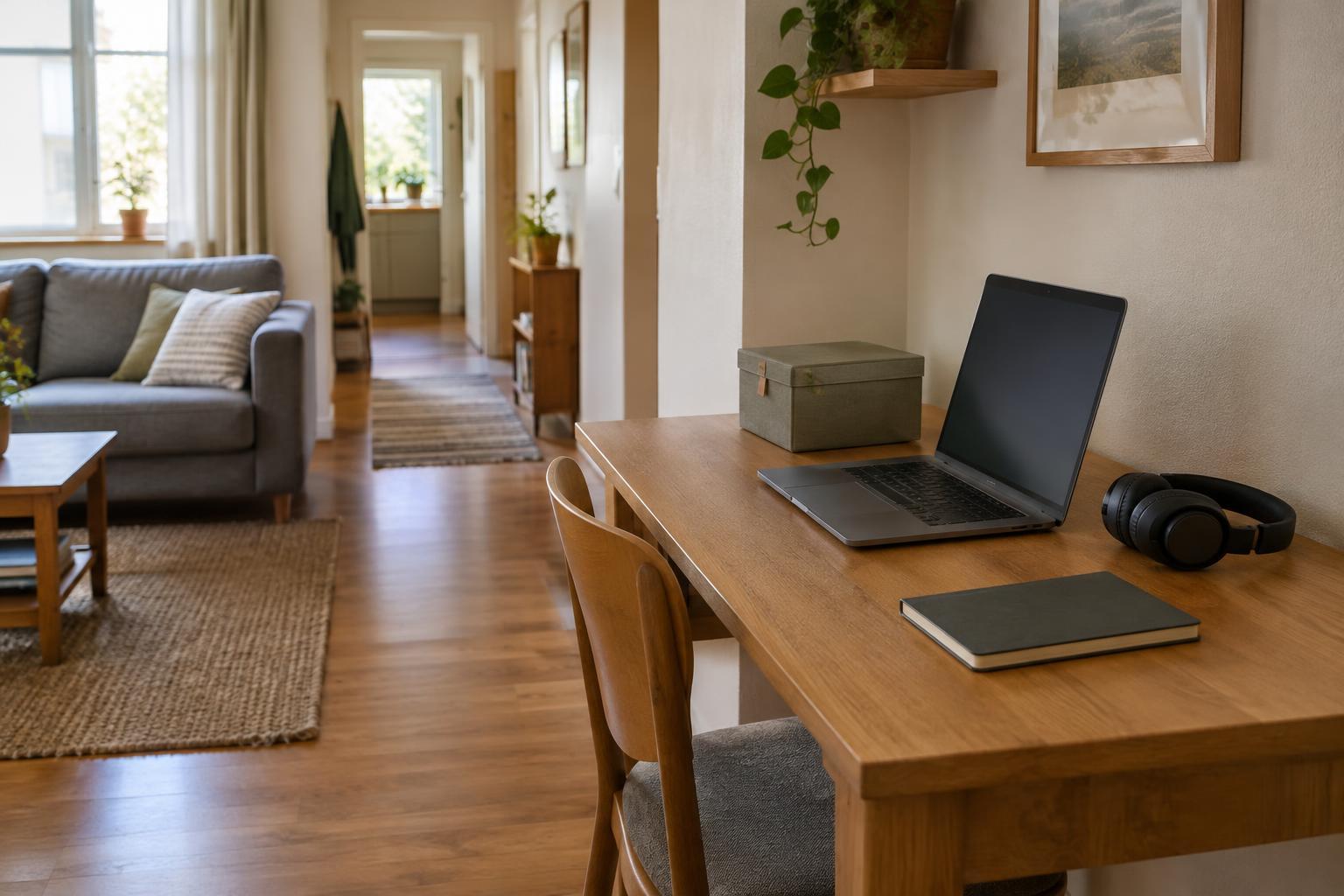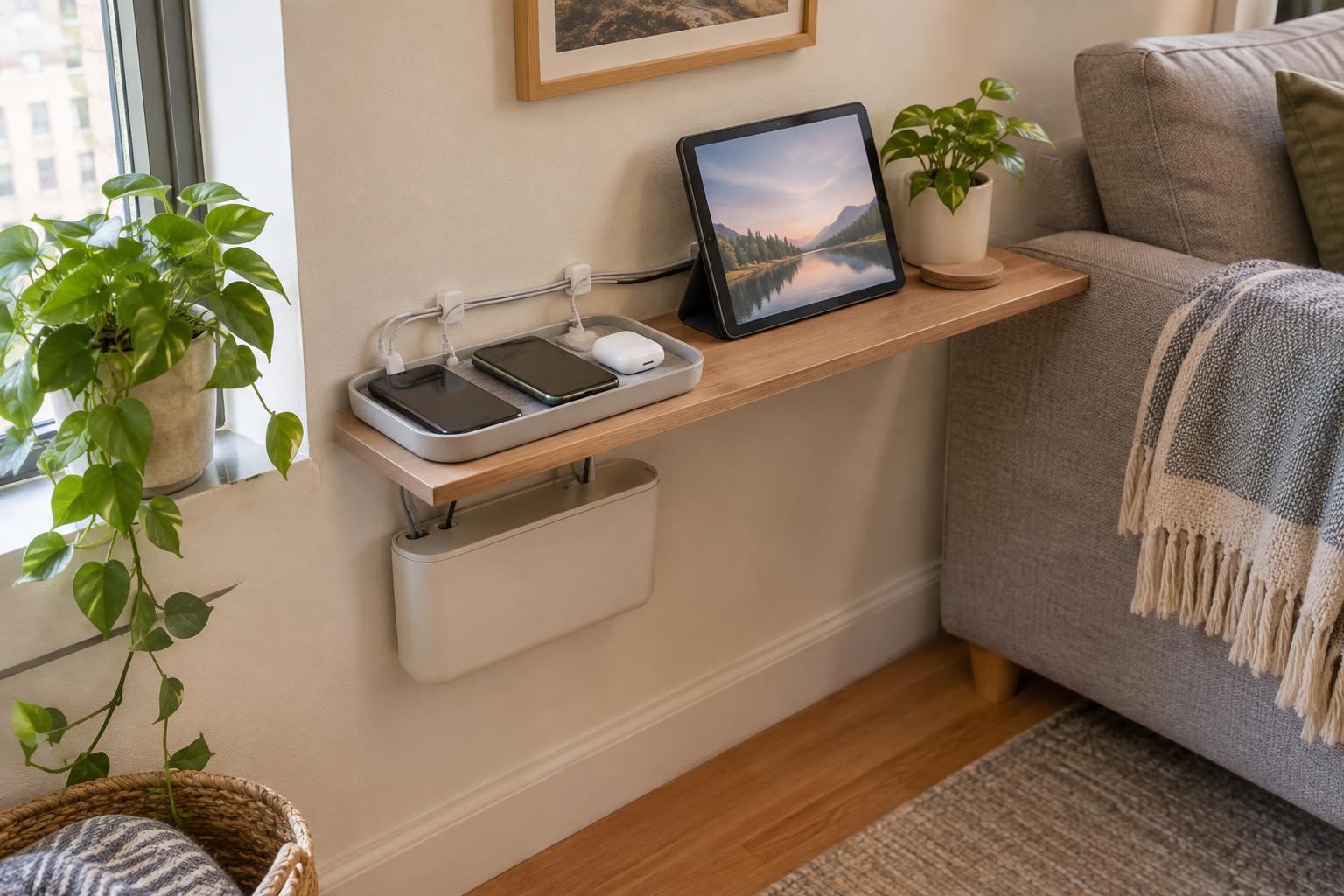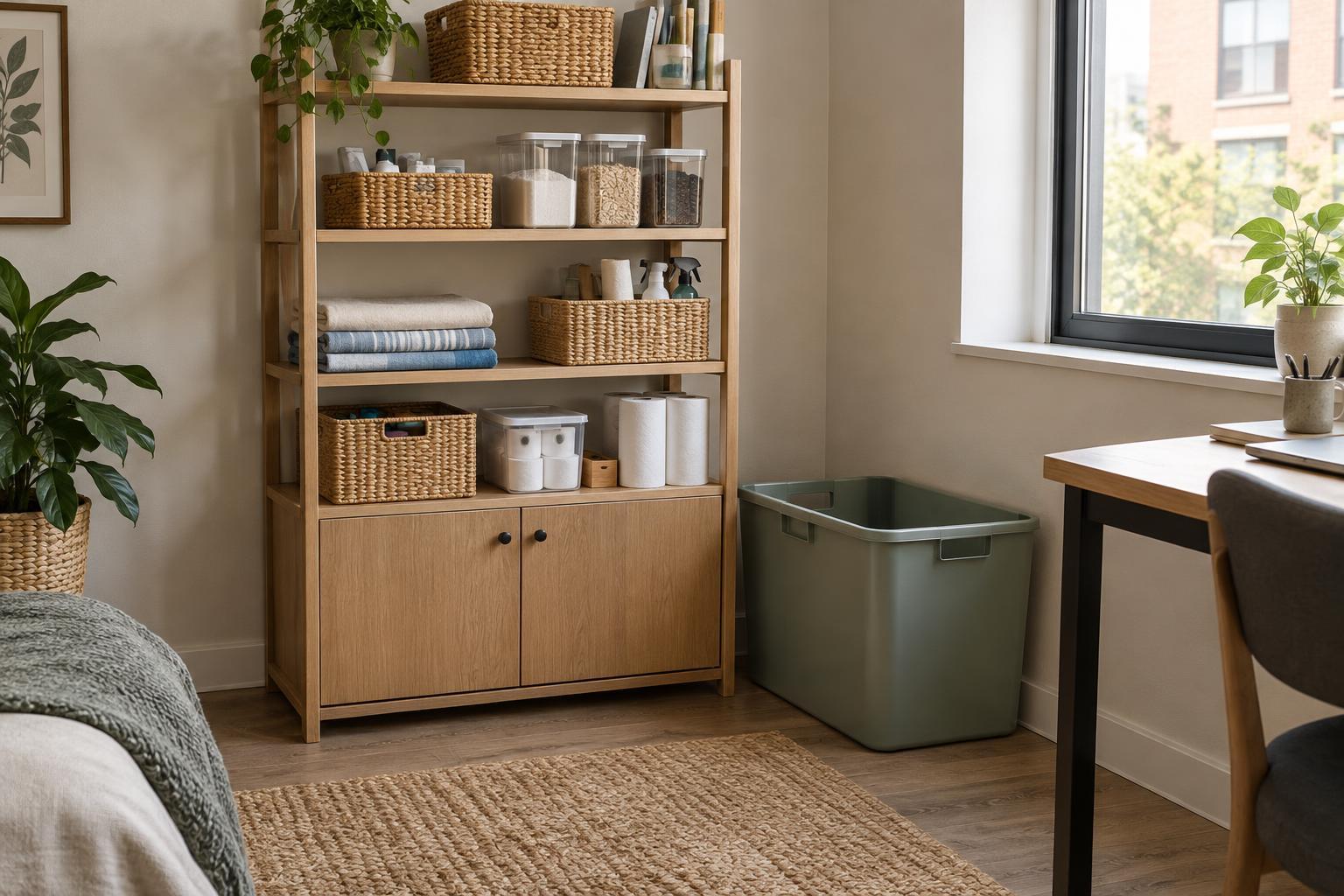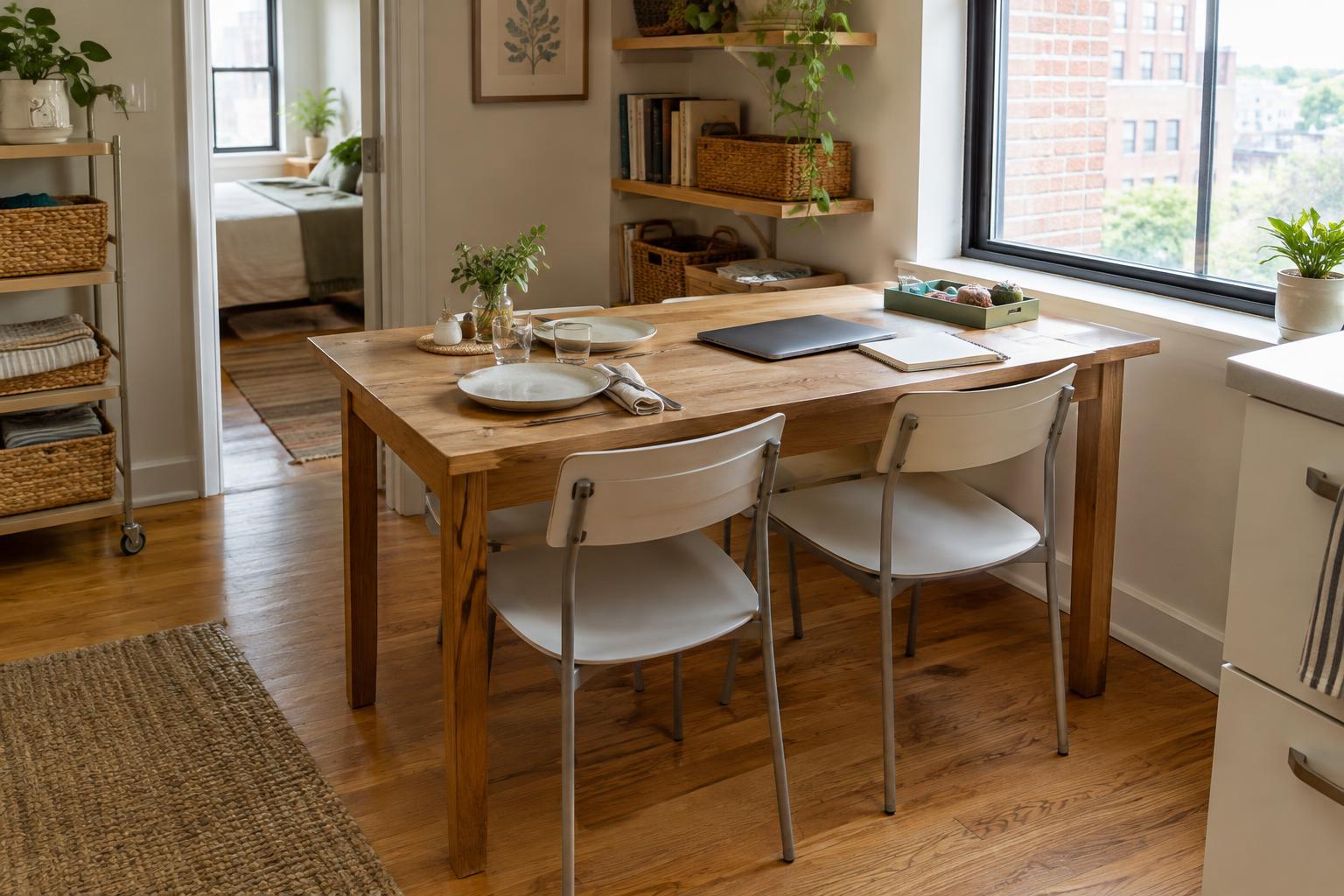
Start with the jobs the table does every week
A table can be a dining spot at night, a paperwork station in the morning, and a place to repair or make things on the weekend. That flexibility is useful only if changing activities does not become another chore. Before replacing your table, list the jobs it handles in a typical week. Note which ones need a clear surface, which involve messy materials, and which can be packed away halfway through.
Choose the two most important jobs to plan around. A table used for daily meals and occasional crafts should be comfortable for eating first; a table used for hours of focused work may need more attention to chair fit and legroom. This helps you avoid buying features for an activity that happens rarely while making the everyday setup awkward.
Check the working space, not just the tabletop
Measure the space where the table will stand, then mark its proposed footprint on the floor with removable tape. Place the chairs where they would go when occupied and walk the routes to doors, cabinets, and other furniture. A table that fits neatly when empty may interrupt the room once someone sits down. If you are considering an extendable table, repeat the test at its larger size and decide where the extra chairs will live.
Think about how much uninterrupted surface each job needs. Spreading out papers is different from opening a laptop beside a plate, and a project may need space for materials as well as the work itself. You do not have to buy a larger table to accommodate an occasional task: a portable board or tray can sometimes provide a temporary work area. Check that any added surface sits securely and does not make the table unstable.
Choose a surface you can live with
The best tabletop is not necessarily the one that looks most pristine in a shop. Consider how easily its finish shows marks, whether it can be wiped down after meals, and how you would protect it from the projects you do. Check the maker’s care guidance before using cleaners or placing hot items on a surface. A washable mat can define a craft area; a desk pad can make writing more comfortable and be removed before dinner.
Also look below the top. Aprons, support bars, and table legs can affect where chairs fit and how comfortably people sit. If possible, try the table with the chairs you expect to use. A narrow table with good legroom may be more practical than a wider one that forces everyone to sit around its supports.
Give each activity a place to go
A shared table stays useful when its supplies have homes close by. Put everyday dining items in an easy-to-reach cupboard or basket, and keep paperwork in a folder or shallow box rather than a permanent pile. For projects, group the materials needed for one session in a portable container. The goal is to clear the table without carrying loose items through the room or forgetting where they went.
Choose storage by how often you switch tasks. If dinner follows work most evenings, the laptop, charger, and notebook need a quick landing spot. If crafts happen once a month, those supplies can be stored farther away. Avoid filling every nearby shelf with table supplies; leave enough room to put away an unfinished activity when you need the surface for something else.
Make the changeover easy to repeat
Try a simple reset: put loose items into their assigned containers, wipe the surface if needed, then bring out only what the next activity requires. Keep protective mats and trays where they can be retrieved without moving furniture. If one person regularly needs to pause a project for a meal, photograph the layout before packing it away or use a tray for small parts so work can resume later.
Test the setup for a week before buying organizers or a new table. Notice where clutter collects and which step slows the changeover. You might need a better storage spot, a chair that is easier to move, or a smaller set of supplies kept at hand. A flexible table works best when the room supports the switch—not when the tabletop has to hold every activity at once.