Start with the job the piece needs to do
Convertible furniture earns its space only if both of its uses work for you. A sofa bed that is comfortable as a sofa but blocks the bedroom door when opened may be a poor choice. Before shopping, write down the piece’s main job, its occasional job and how often you expect to change between them. That gives you a practical standard for judging a bargain.
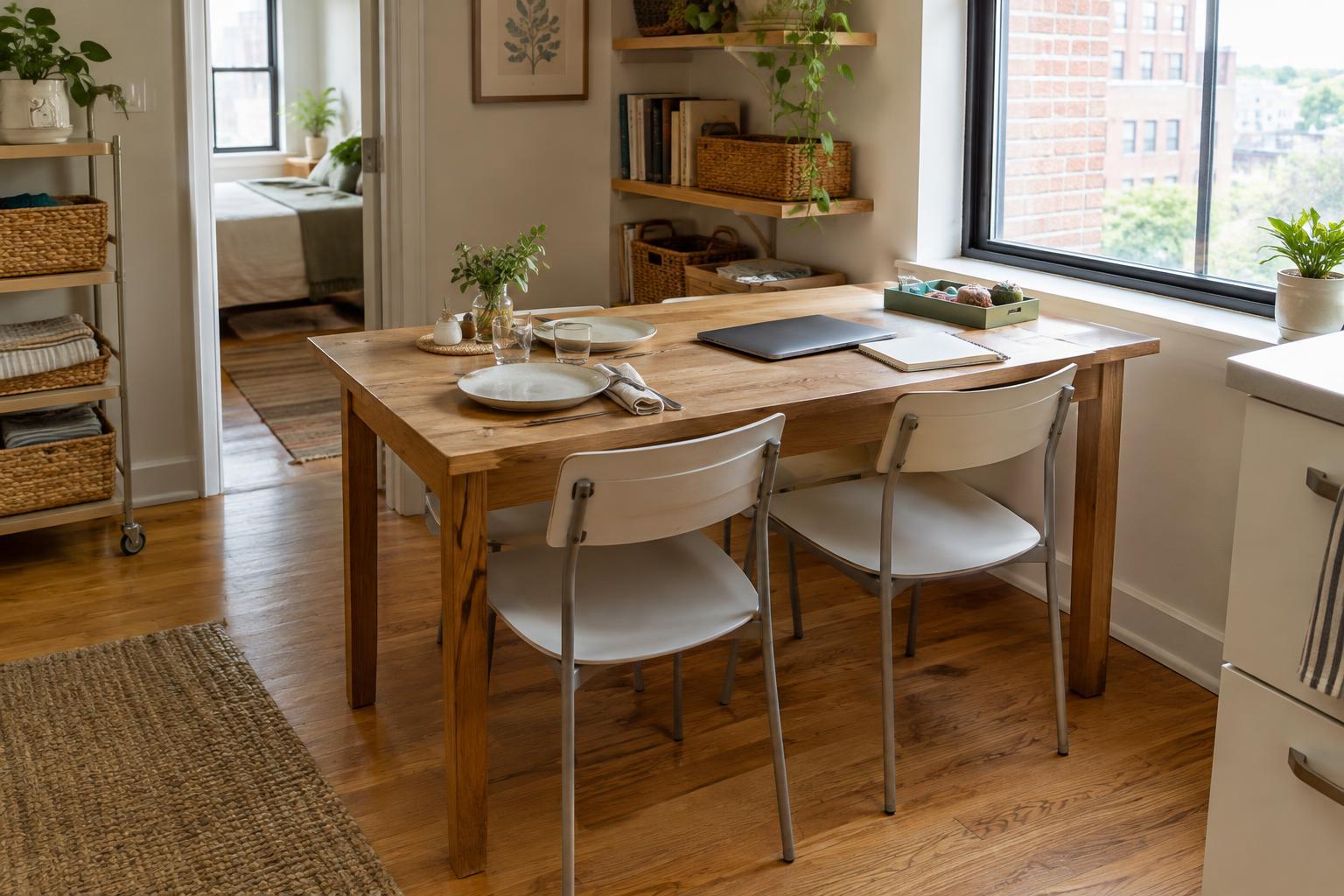
Measure the available floor area, doorways, stair turns and lift opening, if there is one. Ask the seller for the furniture’s dimensions in every position, including the space needed to pull out a bed, raise a leaf or open a storage lid. If possible, mark the full footprint on your floor with paper or tape. Leave room to walk around it and reach nearby drawers, sockets and doors. A quick sketch with measurements is more useful than trying to remember whether a piece looked small in a photograph.
Test the conversion from start to finish
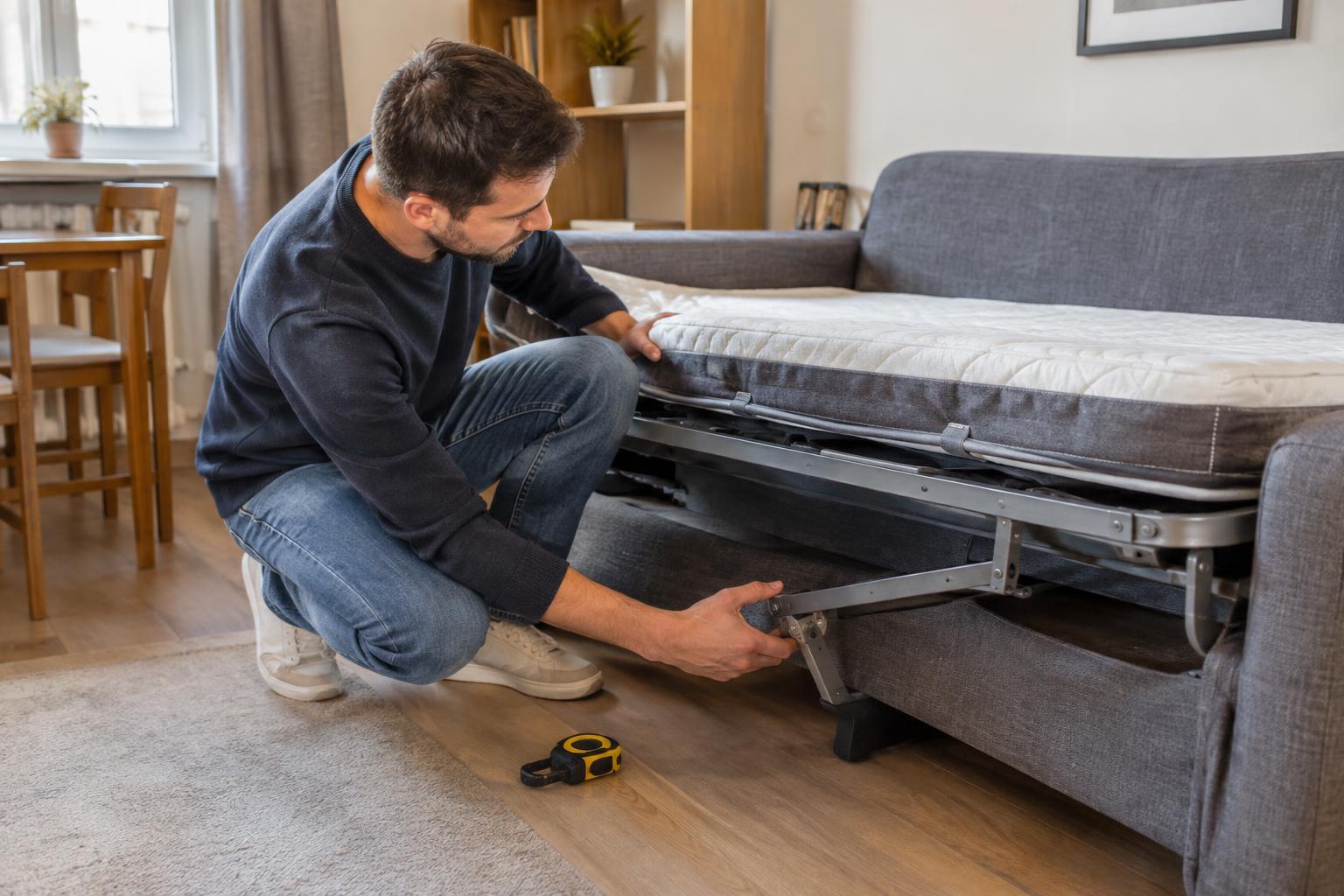
See the furniture in person when you can, and ask to operate it yourself. Open and close a sofa bed, extend a table, lift a storage top or change a futon’s position more than once. The movement should be manageable without forcing, lifting one side unevenly or having another person hold the frame in place. A stiff mechanism may simply need cleaning, but it could also signal bent parts or misalignment.
Pay attention to what happens at the end of each movement. Do leaves sit level? Do legs unfold fully and stand firmly? Does a lid stay where it is meant to stay? Are catches, hinges and handles present and secure? Check for fingers getting trapped at pinch points, especially if children will use the room. If a seller cannot demonstrate a claimed function, make your decision based on the functions you can actually verify.
Look beneath the finish
Inspect the structure as well as the visible surfaces. Sit in several spots on a sofa or chair, gently press near joints and check whether it rocks on a level floor. On a table, look underneath for loose fixings, cracked supports and signs that a leaf has been repaired poorly. On a bed frame, check slats, supports and the areas where moving parts meet. Scratches and small chips may be acceptable; a loose frame needs more careful consideration.
Check the condition of soft parts before focusing on fabric colour. Look at seams, cushion shape and the surface of a fold-out mattress. Notice persistent smells, dampness or staining, and inspect seams and crevices carefully for signs of pests. Cleaning or replacing upholstery can take more time and money than expected, so do not assume a washable cover will solve every problem. If you cannot inspect a hidden section, factor that uncertainty into your decision.
Think through everyday use and transport
Imagine changing the piece over on an ordinary busy day. Where will the sofa cushions go when the bed is open? Will you need to clear the whole table before dropping its leaves? Can you reach items in a storage bench without moving everything stacked on top? A useful convertible piece should make a room easier to use, not create a new daily pile of displaced objects.
Before paying, ask whether the furniture can be disassembled and whether any required fasteners, supports or removable parts are included. Confirm its weight if the seller knows it, and plan how it will travel through your home without relying on guesswork. Photographing the piece in each position can help you remember how it fits together. If you take anything apart for transport, keep small hardware in a labelled bag.
Decide what the real bargain costs
Set a total budget, not just a purchase-price limit. Add likely transport costs and any cleaning, replacement parts or simple repairs needed before the piece can be used. Then compare that total with the value the furniture will bring to your room. A low price may still be sensible for a sturdy drop-leaf table with cosmetic wear; it is less appealing if the leaf will not stay level and you need it as a daily desk.
Make a short list of issues you can accept, such as a finish you plan to paint, and issues that mean walking away, such as an unstable frame or a mechanism you cannot test. This keeps the decision focused when a listing feels urgent. The best secondhand convertible furniture is not necessarily flawless: it fits your space, works reliably in every position you need and leaves enough room in your budget to put it to use.