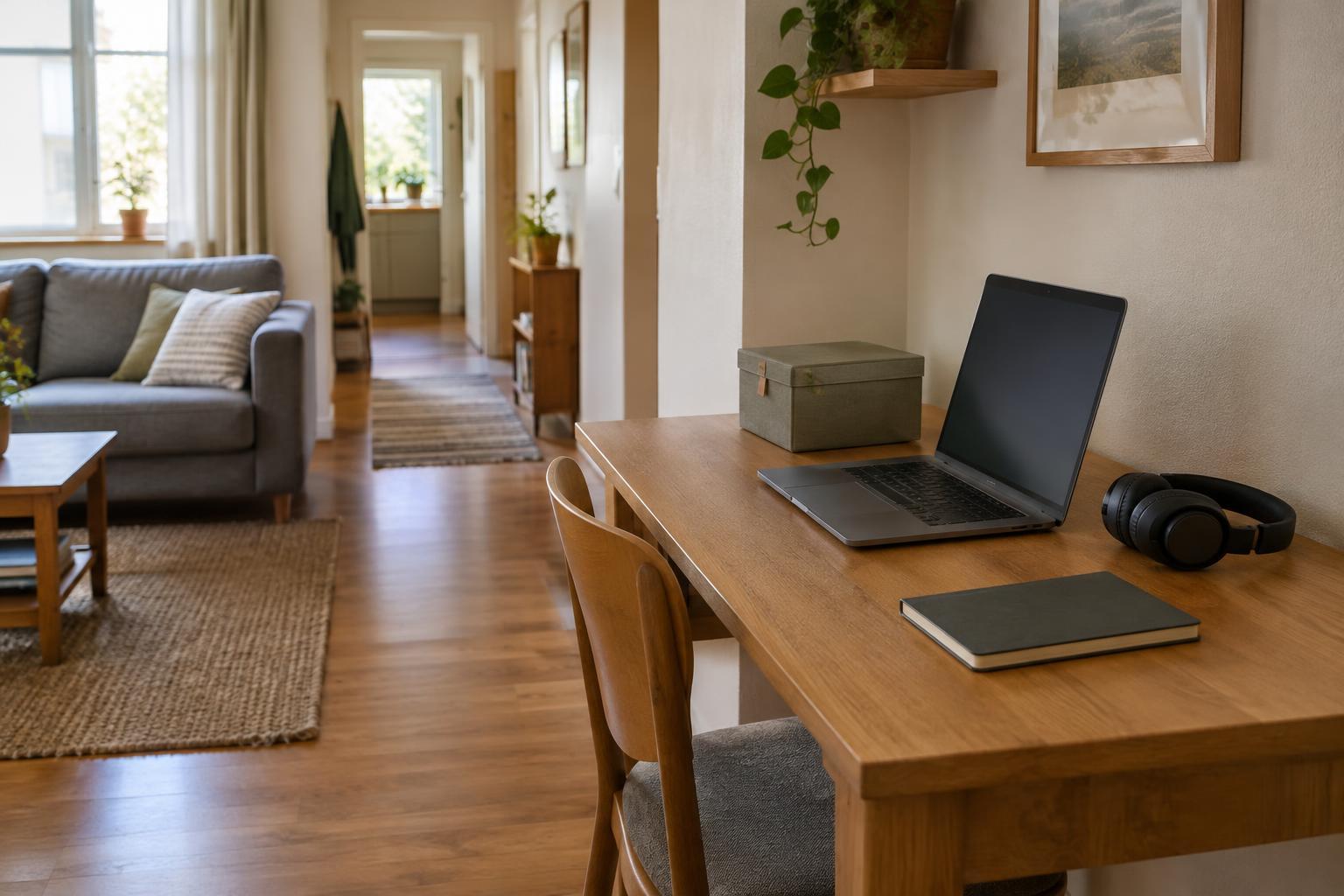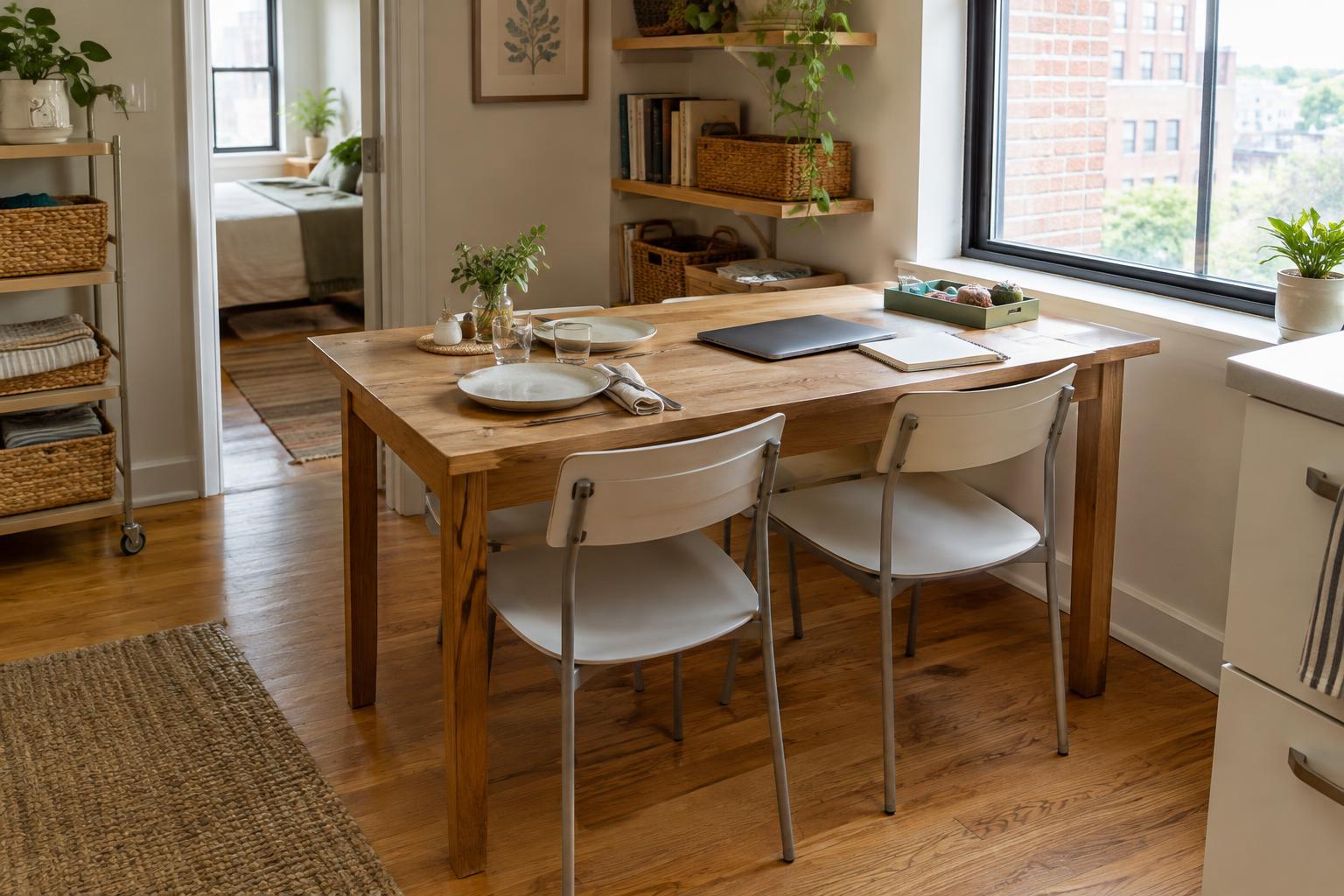
Start with the room change you make most often
A flexible room does not need to support every possible activity equally well. Start by naming its usual setup and the change you make most often: perhaps a living room becomes a home office, or a dining area becomes a place for exercise. Walk through that change as you normally would. Notice which pieces you move, what you must clear first, and whether you have to shift one item just to reach another.
Arrange furniture around that repeated sequence rather than a rarely used ideal layout. If you work at the dining table most weekdays, make it easy to pull out a chair and bring over your work supplies. If guests occasionally stay overnight, the guest setup can take a little longer. Choosing a priority helps you avoid building an elaborate system that is tiring to use every day.
Give every movable piece a destination
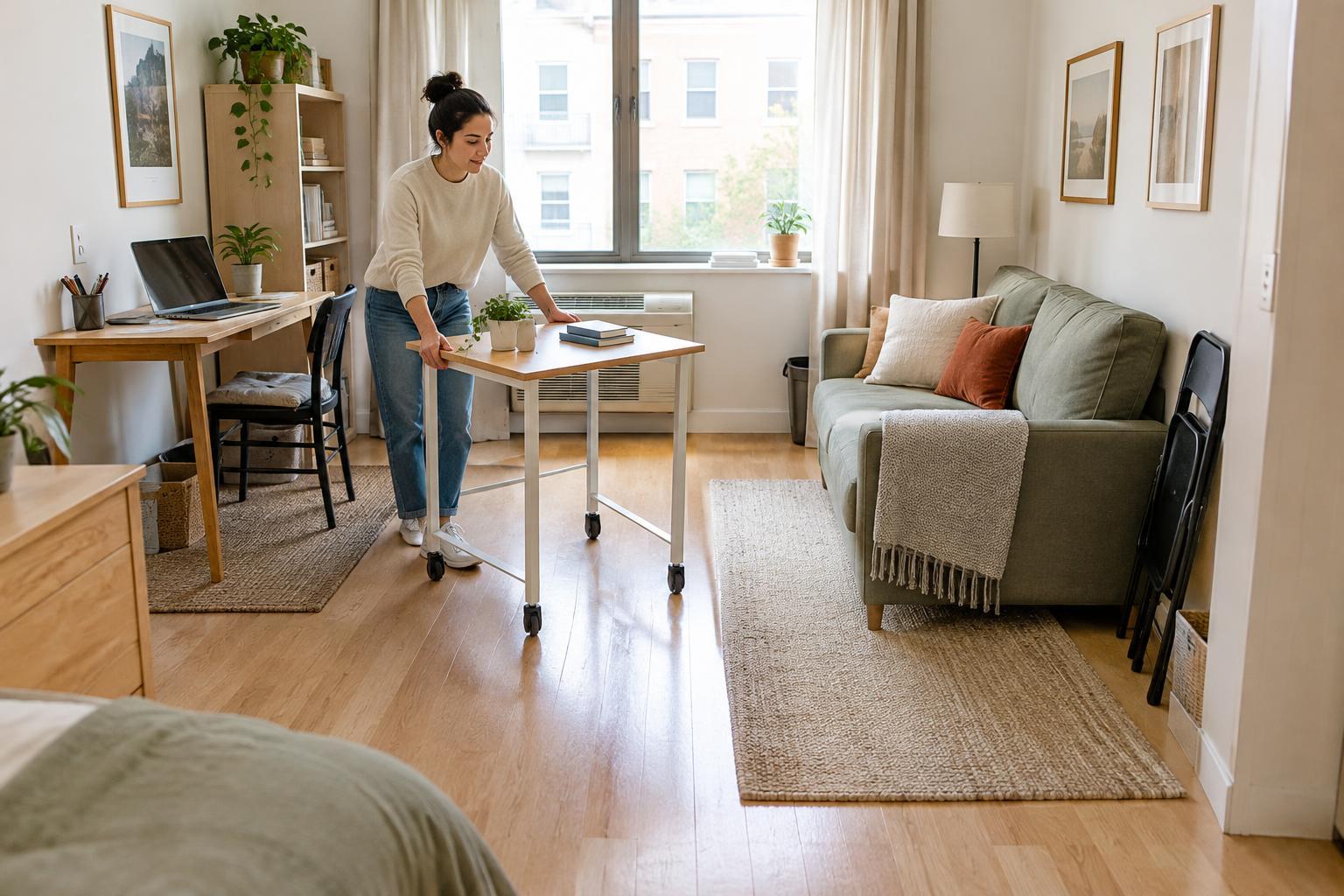
Furniture is easier to move when its destination is obvious and ready. A nesting table might slide beneath a larger table; a spare chair might sit against an open stretch of wall. Check that each piece fits in its parked position without blocking a door, drawer, outlet, or frequently used walkway. If two items need the same patch of floor, the changeover will still feel like a puzzle.
Try each layout with the room in use, not just when it is empty. Pull out chairs, open storage, and walk the route you would take while carrying a laptop or laundry basket. In a room that changes from dining space to workout space, for example, a table that rolls to one side is only helpful if there is still room to move safely around it. Leave enough clear floor for the activity itself and for getting in and out.
Simple visual cues can help everyone put things back. The edge of a rug or the end of a shelf can mark where a table belongs without adding anything to the floor. A quick photo of each successful layout can also help when several people share the room.
Clear the route before buying more furniture
A piece described as movable may still be awkward if it has to be lifted over a rug, steered around a lamp, or emptied before it can shift. Look first at the path between its two positions. Move loose objects off that path, keep cords away from rolling furniture, and place frequently moved pieces where they do not need to pass behind heavier ones.
Then decide whether a different piece would genuinely reduce the work. Locking casters may suit a small work cart that travels between a desk and a cupboard; a lightweight folding chair may be easier to store than another full-size chair. Before spending, try rearranging what you own or borrowing a suitable piece to test the idea. Measure both the working position and the parked position, including clearance for doors and people. Follow the furniture maker’s guidance on loads, locks, and safe use.
Keep the essentials close to each activity
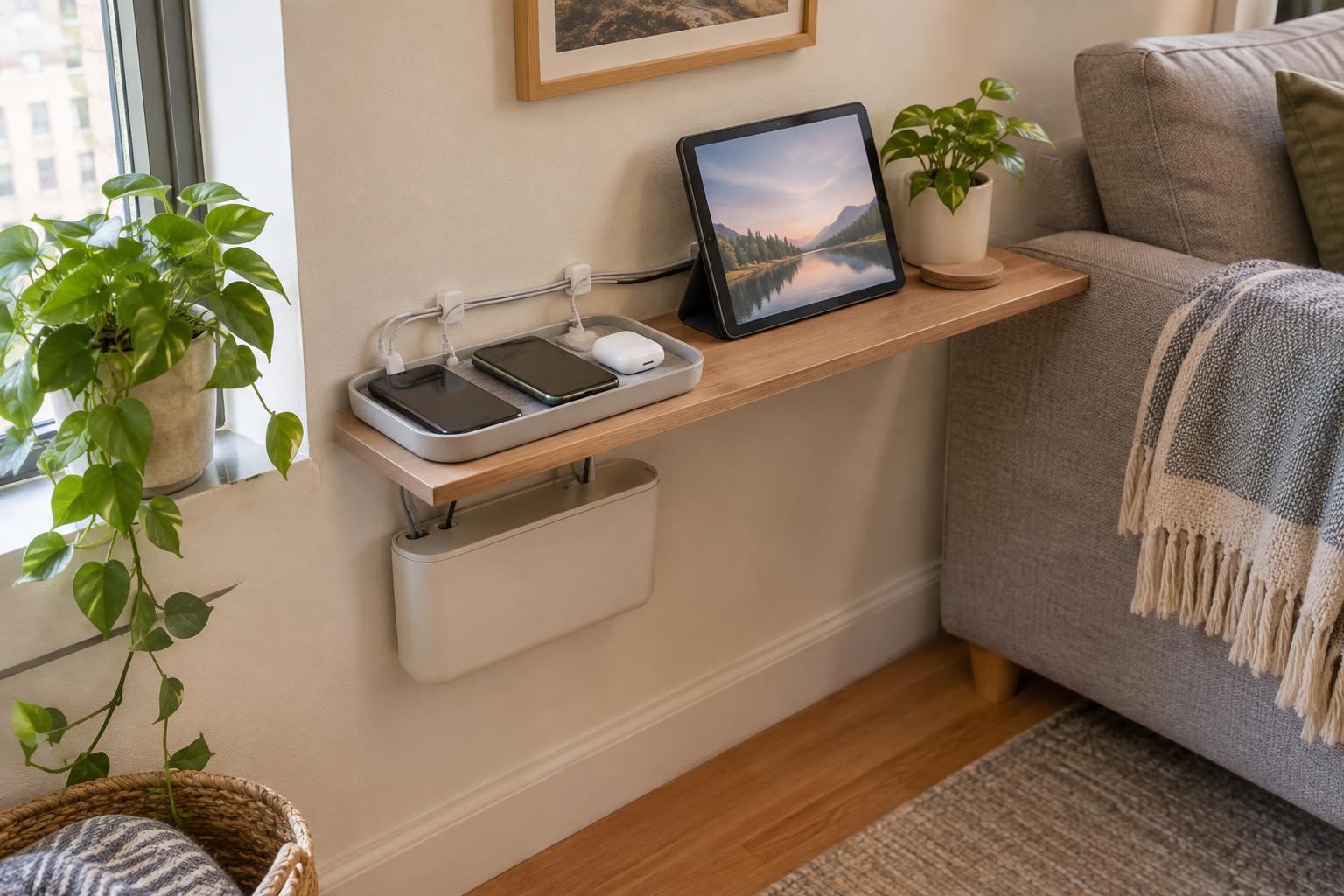
Moving furniture is only part of a room change. If every switch also involves gathering scattered supplies, give each activity a small, contained kit. A tray can hold work chargers and notebooks; a basket can hold cushions that leave the floor during exercise. Place the kit near where that activity happens, but out of the route furniture travels.
Choose storage that matches how often you change the room. A lidded box in a high cupboard may be fine for occasional guests, but inconvenient for daily work supplies. Open shelves, a nearby drawer, or a cart parked beside the table may be easier for frequent use. Avoid filling a rolling cart so heavily that it becomes difficult to move or unstable. The goal is to make setup and cleanup feel like one short sequence, not a series of separate searches.
Test the routine and simplify it
Live with the new arrangement for a week or two, then pay attention to where the process stalls. Do you need to clear a surface before moving it? Does a chair end up stranded in the walkway? Does the rug bunch up under a table leg? Adjust one friction point at a time. You might change a parking spot, remove a seldom-used side table, or keep a surface clear enough to move without unloading it.
A useful flexible room is not necessarily one that transforms dramatically. Often, the best arrangement asks you to move only one or two pieces while the rest stay put. When the usual layout is comfortable and the alternate layout has a clear, repeatable path, switching uses becomes an ordinary part of the day rather than a room-wide project.