Check the rug before you start
A small area rug may fit in a compact room, but that does not mean it should be soaked in a sink or bathtub. Its fibers, dyes and backing may react differently to water. Start with the care label, if there is one. Follow any cleaning restrictions, especially for wool, silk, jute, sisal, vintage rugs or rugs with glued-on backing. If the label calls for professional cleaning or says to avoid water, limit yourself to appropriate dry upkeep rather than trying a wet spot treatment.
Move lightweight furniture out of the way and look at both sides of the rug. Check for loose edges, fraying, worn patches and a backing that is cracking or shedding. Put a clean towel beneath the area you plan to treat, particularly if the rug sits on wood or another moisture-sensitive floor. The goal is to catch any dampness before it reaches the floor, not to create a wet layer under the rug.
Vacuum slowly, including the edges
Remove loose dirt before adding any cleaning solution. Otherwise, dust and grit can turn into muddy residue when dampened. If the rug is easy to lift, take it outside and gently shake out loose debris where appropriate. Then vacuum the top in overlapping passes, working from more than one direction if the pile allows. Slow passes give the vacuum more time to pick up crumbs and grit than quick sweeps do.
Use a suction-only setting or turn off the rotating brush for delicate, looped or loosely woven rugs; a brush can catch threads. Keep the vacuum away from fringe and use a hose attachment near edges instead. If the rug’s construction permits, flip it over and vacuum the back, then clean the floor beneath it. Vacuum the top once more after replacing it. For a rug that is too fragile to flip or shake, skip those steps rather than risking damage.
Treat the spot with as little liquid as possible
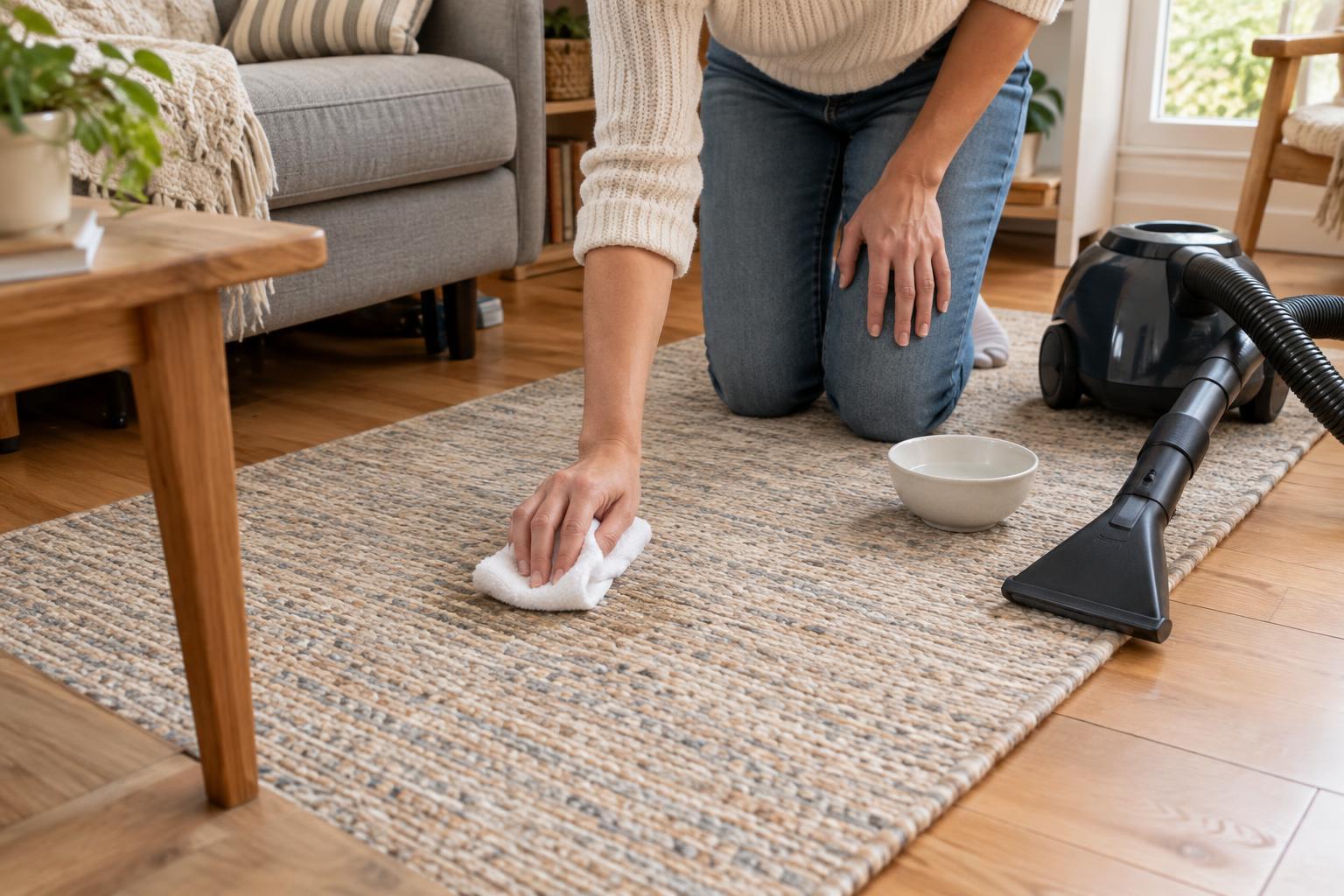
For a fresh spill, first lift any solids with a spoon or dull edge. Blot liquid with a clean, absorbent cloth, pressing gently from the outside of the spot toward the center. Do not scrub: rubbing can spread the mark or roughen the fibers. Keep changing to a clean part of the cloth until it stops picking up much moisture.
Check the care label before choosing a cleaner. For a rug that allows water-based spot cleaning, use a product labeled for its fiber type, following the product directions. Test it on a hidden corner first and let that test area dry so you can check for color transfer or a change in texture. Put the cleaner on a cloth rather than pouring or spraying it heavily onto the rug. Dab the spot with the lightly dampened cloth, working in small passes. If the cleaner calls for rinsing, use a second cloth barely dampened with plain water to lift residue. Avoid mixing cleaning products or repeatedly adding liquid when a stain does not lift.
Dry it before it goes back into service
After treatment, press a dry towel onto the spot to absorb remaining moisture. Replace the towel and repeat if it becomes damp. Check underneath the rug and dry the floor if needed. If you can move the rug safely, place it somewhere with good airflow and arrange it so air can reach the damp area and backing. A fan can help; avoid intense heat that could affect fibers or adhesives.
Wait until the rug feels dry on both sides before putting furniture back or walking over the treated area. A surface that feels dry can still have a damp backing, so check again after a little time. If you notice persistent dampness or an odor, continue drying rather than covering the rug with a pad or setting it back against the floor.
Make the next clean easier
In a multipurpose room, a rug often catches dirt from several activities: shoes at the door, snacks near the sofa or rolling office chairs. Vacuuming before grit builds up makes spot cleaning less demanding. Deal with spills promptly, keep a few clean cloths nearby and use a mat at an entry if tracked-in dirt is a recurring problem.
Some marks need more than a cautious home treatment. Stop if color transfers to your cloth, the backing begins to soften, or repeated gentle dabbing makes no improvement. Choosing specialist cleaning for a valuable or delicate rug is usually less disruptive than trying to rescue one after it has been saturated.