Start with a quick inventory, not a shopping trip
Before buying bins or rearranging shelves, take everything out of the pantry and group it by type: breakfast food, cooking staples, snacks, canned goods and backstock. Check packages as you go. Set aside anything damaged, spoiled or past a date you are not comfortable using, and follow the storage guidance on the label. Wipe the shelves while they are empty, then measure their width, depth and height before deciding whether any organizers would help.
Notice which foods you buy repeatedly and which tend to disappear behind other items. If you have three open bags of rice or several half-used boxes of crackers, the problem may be visibility rather than a shortage of space. Make a brief list of what is already there. It can stop you from buying duplicates while you work out a layout.
Give each shelf a clear job
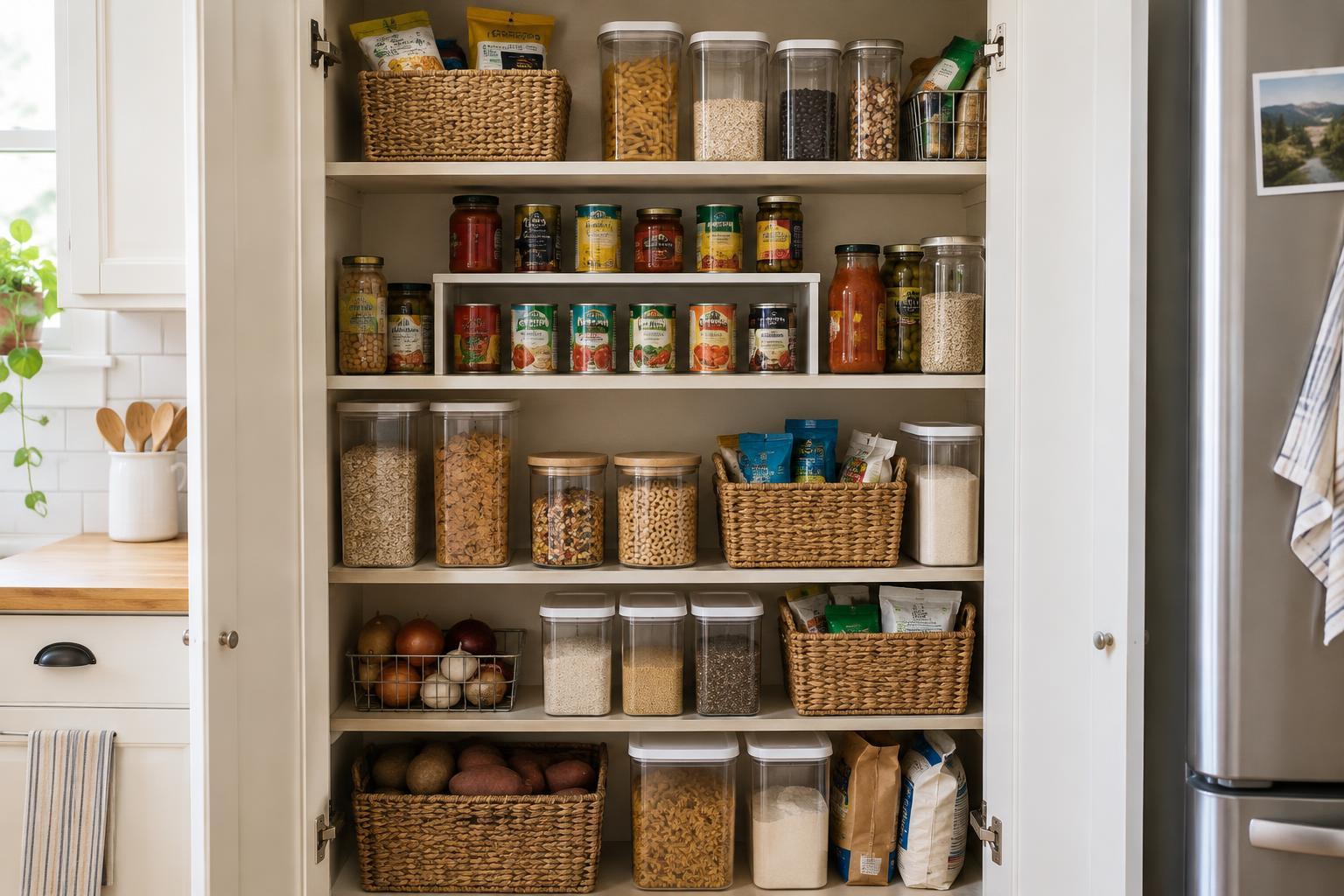
Arrange food around how often you reach for it. Keep everyday ingredients and snacks at a comfortable height, heavier cans or bulk packages lower down, and occasional baking supplies or spare stock higher up. In a cabinet pantry, the same idea can apply shelf by shelf. Leave a little room around groups so you can remove one item without knocking over the rest.
Use broad zones rather than a separate container for every product. A breakfast zone might hold oats, cereal and spreads; a dinner zone might hold pasta, sauces and beans. A shallow tray can keep small packets together, while a sturdy box you already own can corral baking supplies. Put an infrequently used item behind something you need daily, and you will probably have to empty the shelf to get to it. If a zone becomes too crowded to see its contents, either split it or reconsider how much backstock fits.
Make the back row visible
Deep shelves invite forgotten food. Keep single items or the oldest packages at the front, and avoid stacking different products in a tall pile. A low shelf riser may help you see cans in the back row, but only if the shelf has enough height to lift them out easily. On a very narrow shelf, simply turning labels forward and limiting each row to one product type can work just as well.
Clear containers are useful when bags tear or boxes hide how much is left. They are not necessary for every purchase, though, and transferring food can remove helpful package information. If you decant something, label the container with its contents and any storage or date information you need. Before spending money, try your layout with existing trays, jars or small boxes. Buy an organizer only for a specific spot that remains awkward.
Build an older-first restocking habit
When you bring groceries home, move the existing package forward before placing the new one behind it. This simple older-first habit works best when similar items share one location. If you keep backstock elsewhere, make that spot obvious too, so you check it before adding an item to your shopping list.
Opened foods need attention as well. Keep them together where practical, close them as the package directs and check their labels for storage instructions. A small “use soon” area at eye level can hold ingredients you want to plan into the next few meals. It should stay small enough to notice; an overflowing basket becomes another place for food to get lost. Rotate items during ordinary restocking rather than saving the whole task for a major pantry reset.
Keep the system easy to maintain
A pantry layout succeeds when everyone using it can put food away without guessing. Label broad zones if that helps, but do not make the system so exact that one unusual package has nowhere to go. Keep a little unassigned space for changing groceries, and place a shopping list nearby if you find it useful.
Once a week, take a minute to look behind the front row and check the use-soon area before planning meals or shopping. When a shelf starts to feel crowded, pull out that one zone instead of reorganizing the entire pantry. Small checks keep food visible, make older items easier to reach and help the space stay workable even when what you buy changes.