Give used towels a place to dry
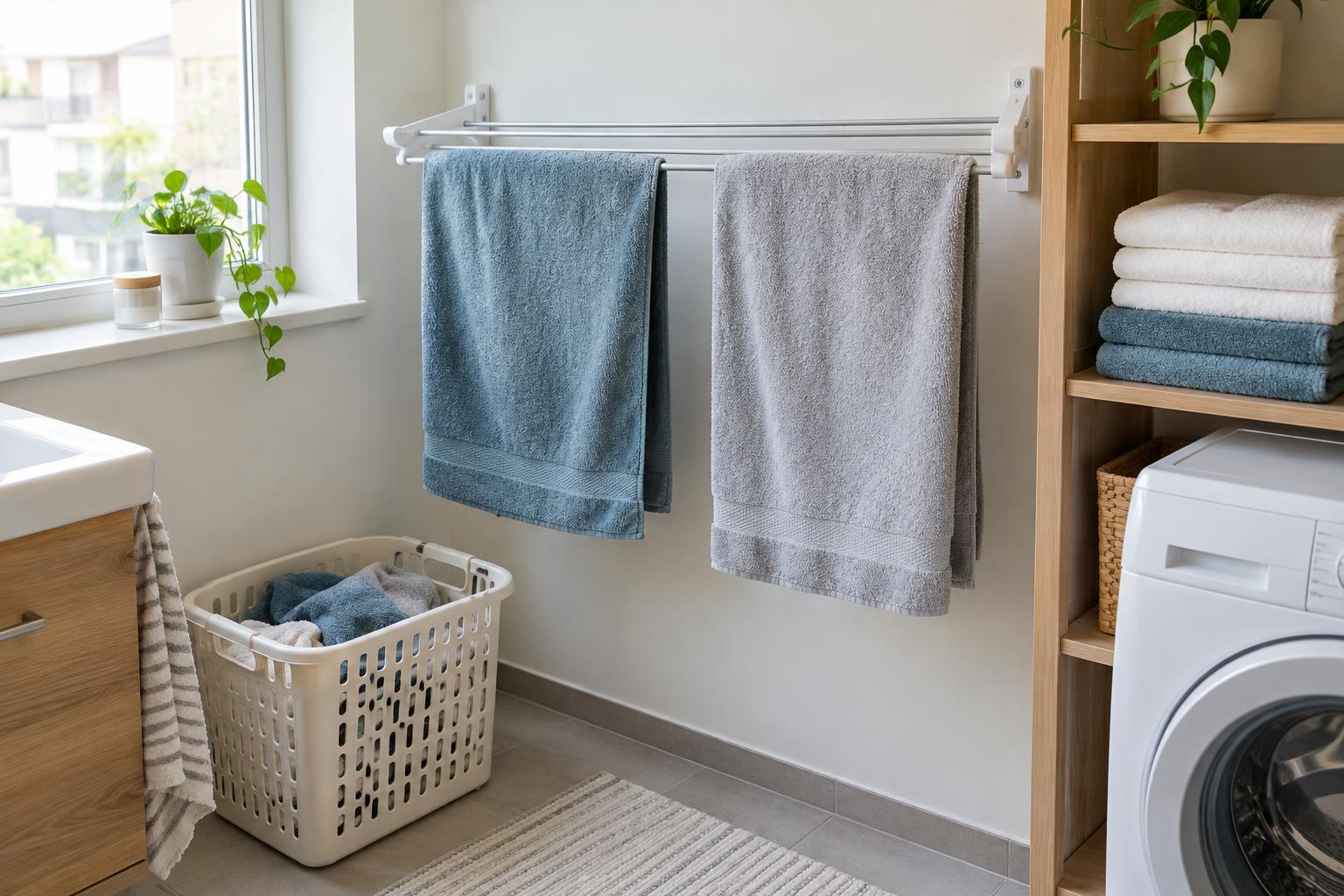
The most useful laundry habit starts before wash day: do not put a wet towel straight into a hamper. In a compact bathroom, a towel folded over a short hook may stay damp where the fabric overlaps. Spread it across a rail if you have one, or use two spaced hooks so more of the towel is exposed to air. If the bathroom stays humid, move the towel to a better-ventilated spot once it is no longer dripping.
Choose a drying place that does not block a doorway, heater, or walkway. An over-door rail, a folding rack, or a few sturdy wall hooks can work, depending on your layout. Leave a little space between towels rather than stacking them. A bath mat also needs somewhere to dry; hanging it over the tub edge or a rail is usually more helpful than leaving it flat on the floor.
Set up a small sorting system
A hamper with a lid can hide laundry, but it can also trap moisture if damp items go inside. Keep one easy-to-reach spot for dry, ready-to-wash clothes and a separate temporary place for wet towels or cleaning cloths. The temporary spot need not be another basket: a hook or the side of a drying rack will do until those items are dry enough to join the laundry.
In a multipurpose room, choose a hamper size that suits the loads you can realistically wash and dry. A large hamper can make it easy to postpone laundry until the pile is awkward to manage. If floor space is scarce, a narrow basket or hanging bag may fit better. Check that its position still lets you reach the washer, open cupboards, and move around the room comfortably.
Wash loads you can dry promptly
Pick laundry days by working backward from drying space. Before starting a towel load, check that the rack, line, or dryer will be available when the cycle ends. In a small home, one manageable load may be easier than several loads waiting in the machine. Move washed items out promptly; if a load has been left sitting and smells stale, washing it again is more useful than trying to cover the odor.
Avoid packing towels tightly into the washer, and follow the care labels and your machine’s guidance for detergent and cycle selection. More detergent is not necessarily better: residue can be difficult to rinse away. If you use fabric softener, consider whether it leaves towels feeling coated or less absorbent, and adjust your routine if it does. Wash cleaning cloths according to their labels, especially if they have been used with household products.
Make drying the final step, not an afterthought
Towels are ready for the cupboard only when the thick hems and folded edges feel dry, not just the broad surface. On a rack, spread each towel across as much space as you can and turn it if one side remains damp. If you use a dryer, check bulky items before folding them; a quick extra drying period may help if seams still feel cool and moist.
Air movement can help in a room where laundry dries slowly. Open a window when practical, use an extractor fan where available, or place a fan so air moves around the rack without blowing items onto the floor. Keep drying laundry away from surfaces that could be damaged by moisture, and avoid leaving a rack where it creates a trip hazard. If condensation regularly collects on windows or walls, reduce the amount drying indoors at once and pay attention to ventilation.
Deal with odors at their source
If clean laundry repeatedly comes out smelling unpleasant, inspect the places moisture can linger. Check the washer door seal, detergent drawer, and any accessible filter according to the appliance manual. Letting the drum and drawer dry between uses may help. Clean the hamper and drying rack occasionally too, particularly if damp fabric has rested against them.
A useful weekly reset is simple: hang every used towel, wash a load you have room to dry, clear the rack when items are fully dry, and wipe any damp surfaces nearby. Keep spare towels limited to what fits comfortably in a dry storage spot. If a persistent musty smell seems to come from a wall, cupboard, or leak rather than the laundry, investigate that moisture source instead of repeatedly washing the textiles.