Separate the papers you use from the papers you keep
When a dining table doubles as a desk, the easiest way to lose track of a document is to put every sheet in the same pile. Start by dividing papers into three groups: items you need during your next work session, items you may need later, and items ready to leave the workspace. The first group should be small enough to move in one trip. The second needs a regular storage spot. The third can be filed elsewhere or disposed of appropriately.
This distinction makes privacy easier to manage without making work harder. A document does not have to stay in view to stay accessible. If you can reach your active papers by opening one folder or drawer, you are less likely to spread them across a shared surface. Review the active group regularly so it does not quietly become an archive.
Build a portable home for active work
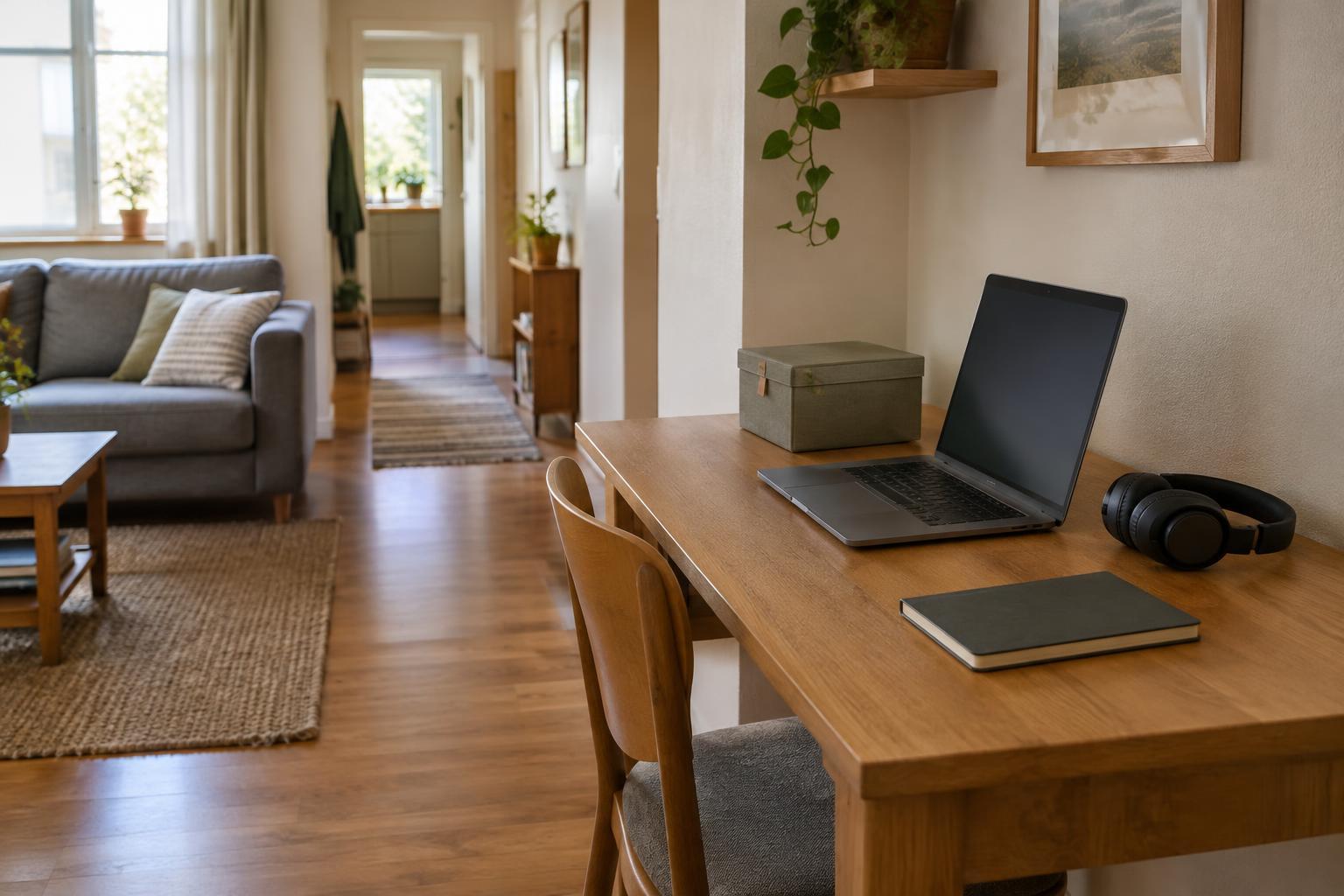
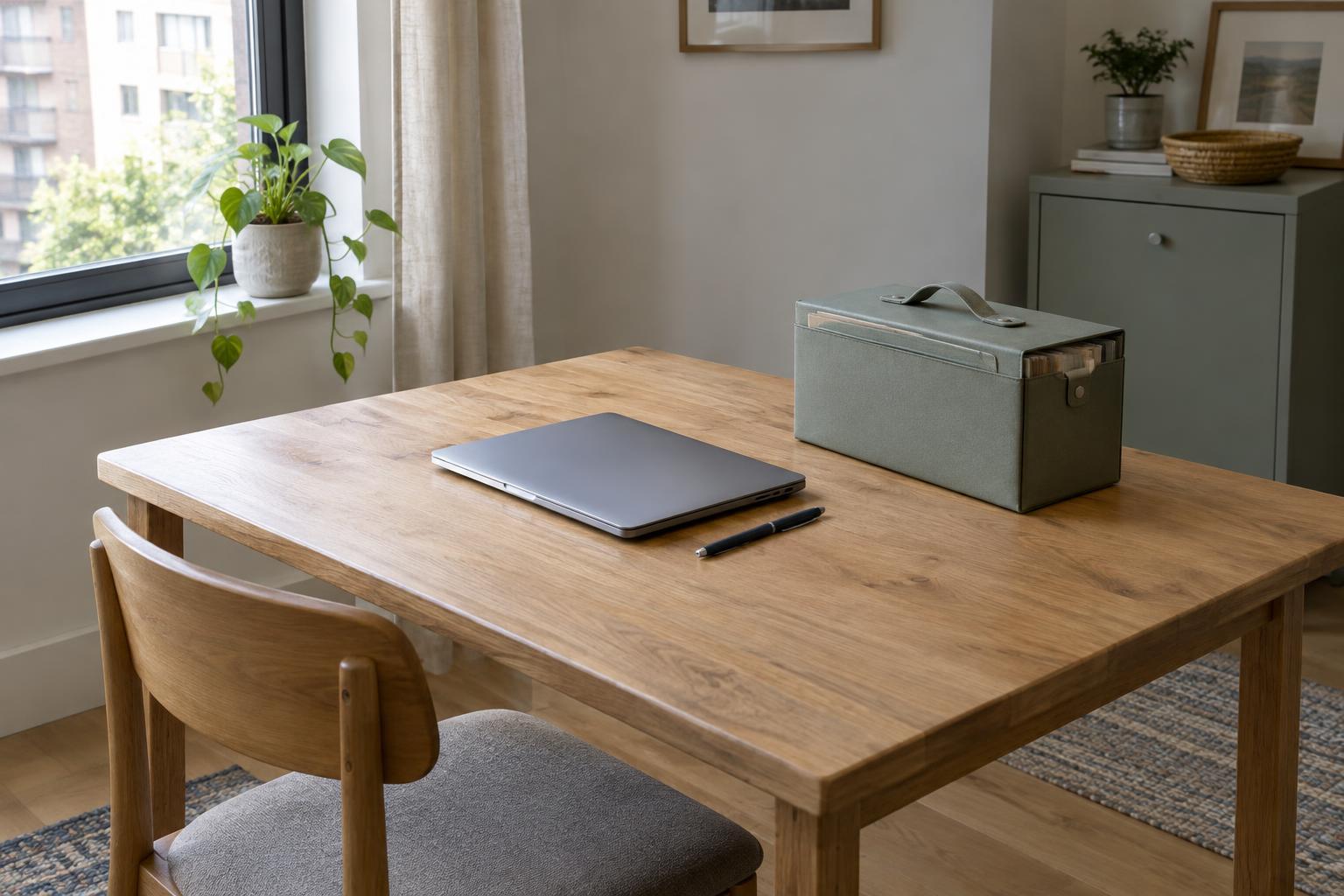
For a room that changes purpose during the day, try a lidded document box, an upright file holder inside a cabinet, or a slim folder that fits in a drawer. Choose a container that suits the amount of paper you actually handle, rather than a large one you feel obliged to fill. A simple folder with dividers for “to do,” “waiting,” and “reference” can be enough. Label the dividers, but keep names and project details off the outside if other people use the room.
Place this active-work container close to where you sit, but not on a surface visible to visitors or household members passing through. A cabinet shelf beside the table may be more convenient than a desk organizer several steps away. If you work at more than one spot, a portable container lets you bring out the same set of papers and put it away again without sorting everything twice.
Give more sensitive papers a separate spot
Not every work paper needs the same treatment. Blank forms and general notes might be fine in a closed folder, while documents containing personal details or private business information may call for more restricted storage. If your workplace has rules for handling paper records, follow those rules when choosing where to keep or dispose of them. A home storage setup should support those requirements, not replace them.
In a shared room, consider who can open a drawer or move a box. A lid hides papers from casual view, but it does not control access. Where appropriate, use a lockable drawer or case for documents that should not be handled by others, and keep its key in a sensible place. If you cannot store a particular document safely at home, ask the person responsible for that work how it should be handled rather than improvising a system.
Make the work surface easy to clear
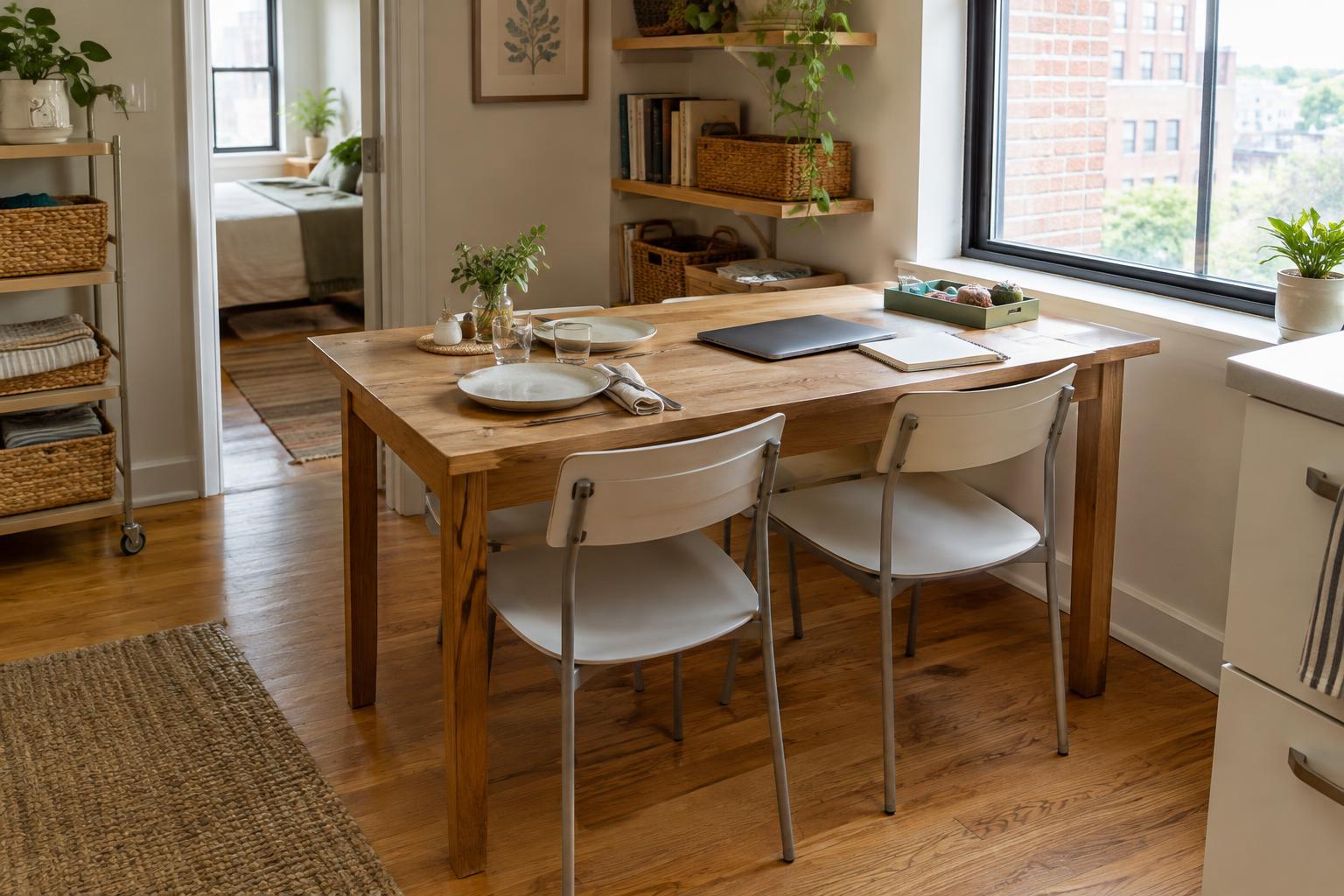
A useful setup should work on a busy day, not only after a thorough tidy. Keep a clear space beside your chair where the active-work container can land. When you begin, take out only the documents needed for the task at hand. When you pause, slide them back into the folder, even if you expect to return soon. This small step matters in rooms where someone might use the table, clean around it, or invite a guest in before you resume.
Pay attention to easy-to-miss display spots: papers beneath a laptop, notes on a wall, and pages left face up in a printer tray. Position the printer or paper tray away from a shared walkway if you can. If not, make collecting printouts part of the task rather than something to do later. A folding screen or tidy desk mat can improve how a work area looks, but neither is a substitute for putting private pages away.
Finish with a two-minute paper reset
Before the room changes back to family or leisure use, gather loose sheets and check the table, chair, printer, and floor. Put unfinished work in the active folder and return reference material to its designated spot. Place papers for disposal in a separate, discreet location until you can handle them in a way that fits their contents and any applicable workplace instructions. This prevents an ordinary recycling pile from becoming an accidental holding area for private information.
Keep the routine simple enough to repeat. You might leave an empty folder in the box for tomorrow’s incoming papers, or reserve one divider for items you must follow up on. Once a week, look through the active folder and move out anything you no longer need at hand. The aim is not a perfectly paperless room: it is a work area you can open quickly, close reliably, and share comfortably.