Identify the noise before buying anything
A distracting workspace is not always a loud one. You might hear traffic through a window, conversations from the next room, footsteps above you or your own voice bouncing off hard surfaces. Notice which sounds interrupt you most and when they happen. That distinction helps you choose a useful change instead of buying a product that addresses the wrong problem.
It also helps to separate two goals. Soft materials can reduce echoes within your room, but they will not reliably stop voices or traffic coming through a wall or window. If outside sound is the main issue, your best no-renovation options may be moving your work position, closing gaps where practical and using headphones. If the room feels harsh and echoey during calls, furnishings may make a more noticeable difference.
Move the workspace before changing the room
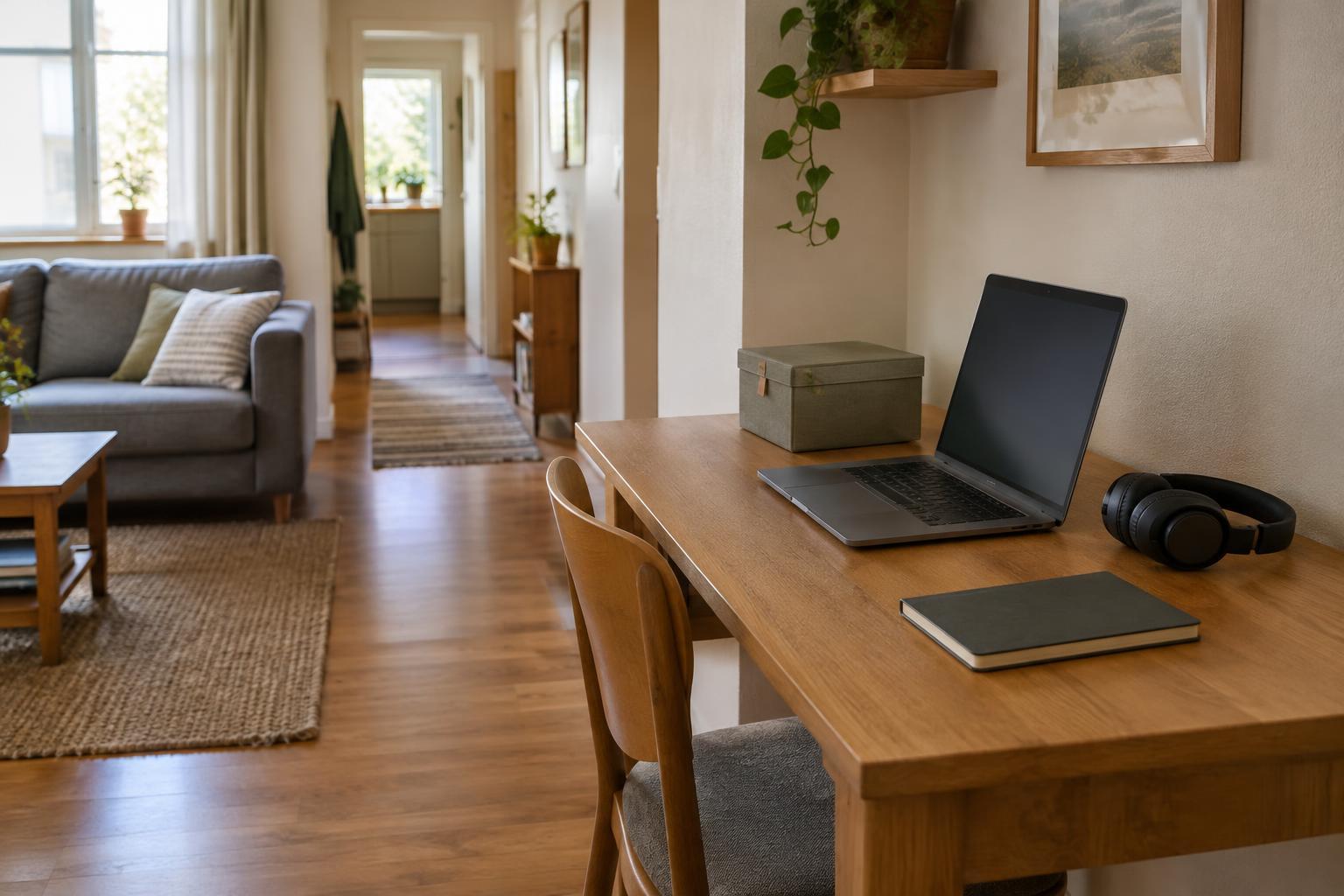
Try your desk in a few positions, even if the room is small. A table against a shared wall may put your ears close to household conversations. Moving it to another wall, or turning it so the noisiest area is behind you, can make interruptions less prominent. A bookcase or storage unit placed between the desk and a busy part of the room may also help the workspace feel more separate, although it will not soundproof it.
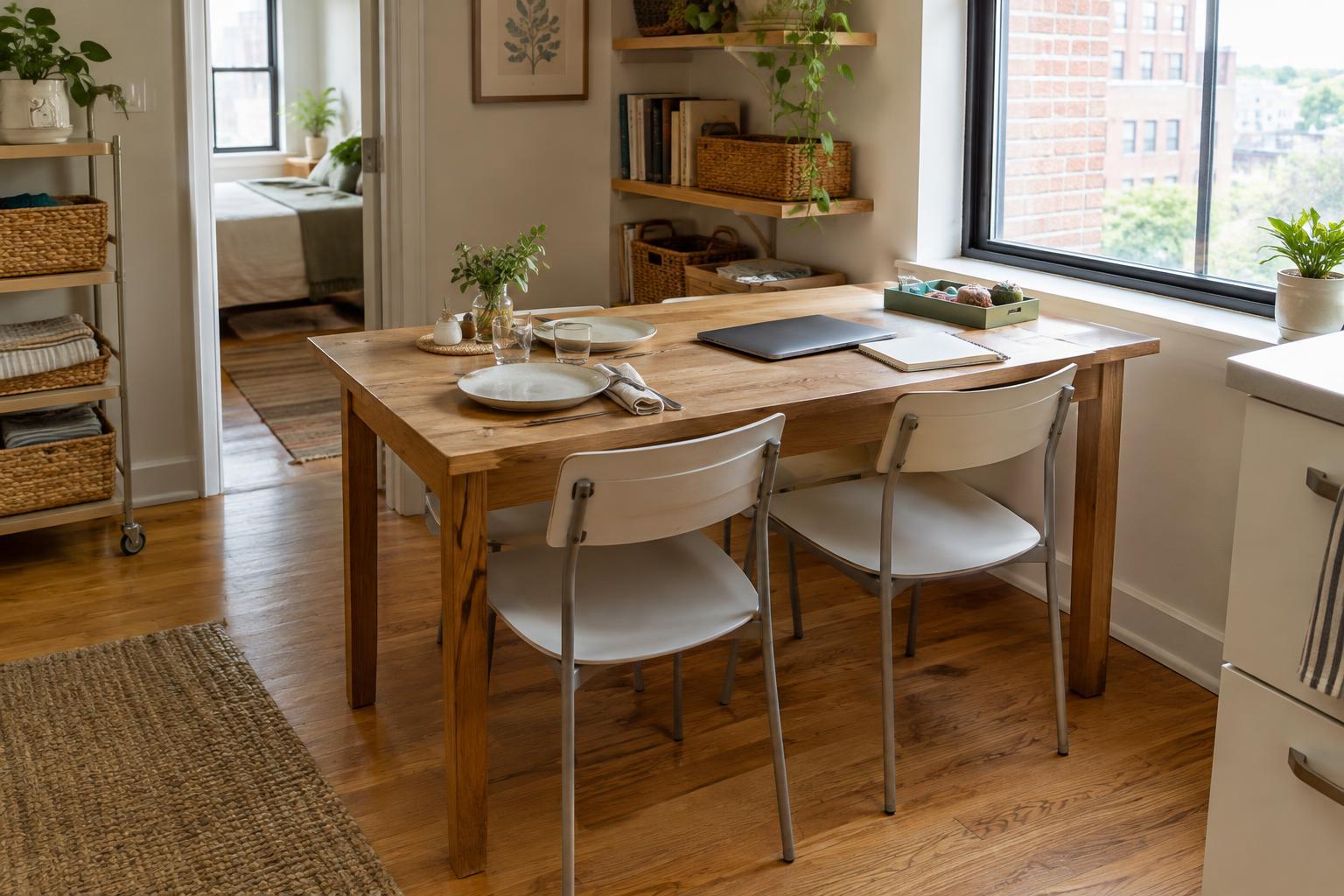
Think about the timing of noise as well as its location. If the kitchen is busiest at lunchtime, a bedroom corner might be better for an important call, even if you prefer working at the dining table the rest of the day. A lightweight laptop stand and a small box for work supplies can make that temporary move easier. In a multipurpose room, a workable backup spot is often more useful than trying to make one desk perfect for every task.
Soften hard surfaces with things you can move
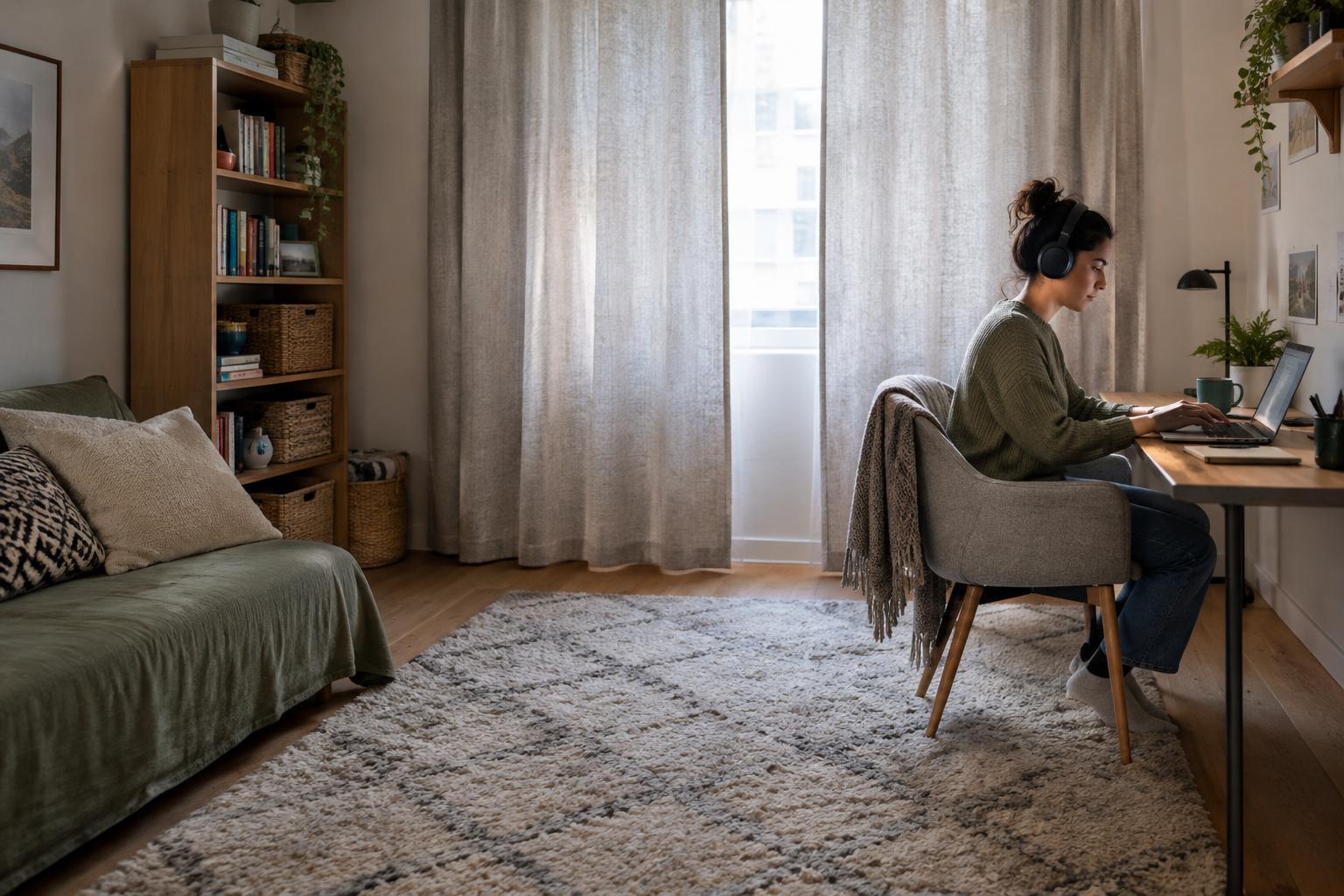
Bare floors, large windows and empty walls can make voices sound sharper within a room. Start with furnishings you already have: a rug near the desk, curtains you can close during calls or upholstered seating instead of an empty corner. These additions are most useful for reducing reflections inside the workspace. Choose pieces that still suit the room when work is over, rather than filling a compact space solely for acoustics.
For a flexible setup, a folding screen draped with a suitable fabric can create a visual boundary and slightly soften nearby sound. A filled bookcase can break up a broad, bare wall. Neither is a substitute for a solid door, and effects will vary with the room and the noise source. Keep movable items stable, leave walkways clear and avoid covering vents, heaters or electrical equipment with fabric.
Make shared-home noise more predictable
When other people use the same space, a brief agreement can do more than another accessory. Let housemates know when you have calls or focused work, and ask which times they need the room. A simple shared calendar or note on the door can help, provided everyone knows it is a request for consideration rather than a demand for silence.
Match tasks to the quieter parts of your day where you can. Save calls, writing or detailed review for those windows, and use busier periods for work that tolerates interruptions. If noise is unpredictable, decide in advance where you will move for a ten-minute call. That small plan reduces the scramble of relocating while someone is waiting on the line.
Use audio tools deliberately and check what helps
Headphones can make a difference when you cannot control the room. Well-fitting headphones may reduce how much background noise you notice; noise-cancelling models tend to be more helpful with steady sounds than with nearby speech. For calls, a headset microphone positioned close to your mouth may help others hear you more clearly. Test it with a colleague or a short recording before relying on it for an important meeting.
If a fan or gentle background sound helps you concentrate, keep the volume comfortable and make sure you can still hear anything you need to hear at home. You do not need to purchase every suggested fix at once. Try one free change, such as moving the desk or adjusting call times, for several workdays. Then add a rug, headset or other item only if you can name the remaining problem it is meant to solve. The aim is a workspace you can use consistently, not a perfectly silent room.