Start with the job, not the bottle
In a small home, every cleaning product competes for storage space. An all-purpose cleaner can be a sensible starting point because one bottle may handle everyday marks on several washable surfaces. But “all-purpose” does not mean suitable for every material or every mess. The useful question is what you need to remove, and from which surface.
For routine upkeep, a damp microfiber cloth may be enough to lift dust and fresh spills. A general cleaner can help with fingerprints on cabinet fronts, marks on a desk or light grime on a sealed countertop, provided its label permits those uses. Grease, limescale and stubborn soap residue may call for a product designed for that particular job. Letting the task guide your choice can keep your kit smaller without making cleaning harder.
Where an all-purpose cleaner earns its space
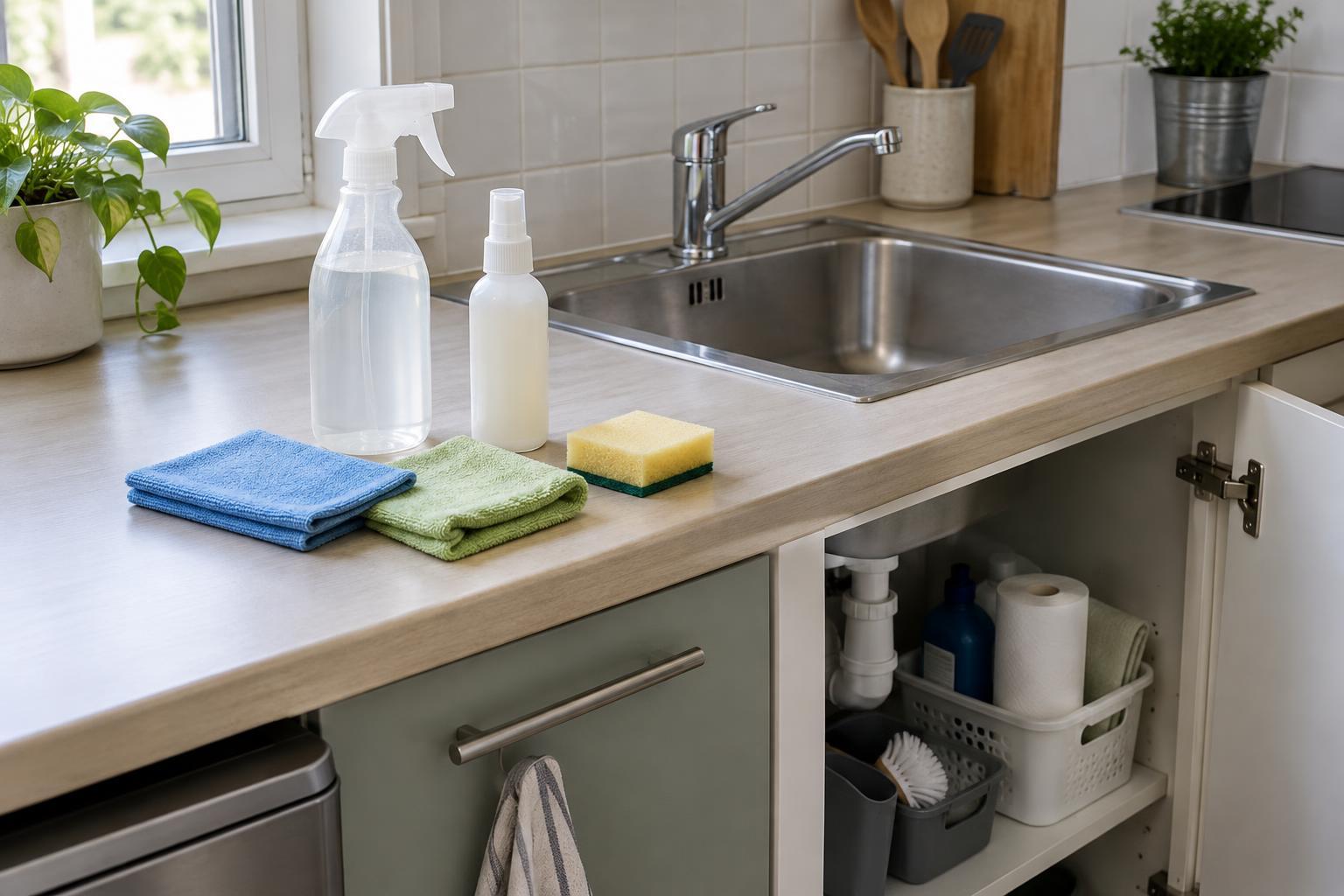
An all-purpose cleaner is most useful for the surfaces you wipe often: perhaps a laminate table that doubles as a work desk, washable cupboard doors and a sealed kitchen counter. If the label lists those materials, keeping one bottle and a few reusable cloths nearby can make quick cleanups easier than fetching a different product for every room.
Check both the product label and any care instructions for the surface. Finishes vary, even when two surfaces look alike. Test a new cleaner in an inconspicuous spot, especially on painted furniture or a surface whose finish you do not know. Use only the recommended amount; extra product can leave residue that takes another wipe to remove. Where directions call for rinsing, particularly on food-contact areas, follow them.
When a specialist is worth keeping
A surface-specific cleaner earns a place on the shelf when it solves a recurring problem or protects a material that needs particular care. A bathroom product intended for mineral deposits may be more useful on a persistently marked tap than repeated scrubbing with a general spray. A suitable degreaser may make regular stove cleanup easier. Glass cleaner can be convenient if streaks on mirrors bother you, though it may not be essential if a damp cloth followed by a dry one works for you.
Some materials deserve extra caution rather than a stronger cleaner. Natural stone, unfinished wood, delicate coatings and certain metals can be damaged by products that are fine elsewhere. Use a cleaner approved for the material, or follow the manufacturer’s care guidance. The same principle applies to floors: a product suited to one type of flooring may be wrong for another. Buying for a known surface is more useful than buying a specialist bottle on the chance that you might need it.
Keep cleaning and disinfecting separate in your plan
Cleaning removes visible dirt and residue; disinfecting is a different task. An ordinary all-purpose cleaner should not be assumed to disinfect, even if it leaves a surface looking spotless. If you choose to disinfect a surface, select a product labeled for that purpose and follow its directions, including any stated contact time and rinsing requirements.
Do not mix cleaning products or transfer them into unmarked bottles. Combinations that seem like a shortcut can create harmful fumes or damage surfaces. Keep products in their original containers, follow ventilation directions and store them out of reach of children and pets. These habits matter especially in a compact room, where cleaning supplies may otherwise end up beside food, toiletries or work equipment.
Build a small kit around your routine
Before buying anything new, list the surfaces you clean each week and the problems your current supplies do not handle well. A modest kit might include washable cloths, one all-purpose cleaner approved for your common surfaces, and one specialist product for a repeated issue such as bathroom scale or cooking grease. Add a separate disinfectant only if it serves a purpose in your routine; do not count on a general cleaner to do that job unless its label says so.
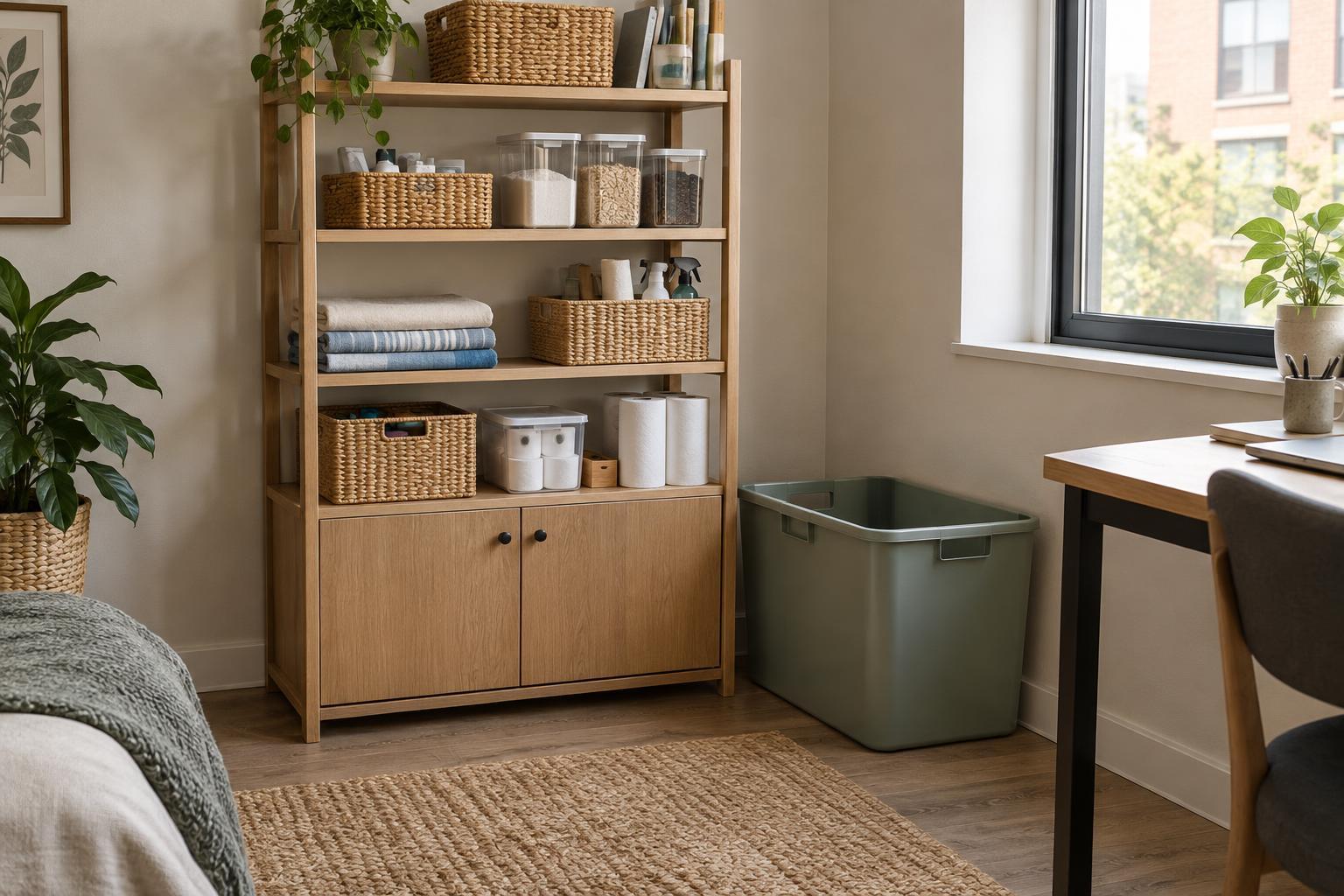
Give the kit one accessible home, such as a lidded caddy or a designated shelf, while observing any storage directions on the labels. Keeping a cloth close to the areas where spills happen can make it easier to wipe them up promptly. Review the kit when a bottle runs out: if you rarely used it, you may not need to replace it. The best choice is not the largest collection of cleaners, but a few products you understand, can store safely and will actually use.