Start by giving steam a way out
Condensation forms when warm, moist air meets cooler surfaces such as mirrors, tiles and ceilings. In a small bathroom, a shower can fill the room with humid air quickly. The most useful first step is to move that air outdoors rather than letting it drift into the rest of the home.
If you have an extractor fan, switch it on before showering and leave it running afterward until the mirror and other surfaces begin to clear. Check that its grille is not blocked by dust. If you have a window instead, open it when practical and close the bathroom door so moisture can escape outside. On days when opening a window is uncomfortable, a shorter shower and prompt surface drying still help.
An open door is not always the best solution. It may clear the bathroom faster, but it can carry steam into a nearby bedroom or living area. Watch where moisture settles and choose the route that actually removes it from your home.
Dry the surfaces that stay wet longest
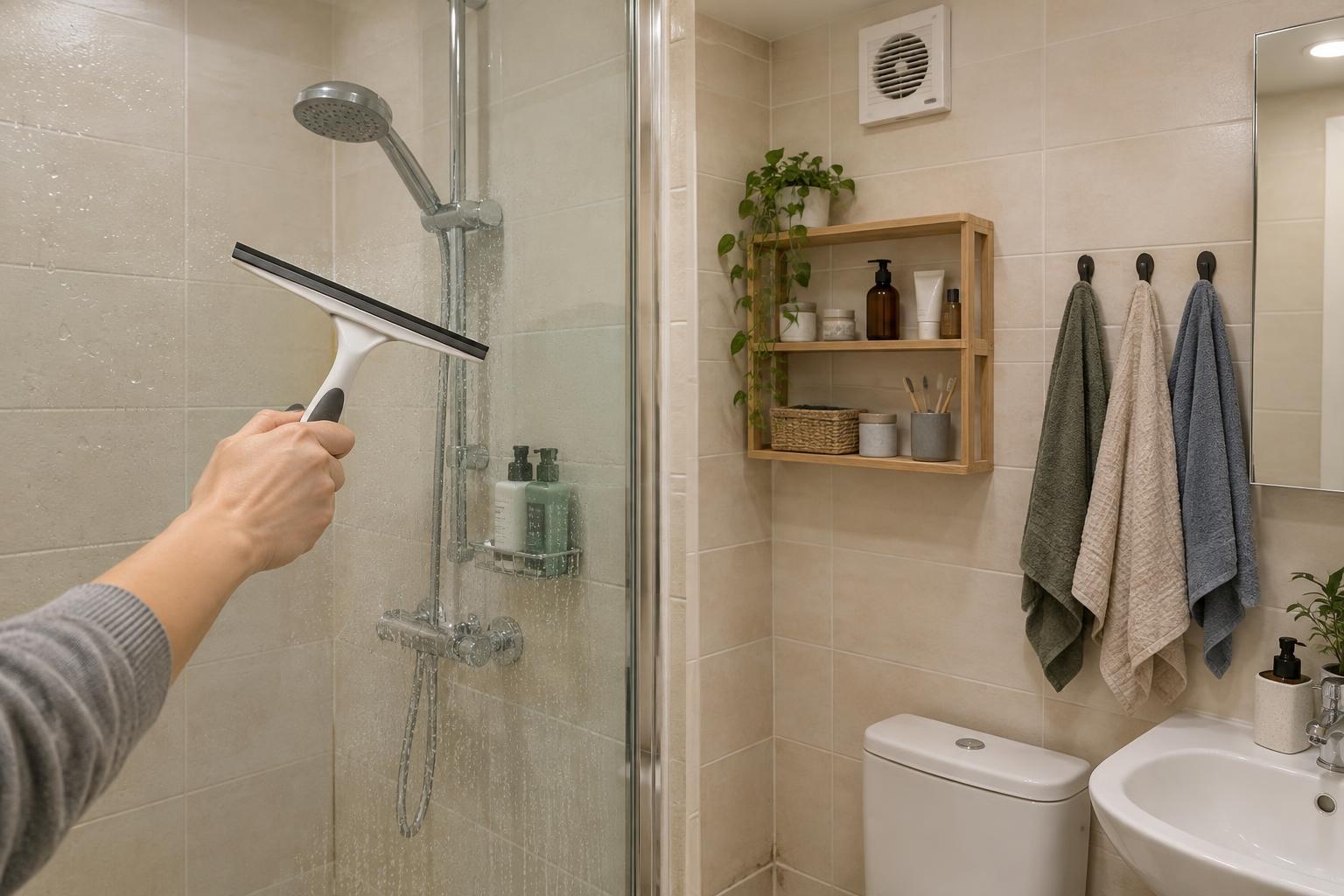
You do not need to dry every tile after every shower. Focus on the places where water collects: the shower screen, the bottom edge of a curtain, the ledge around a bath, taps and the corners beside the sink. A small squeegee or absorbent cloth kept within reach makes a quick wipe-down easier to maintain.
Pull a shower curtain fully across its rail after use so its folds can dry, and keep its lower edge out of pooled water. Hang towels separately rather than leaving them bunched on hooks. If there is no room for a towel rail, an over-door rack can create more drying space without taking up floor area. Avoid putting away damp bath mats or stacking damp towels in a closed basket.
Look for spots that remain wet even when nobody has used the room. Drips beneath the sink, water around the toilet base or a persistently wet patch beside the bath may point to a leak rather than ordinary condensation. Dry the area, check whether the moisture returns and arrange a repair if it does.
Make a simple cleaning routine for mildew-prone spots
Mildew often becomes noticeable in places that stay damp and receive little airflow, such as grout lines, sealant, window frames and the back of a crowded shelf. Keeping bottles and other items off wet ledges makes those areas easier to clean and lets them dry between uses.
Once a week, inspect the corners you usually overlook. Remove surface buildup with a bathroom cleaner suitable for the material, following its label and allowing the area to dry afterward. Wear gloves if the product calls for them, ventilate the room, and never mix cleaning products. Harsh scrubbing can damage grout or sealant, so use a gentler method first.
If staining repeatedly returns in the same place, cleaning alone may not solve it. Cracked sealant, failed grout, a leak or poor ventilation may be keeping the area damp. Damaged sealant may need replacing once the underlying area is clean and dry. For extensive growth or moisture that seems to come from inside a wall or ceiling, seek help with the underlying problem rather than repeatedly painting or cleaning over it.
Keep air moving around stored items
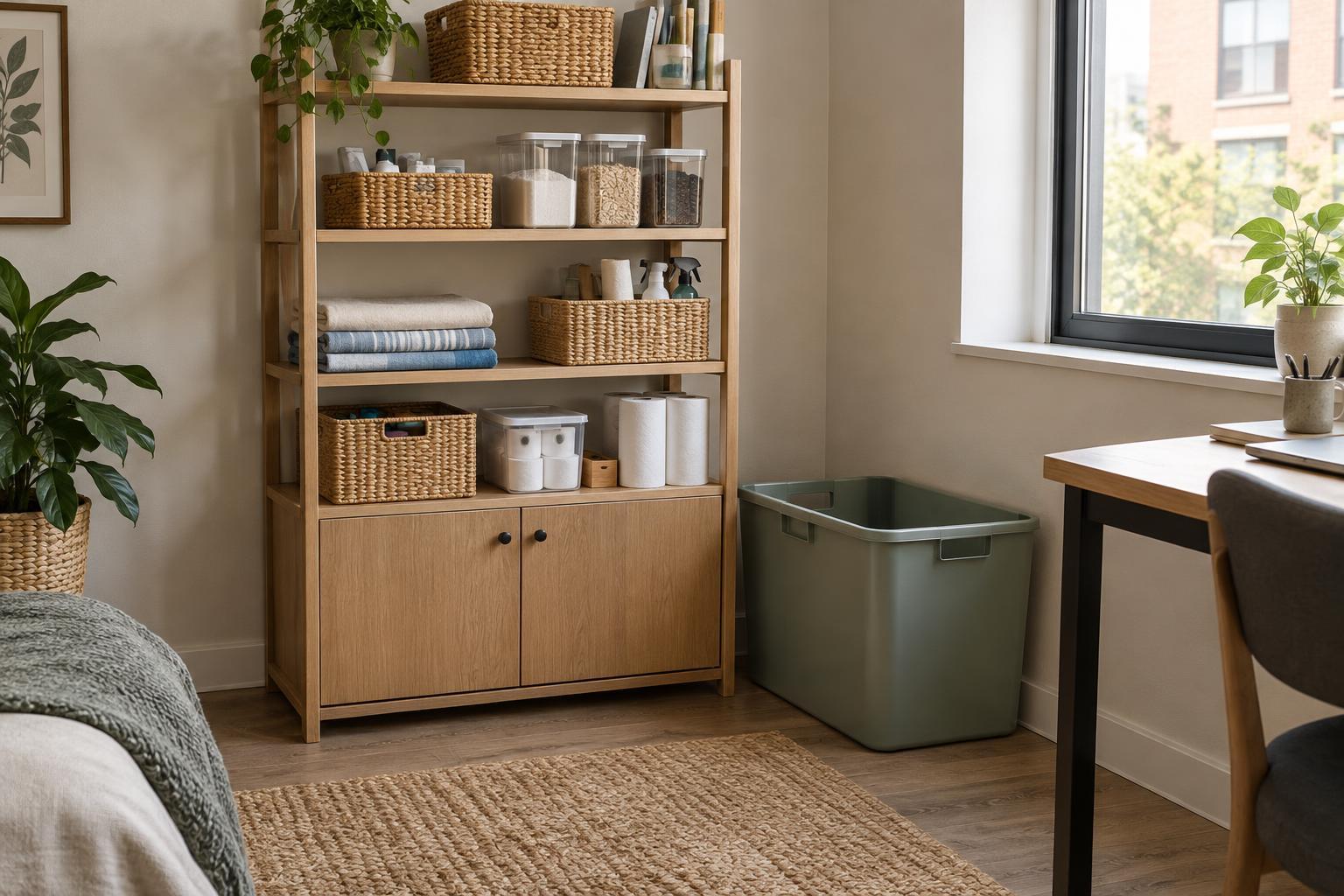
Compact bathrooms often depend on shelves, cabinets and baskets, but tightly packed storage can trap moisture against walls. Leave a little space behind freestanding units and avoid pressing fabric baskets against an exterior wall that feels cold or damp. Store spare toilet rolls and clean towels away from splash zones.
Choose storage that is easy to lift and wipe underneath. A small wall shelf or a narrow, open-sided unit may be more practical than a deep cabinet beside the shower. If a cabinet is the only option, check its back and lower corners regularly. The aim is not to leave the room empty; it is to make damp patches visible before they become a recurring chore.
Build a routine that fits your room
Start with three actions you can repeat: run the fan or open the window, wipe the wettest surfaces, and spread out towels and the shower curtain to dry. Then add a weekly check of grout, sealant, storage corners and the area beneath the sink. This is more manageable than a long cleaning list that gets ignored.
If you rent, report leaks, a nonworking fan or persistent dampness to the person responsible for repairs. If you own your home, investigate those problems before spending money on decorative fixes. A dehumidifier may help in some layouts, but it needs space, maintenance and a safe place away from splashes; it is not a substitute for fixing a leak or improving ventilation. The best setup is one that lets moisture leave and makes the remaining water easy to remove.