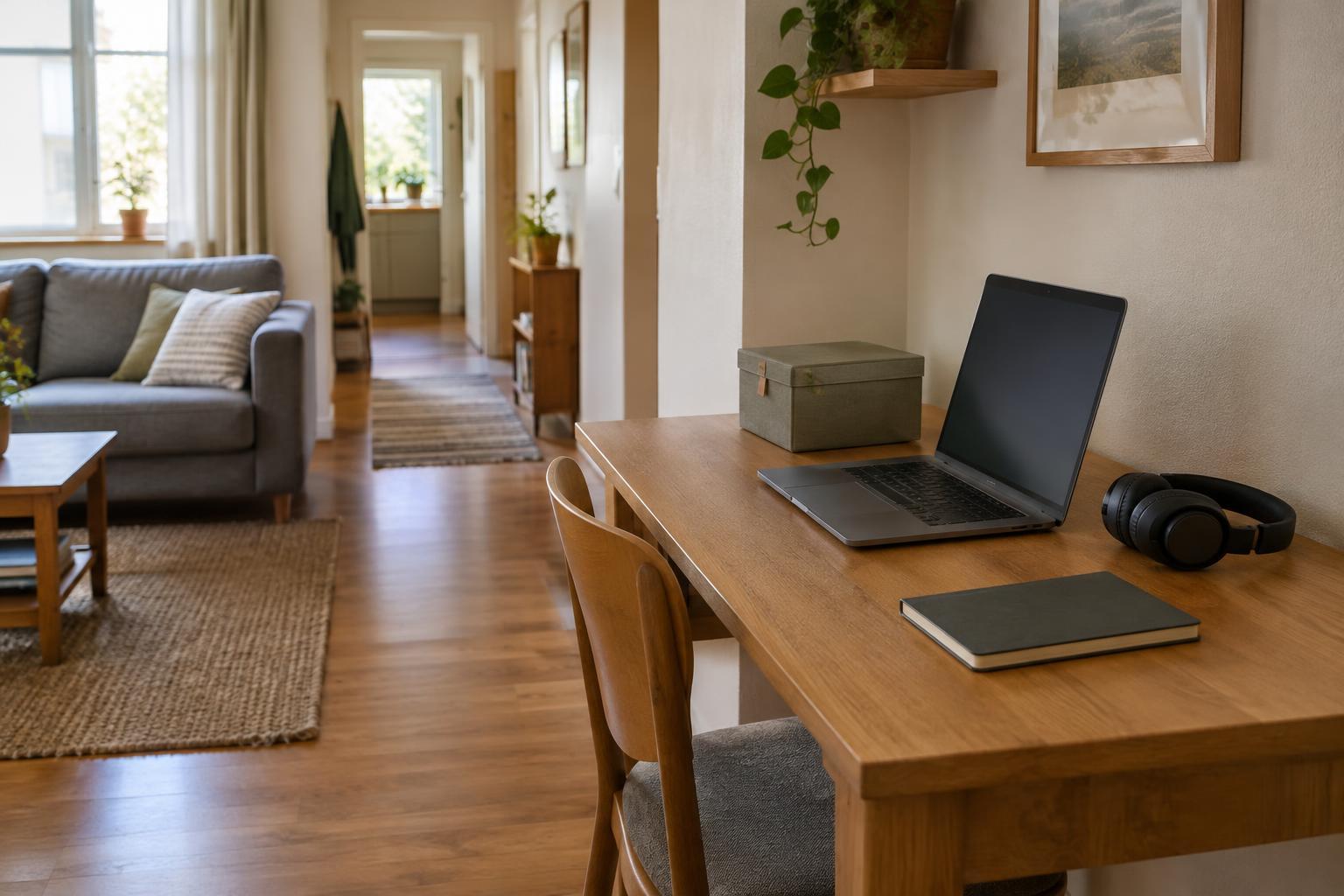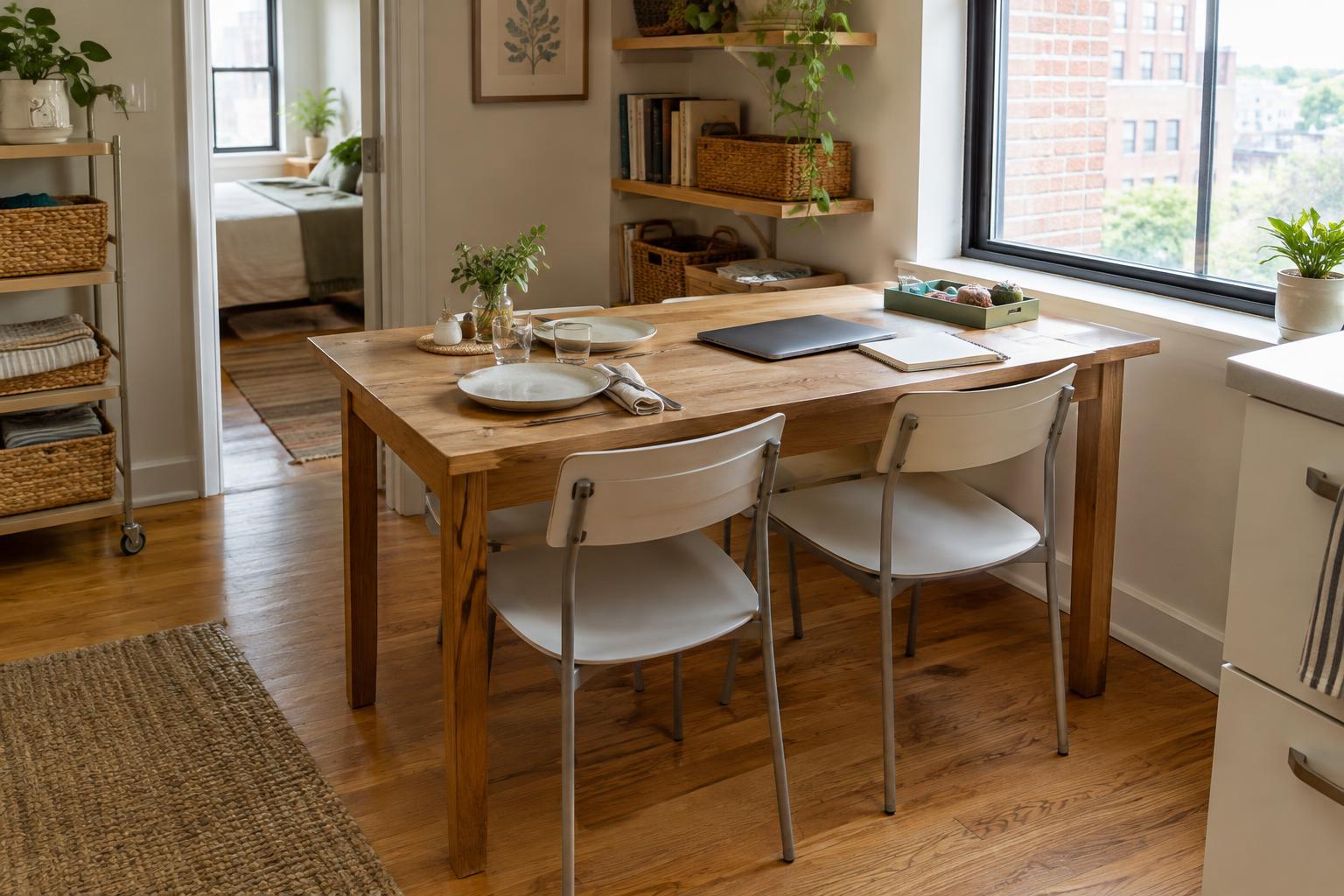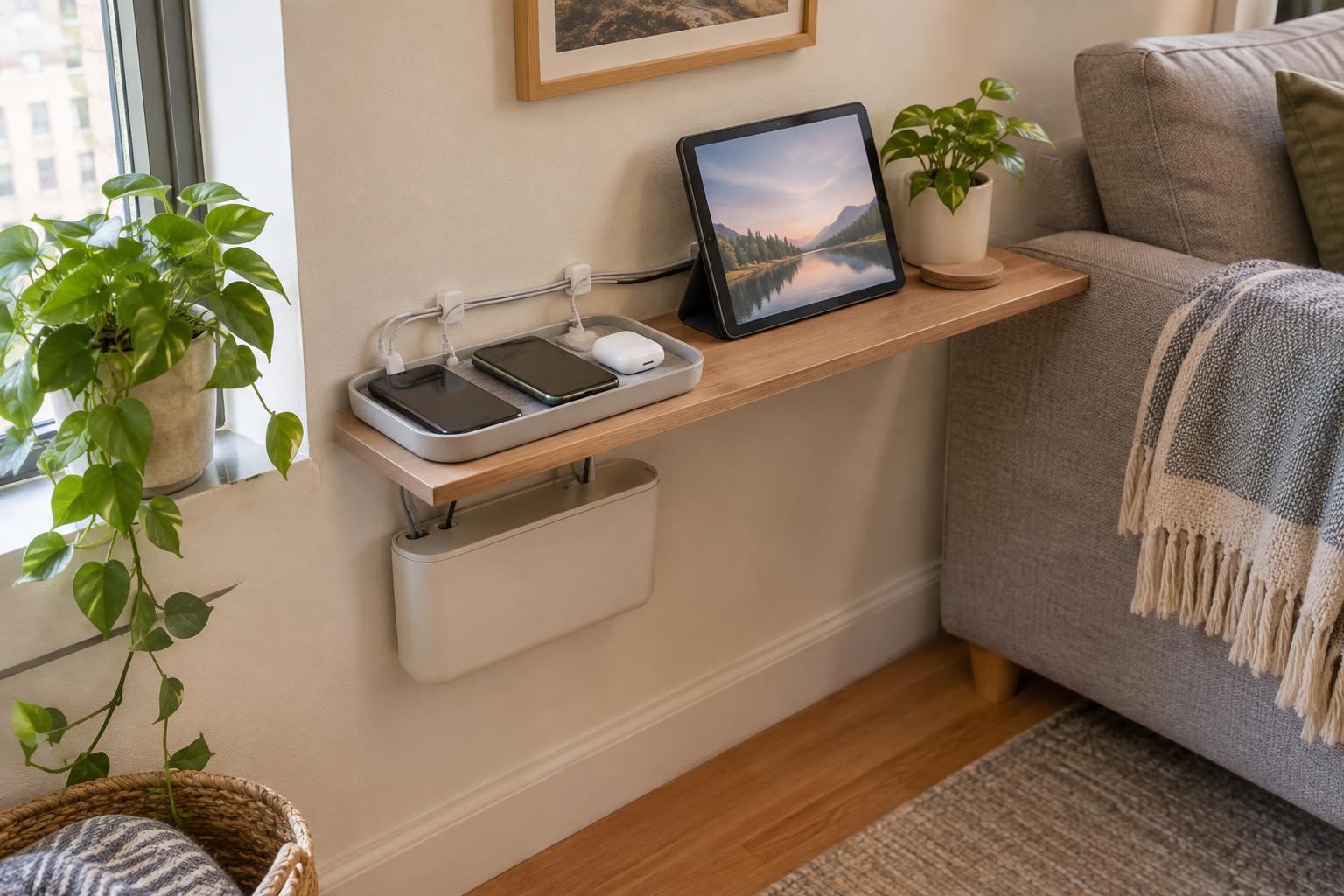
Start with the wall’s job
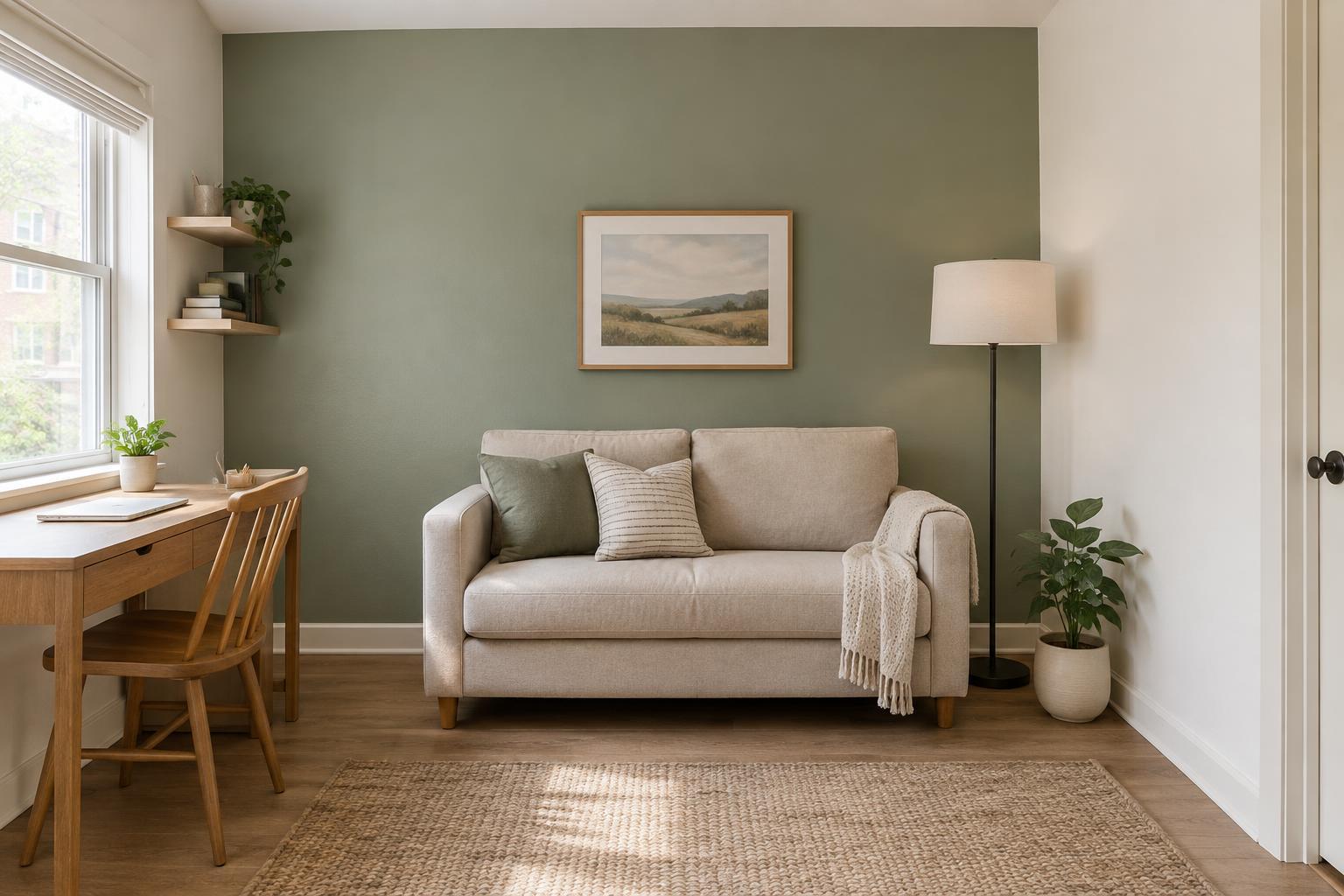
In a compact room, an accent wall works best when it helps explain the space rather than competing for attention. Look for a wall that already has a purpose: the one behind a sofa, desk, bed or dining nook. Painting that surface can give the furniture a visual anchor and make a multipurpose room feel more organized.
Before choosing a wall, stand at the room’s main entrance and notice where your eye goes first. A wall broken up by several doors, shelves or windows may be harder to read as one calm feature. A relatively uninterrupted wall is often simpler to paint and easier to live with. You do not have to pick the largest wall; a short wall behind a work area can be enough.
Choose contrast that suits the room
An accent color does not need to be dramatically darker than the other walls. A muted green beside warm white, a soft clay tone beside cream, or a deeper version of the room’s existing wall color can create definition without a sharp visual stop. If the room already contains colorful books, textiles and artwork, a quieter paint color may give those items space to breathe.
Pay attention to undertones as well as the color name on the tin. A gray that looks neutral in a shop may appear blue beside a warm floor, while a beige may look pink next to a cool white wall. Paint sample patches on the proposed wall and check them at different times of day with the lamps you normally use. Look at each sample beside the flooring, main furniture and adjoining walls. If possible, leave the samples up for a few days before deciding.
Keep the edges and surrounding surfaces calm
The clearest accent walls have a straightforward boundary. Painting one complete wall from corner to corner is usually less fussy than stopping the color halfway across an open surface. In a room with an alcove or recessed desk, painting just the recess can also work: the existing corners provide natural edges, and the color signals what that little zone is for.
Let the remaining walls act as a quiet backdrop. You can repeat the accent color once or twice in small items, such as a cushion or a planter, without trying to match everything. Avoid filling the painted wall simply because it now looks like a feature. A single picture, a useful shelf or even an empty stretch of color may be enough. Keeping some visible wall around furniture and decorations helps the room feel less packed.
Plan the paint job before opening the tin
Measure the wall and check the paint label’s coverage guidance before buying. For a modest project, the essentials are usually paint, a suitable roller and brush, a tray, painter’s tape if needed, and protection for the floor. Check whether you already own usable supplies; buying tools for one small wall can change the project’s cost. If you rent, confirm what your agreement allows before painting.
Move furniture far enough away to work comfortably, then clean the wall and let it dry. Fill noticeable holes, sand rough patches and remove dust. Protect sockets, trim and the floor. Cut in around the edges with a brush, then roll the larger area, working in manageable sections and keeping a wet edge where practical. Follow the paint manufacturer’s directions for drying time and additional coats. Remove tape carefully so it does not pull at the new finish.
Live with the result before adding more
Once the wall is dry and the furniture is back, give the room a little time. Color can feel more prominent when the space is empty during painting than it does when the room is in use. Check the view from the doorway, from your usual seat and, if it is a home-working space, from your desk. If the wall feels too busy, try removing a few small decorations before changing the paint.
An accent wall is a useful small decorating project because it can change the room without changing its footprint. The goal is not to make every surface interesting. It is to give one part of the room a clear role while leaving the rest comfortable, flexible and easy to use.