Start with the job it needs to do
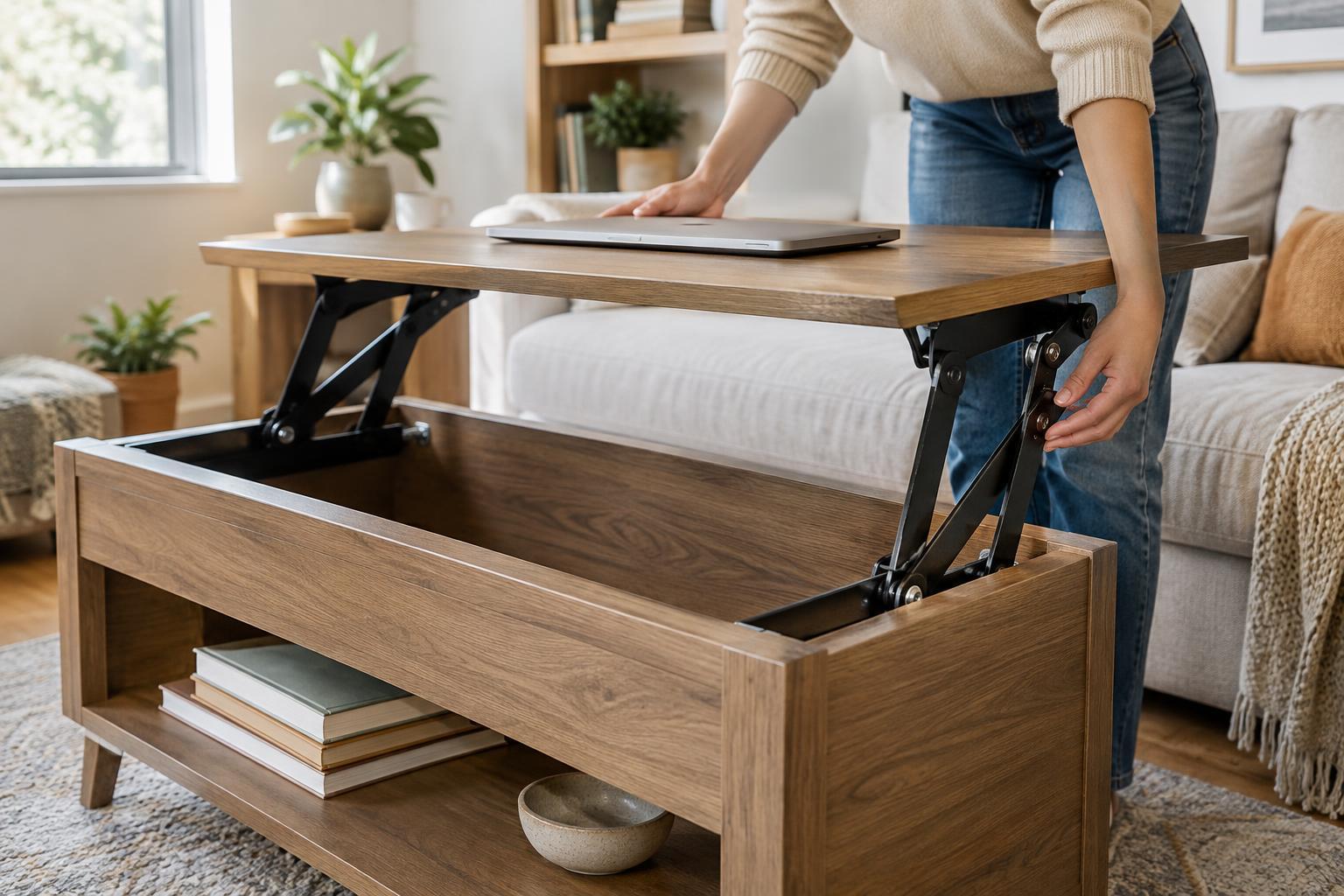
Transforming furniture earns its place in a small room only if both of its forms are useful. A desk that folds away may free the floor after work, but it still needs a stable surface at a comfortable height. A lift-top coffee table may offer a place to eat, but it has to open without knocking into the sofa. Before comparing styles, write down what you will put on the piece, how often you will change it, and where people will stand or sit while using it.
Measure the space in every position, not just when the furniture is closed. Allow room for a sofa bed to extend, chairs to pull out from an expanding table, or a cabinet door to swing past nearby furniture. Marking the proposed footprint on the floor with removable tape can reveal whether a clever-looking piece will be awkward in daily life.
Inspect the parts that move
Hinges, slides and lift mechanisms do much of the work in transforming furniture. In a shop, operate the piece several times rather than watching only a demonstration. Notice whether it moves smoothly, stays aligned and settles firmly into each position. You should not have to force it, hold a heavy panel in an uncomfortable position, or put your fingers near a pinch point to complete an ordinary changeover.
Look closely at how the moving hardware attaches to the frame. Screws should sit securely, and the surrounding material should not appear split, crushed or loose. Check for stops, latches or supports that keep a surface from moving unexpectedly. If shopping online, look for clear photographs of the mechanism and instructions for changing modes. If those details are missing, ask the seller before ordering rather than assuming the furniture works as you expect.
Check joints and stability in every setup
A transforming piece may feel solid when folded yet wobble when extended. Examine the corners, legs, braces and points where separate sections meet. A little movement in an adjustable mechanism may be normal, but the main surfaces should feel suitably supported for their intended use. Check that legs contact the floor evenly and that any locking parts engage fully.
Think about how weight will be placed on the furniture. A table extension has to support items near its outer edge, while a sofa bed needs a comfortable, supported sleeping surface. Do not test a showroom model by sitting or leaning where the maker has not said it is safe to do so. Instead, ask a staff member to demonstrate each position and explain what the piece is designed to support. For a wall-mounted folding desk or bed, include the specified mounting requirements in your decision; the wall and fixings are part of the setup.
Read weight limits by mode, not by product name
Look for a stated weight limit for each use that matters to you: seating, sleeping, a raised tabletop, shelves or a pull-out work surface. A general capacity figure may not tell you what an extended section can hold. Check whether the limit applies to evenly distributed weight and whether the instructions restrict sitting on edges or placing heavy items on a moving surface.
Compare those limits with your planned use, including the things you expect to leave on the furniture. A desk that holds a laptop may not be suitable for a heavy monitor arrangement; a lift-top table may not be intended for someone to lean on while standing up. If the relevant capacity is unclear, request the product manual or written clarification before buying. Treat a missing answer as a reason to keep looking, especially for a piece that will support a person.
Balance durability with everyday effort
Even well-built furniture can be the wrong purchase if changing it is a chore. Try the full routine: move nearby objects, open the piece, secure it, use it, then put it away. Consider whether you can do that comfortably at the times you expect to need it. Also check the care instructions, assembly requirements and availability of replacement hardware, where offered. A simpler design that you will use regularly may be better value for your room than an elaborate one that stays in one position.
Before paying, review the dimensions, manual, delivery access and return terms. Keep the instructions after assembly, and recheck accessible fasteners as the maker recommends. These small steps cannot guarantee a piece will last, but they give you a clearer picture of how it will fit your space, your routine and the loads you need it to carry.