Start with the job, not the container
In a compact room, storage has two jobs: it must hold your things and help the room function. A box under a bed can prioritize capacity, while a container on a living-room shelf also affects how the room looks. Clear bins and opaque boxes can both work well, but they solve different frustrations. Before buying, decide what will go inside, how often you need it, and whether the container will be on display.
A useful first step is to sort the items you already own into groups. Put frequently used supplies together, then separate occasional items such as spare cables, seasonal decorations, or guest bedding. Measure the shelf, cupboard, or under-bed gap before choosing containers, including the space needed to pull them out. This can save more money and trouble than finding the cheapest box that happens to look right.
Visibility: finding things versus seeing everything
Clear bins are helpful when you need to identify contents quickly. They suit craft materials, cleaning refills, or small office supplies stored inside a cupboard. In a shared room, they can also make it easier for everyone to put things back in the right place. Visibility is less useful, though, when a bin contains a jumble of unrelated objects. You may still need to rummage, and the contents can make an open shelf look busy.
Opaque boxes hide that visual clutter. They are a practical choice for irregular-looking items such as chargers, spare stationery, or game pieces on shelves you see every day. The trade-off is that you cannot tell one closed box from another at a glance. Simple labels can fix that: name the contents rather than using vague categories such as “miscellaneous.” If several people use the storage, place labels where they are visible when the boxes are stacked or shelved.
Appearance: decide what you want the room to show
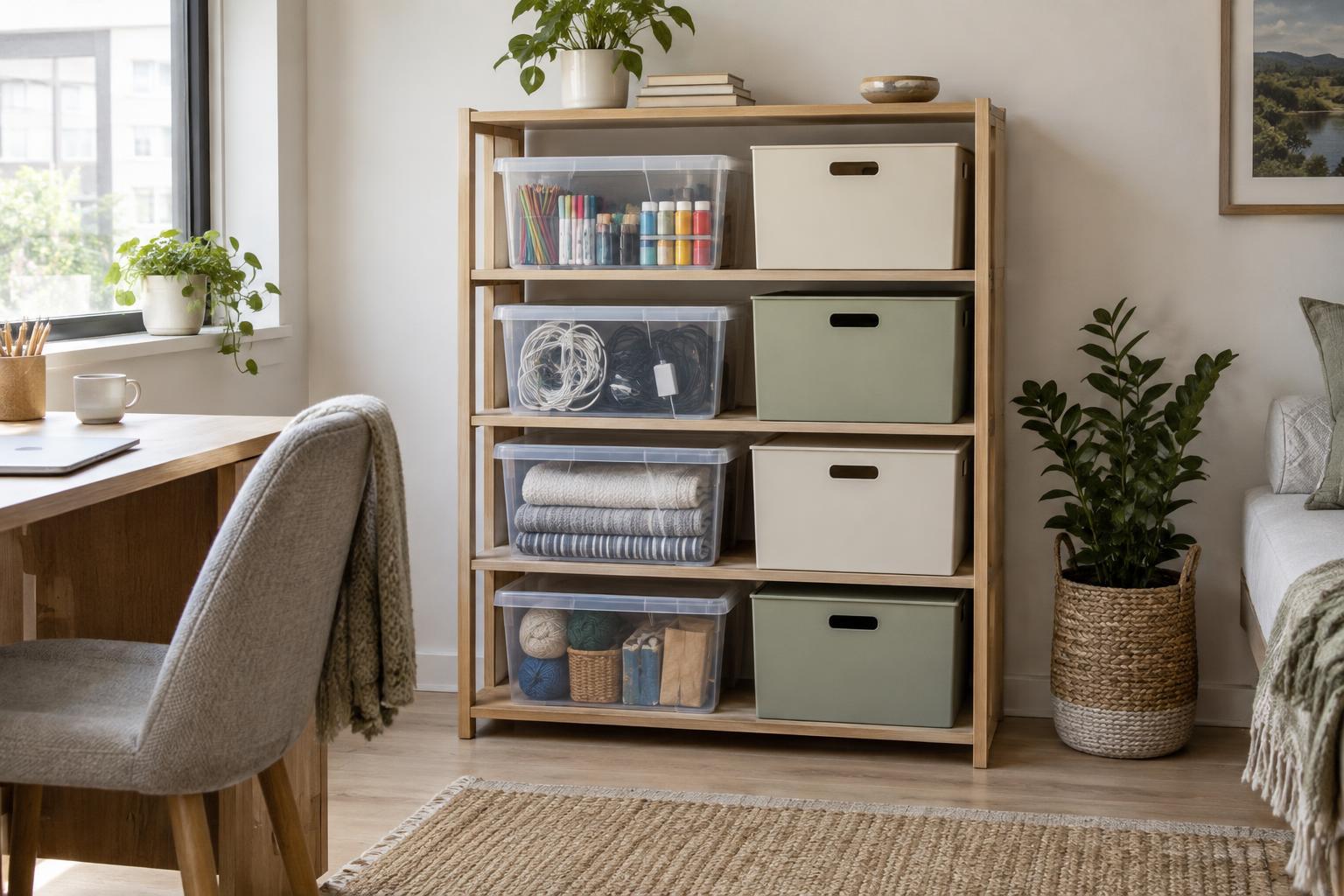
Clear containers tend to look orderly when their contents are fairly uniform: folded linens, matching supplies, or neatly grouped materials. When colors and shapes vary, the containers may make a small room feel visually crowded, even if everything is technically put away. This matters most on open shelving, around a desk, or in a room that doubles as a workspace and a place to relax.
Opaque boxes create a more consistent surface, especially when you use a limited range of sizes or colors. You do not need a matching set for every possession. Try using a few similar boxes at eye level and less coordinated containers inside closed cupboards. If your budget is tight, reuse sturdy boxes you already have for hidden storage, then spend only where the containers will be seen or handled often. A box with a lid can look tidy, but consider whether that extra step will discourage you from putting everyday items away.
Upkeep: choose the option you will actually maintain
Both types need occasional attention. Clear bins show dust, smudges, and disorder more readily, which may prompt you to tidy them before they overflow. That can be an advantage if you like a visible reminder. It can also add work if the bins sit on exposed shelves. Opaque boxes conceal messy contents, but they can quietly become catchalls unless you check them from time to time.
Think about how each container will be used, not just how it looks empty. Smooth, wipeable surfaces may be convenient for cleaning supplies or items stored near an entryway. A lightweight box can be easier to lift from a high shelf; a sturdy one may be more suitable for heavier contents. Avoid packing any container so tightly that you have to unload it to retrieve one item. Leaving a little room makes the system easier to keep up.
Use a mix, then test it
Most compact homes do not need an all-clear or all-opaque storage system. One workable arrangement is clear bins for sorted supplies inside a closet and opaque boxes for loose items on open shelves. In a home-working corner, a clear bin could hold printer supplies in a cabinet, while an opaque box keeps spare cables out of sight beside the desk. Choose containers based on the location and the task, rather than trying to make every shelf identical.
If you are unsure, test the layout with containers you already own before buying a full set. Use temporary labels, live with the arrangement for a week or two, and notice where items end up when you are in a hurry. If you repeatedly open the wrong box, improve its label or switch to a clear bin. If a visible bin makes the room feel cluttered, move it behind a door or try an opaque box. The best storage choice is the one that helps you find things and put them away without turning either task into a project.