Start with a small, simple kit
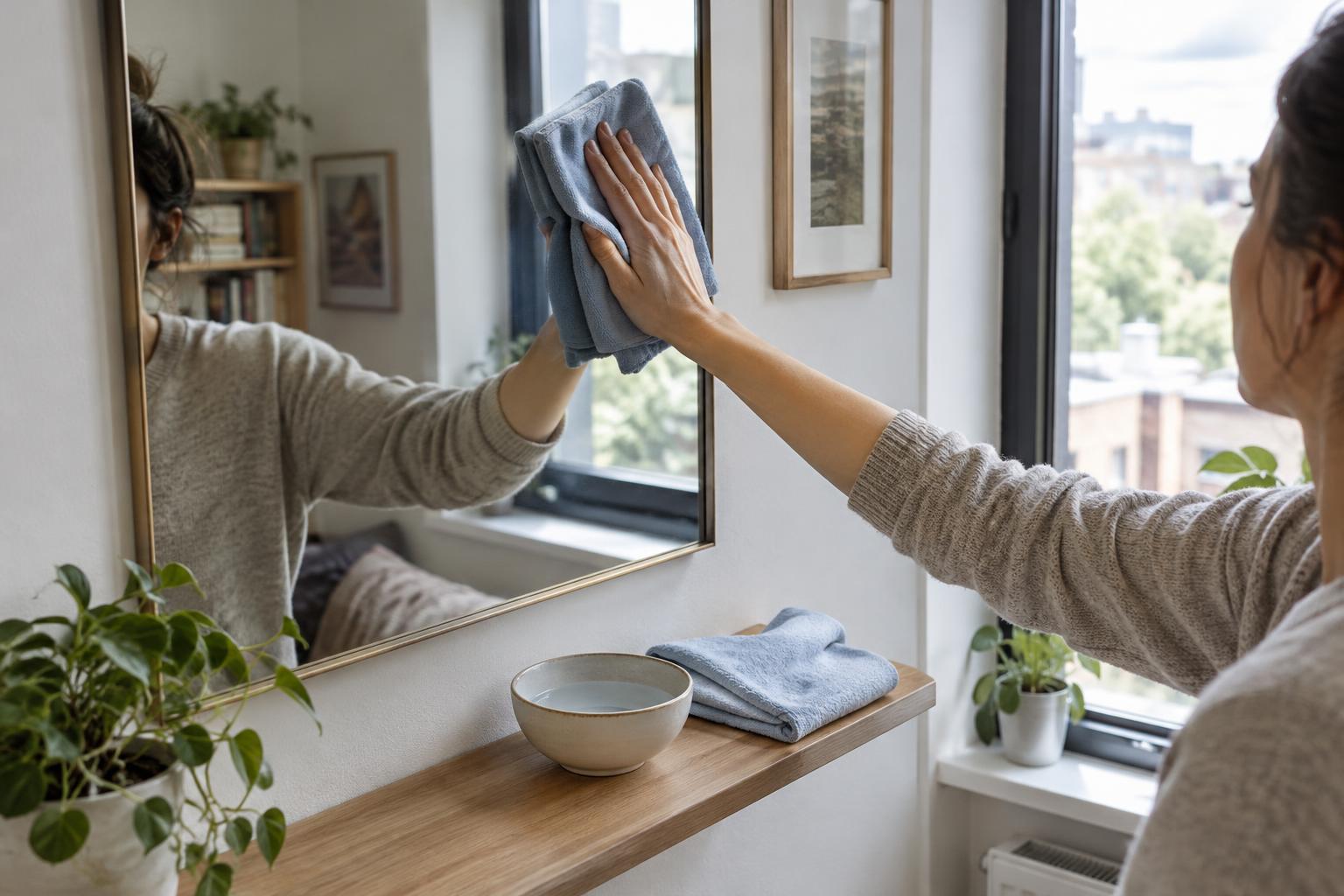
For most everyday marks, gather two or three clean microfiber cloths, a bowl of water and, if needed, a little unscented dish soap. Keep one cloth for washing and a separate, dry cloth for the final polish. A small squeegee can make larger windowpanes quicker to dry, but it is not essential. You do not need a cupboard full of sprays to clean a bathroom mirror or the window beside a desk.
Use plain water first for light dust and fingerprints. If a pane has greasy marks, add just a drop or two of dish soap to the water. Too much soap can leave a film that takes extra wiping to remove. If your tap water tends to leave visible spots, distilled water may be useful for the final wipe. Check any care instructions before cleaning tinted, coated or treated glass, since those surfaces may need a particular method.
Remove dust before you wash
Start by wiping loose dust from the top of the frame, the sill and any nearby blind or shade. Then lightly dust the glass with a dry cloth. This small step keeps loose grit from being dragged across the surface and stops dust from turning into muddy smears when it gets wet. On a mirror, pay attention to the lower edge, where splashes and toothpaste spots often collect.
For a window, clear crumbs and debris from the track with a cloth or a soft brush before wiping it with a damp cloth. You can deal with the frame and sill separately from the glass, using fresh water if the first bowl becomes dirty. Keeping the cloth for the track away from the pane saves you from spreading grime over an area you have already cleaned.
Use less liquid than you think
Dampen the washing cloth rather than soaking it, then wipe the glass in overlapping passes from top to bottom. Work on one manageable area at a time so the surface does not dry before you reach it with a second cloth. For a stubborn spot, hold the damp cloth against it briefly and wipe again instead of scrubbing hard. Avoid abrasive pads, which may scratch glass or damage a coating.
It is especially useful to control drips around mirrors. Moisture that runs down behind a mirror or into its edges can be difficult to dry. Apply water to the cloth rather than spraying the surface heavily, and wipe the edges with a nearly dry cloth. On windows, keep excess water away from painted wood, fittings and nearby furnishings.
Dry promptly for a clearer finish
Streaks often come from residue or from water left to dry on the glass. After washing a section, wipe it promptly with a clean, dry microfiber cloth. Fold the cloth to expose a fresh side as it becomes damp. If you see a cloudy patch, try a lightly damp pass followed by a dry one before adding more soap. A final look from an angle can reveal marks that are hard to see straight on.
For a larger pane, draw a clean squeegee across the wet glass in steady, slightly overlapping passes. Wipe its rubber edge with a cloth between passes, then dry the edges and sill. If possible, choose a time when direct sun is not warming the glass; fast drying can leave you less time to remove water evenly. Keep the task limited to windows you can reach safely without leaning out.
Keep the next clean quick
A short touch-up is often easier than a full wash. Keep a clean cloth handy for bathroom mirror splashes, fingerprints near window handles and marks on glass doors. Wipe fresh spots with a lightly damp corner, then dry them with another part of the cloth. Wash reusable cloths when they become dirty and avoid fabric softener if it leaves them less absorbent.
If you use a commercial cleaner for a particular surface, follow its label and the surface maker’s guidance. Do not mix cleaning products together. For routine upkeep, though, plain water and a small amount of mild, unscented soap when needed are a practical place to start. The most useful habit is simple: remove dust, wash with a light touch, and dry before the water can leave marks.