Give the cart a specific job
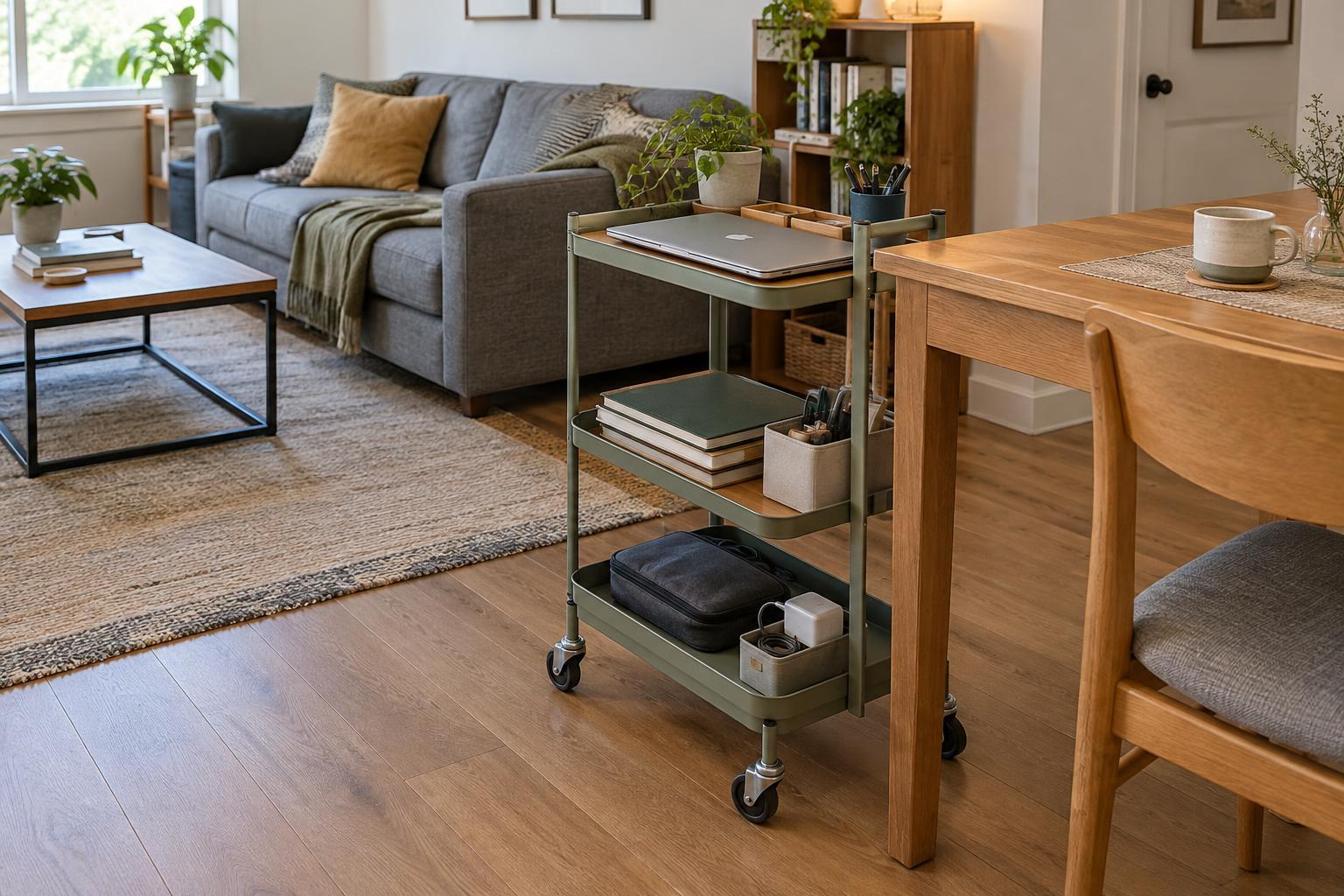
In a room used for meals, relaxing, and work, the hardest part of a temporary workstation may be putting everything away. A rolling cart can help by keeping supplies in one movable place. It does not need to replace a desk: its job might be to carry a laptop stand, notebooks, chargers, and a small task light to the table, then hold them when the table is needed for something else.
Before shopping, gather the items you would actually keep on the cart. Separate everyday essentials from occasional supplies. If paperwork fills a deep box, a shallow tray may make the papers easier to find; if you use only a laptop and notebook, a large three-tier cart may create more clutter than it solves. Decide whether the top needs to act as a brief work surface or simply hold items while you move them.
Measure the route and the parking place
Measure the proposed parking spot first, including its usable width, depth, and height. A cart parked beside a sofa should not block a walkway or make a door difficult to open. If it will fit under a table, check the space between the legs as well as the clearance beneath the tabletop. Allow room to reach anything stored on the shelves; a cart that fits tightly in a gap may be awkward to use.
Then trace the route from the parking spot to the work area. Look for tight turns, rug edges, raised thresholds, and places where a wheel could catch. Check the cart’s overall dimensions, including handles and any baskets that project beyond the frame. If you expect to move it often, test how easily you could steer a cart of that size while carrying nothing else. In a particularly narrow room, a smaller cart may be more useful than one with extra storage.
Choose features that suit the load
A sturdy, level top can serve as a landing place for a closed laptop or a tray of supplies, but it may not be comfortable as a primary typing surface. If you plan to use it that way, check whether its height works with your chair and whether there is room for your knees. For most shared rooms, it is simpler to work at an existing table and let the cart carry the equipment there.
Check the manufacturer’s load guidance, particularly if you will store books, a printer, or other heavy items. Put heavier objects low and keep the top relatively clear so the cart is easier to move and less likely to feel top-heavy. Raised shelf edges can help contain loose items, while removable bins make small supplies easier to bring to the table. Wheel locks may help when the cart is parked, but they are not a substitute for a stable frame and a suitable floor.
Make setup and shutdown easy
Arrange the cart in the order you use it. Keep the items you reach for at the start of a work session on the upper shelf, with less-used supplies below. A small container for pens, a folder for active papers, and a designated place for charging accessories can prevent the cart from becoming a catchall. Leave a little empty space so putting things away does not require repacking every shelf.
Plan for cables before choosing the parking spot. Keep cords contained while moving the cart, and plug in devices only once it has stopped; do not roll the cart with a cable trailing across the floor. If it stays near an outlet overnight, make sure the cord does not cross a walking route. At the end of a session, clear the table, return supplies to their places, and move the cart back. That short routine is what lets the room change purpose without a larger furniture rearrangement.