Start with what you use, not what you own
Cat supplies rarely need to live in one large cabinet. Food and feeding tools are used in one part of the home, while toys, litter equipment and a carrier may be needed elsewhere. Before buying an organizer, gather the supplies you already have and group them by task. Separate daily items from occasional ones, and check for empty packaging, worn toys or duplicates you no longer need.
Then note where each task happens. A scoop should be easy to reach near the litter area; a carrier does not need prime shelf space every day. This simple inventory prevents a common small-home problem: putting everything in a single box that must be unpacked whenever you need one item. If you are planning a new cat’s place in a shared home, Adopcja i wspólne życie · Koci Dom offers further browsing on adoption and living together.
Give daily supplies a compact home
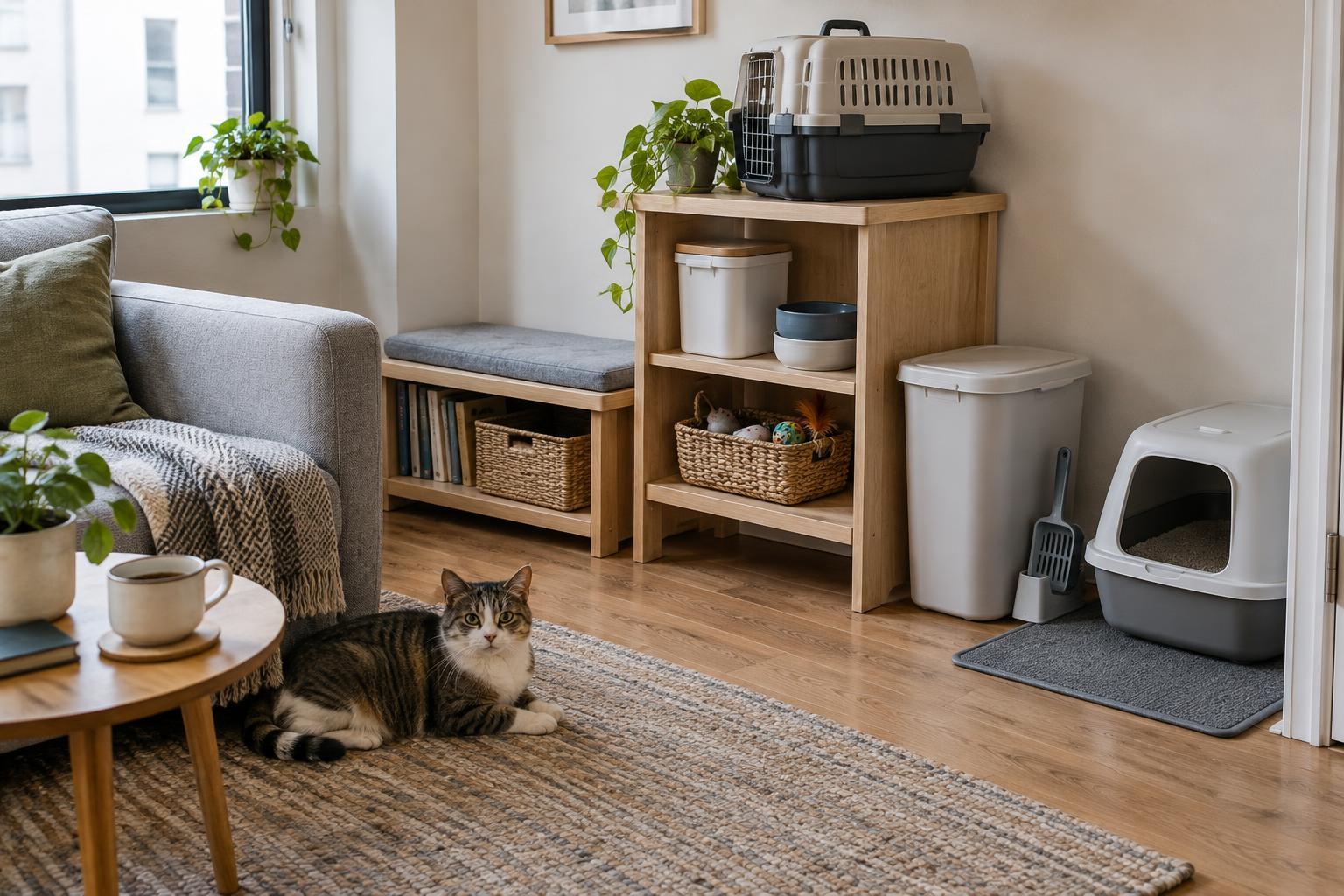
Choose a spot for each daily category before choosing containers. A narrow kitchen cabinet might hold unopened food and feeding accessories, while a low shelf near the play area can hold toys. Use spaces that are already available rather than filling the floor with another storage unit. In a multipurpose room, a closed cabinet or a matching bin may help supplies sit quietly alongside the rest of the room.
Measure the shelf or cupboard, then measure the supplies that must fit inside it. Leave room to lift out a container and see what remains behind it. A shallow tray can make small items easier to retrieve than a deep bin. If several people care for the cat, use simple labels such as “food,” “toys” and “carrier gear” so items are returned to the same place.
Keep feeding supplies separate and easy to check
Store food according to its packaging directions and keep it away from household cleaners and litter tools. If you transfer dry food to a container, choose one that closes securely and keep the original package details available. An orderly shelf also makes it easier to see what is already open before adding another bag or packet. Give bowls and feeding accessories a nearby place that does not interfere with preparing household meals.
Avoid building a storage system around a large reserve unless you have room to use it comfortably. A quantity that fits your available shelf can be simpler to rotate and keep track of than packages tucked into several corners. For more browsing about everyday cat care, see Żywienie i codzienna opieka · Koci Dom; keep your own storage choices grounded in the space and supplies you actually have.
Contain litter tools without hiding the work
The litter area needs a practical storage spot, but not necessarily a dedicated piece of furniture. A small, wipeable caddy can hold the scoop and bags close to where they are used. Place it where it will not block a doorway or force you to move it before cleaning. Keep these tools separate from food, toiletries and general household supplies, and choose a location that makes routine upkeep convenient.
For spare litter, look first at a shelf or cupboard near the area rather than beside the tray itself. A heavy package is easier to handle when you can pull it out without reaching over other belongings. If the shelf is high or awkward, consider storing a smaller working amount in an easy-to-reach container while keeping the remainder somewhere stable and dry.
Make room for play and occasional gear
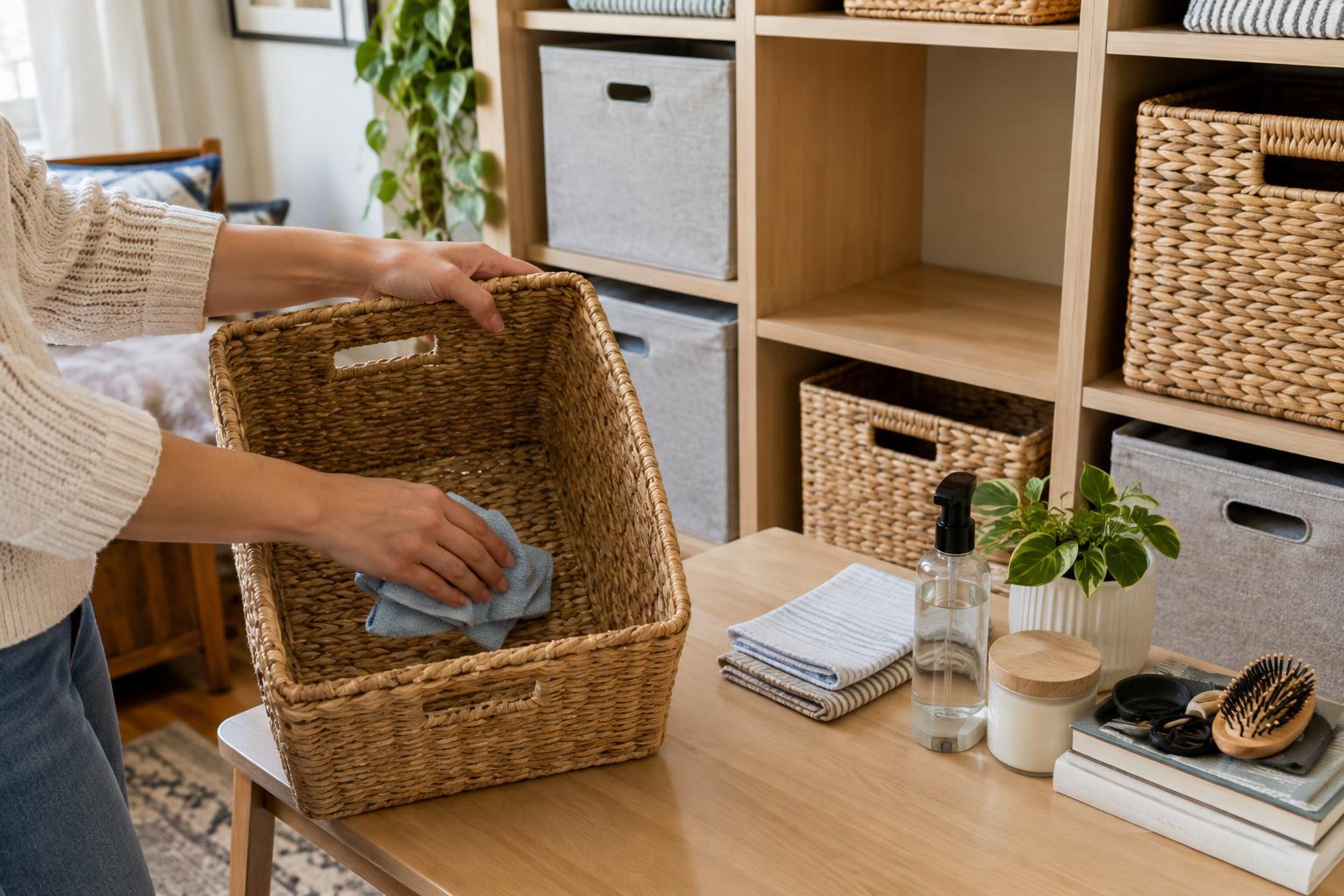
Toys are easier to put away when their container is close to where play happens. Try one open basket for items used regularly and a separate closed box for extras. The goal is not to make every toy invisible; it is to give the floor a quick reset after play. If you want ideas for keeping play part of a daily routine, Zabawa i aktywność · Koci Dom is another place to browse.
Finally, assign a home to the bulky things: the carrier, spare bedding and travel supplies. An under-bed space or the bottom of a closet may work if the carrier can be retrieved without dismantling the room. Review the setup after a week or two. If an item keeps being left out, its assigned spot may be too far away or too difficult to use. Adjust the storage to fit the routine rather than expecting the routine to fit the storage.