Start with the job the lamp needs to do
Before shopping, switch the lamp on in its usual spot and notice what works. Does it light a book comfortably, soften a dark corner, or mainly add a warm glow? A shade that looks attractive on a shelf may feel frustrating if it directs light away from the task you use the lamp for. In a compact room, where one lamp may serve several purposes, decide which job matters most.
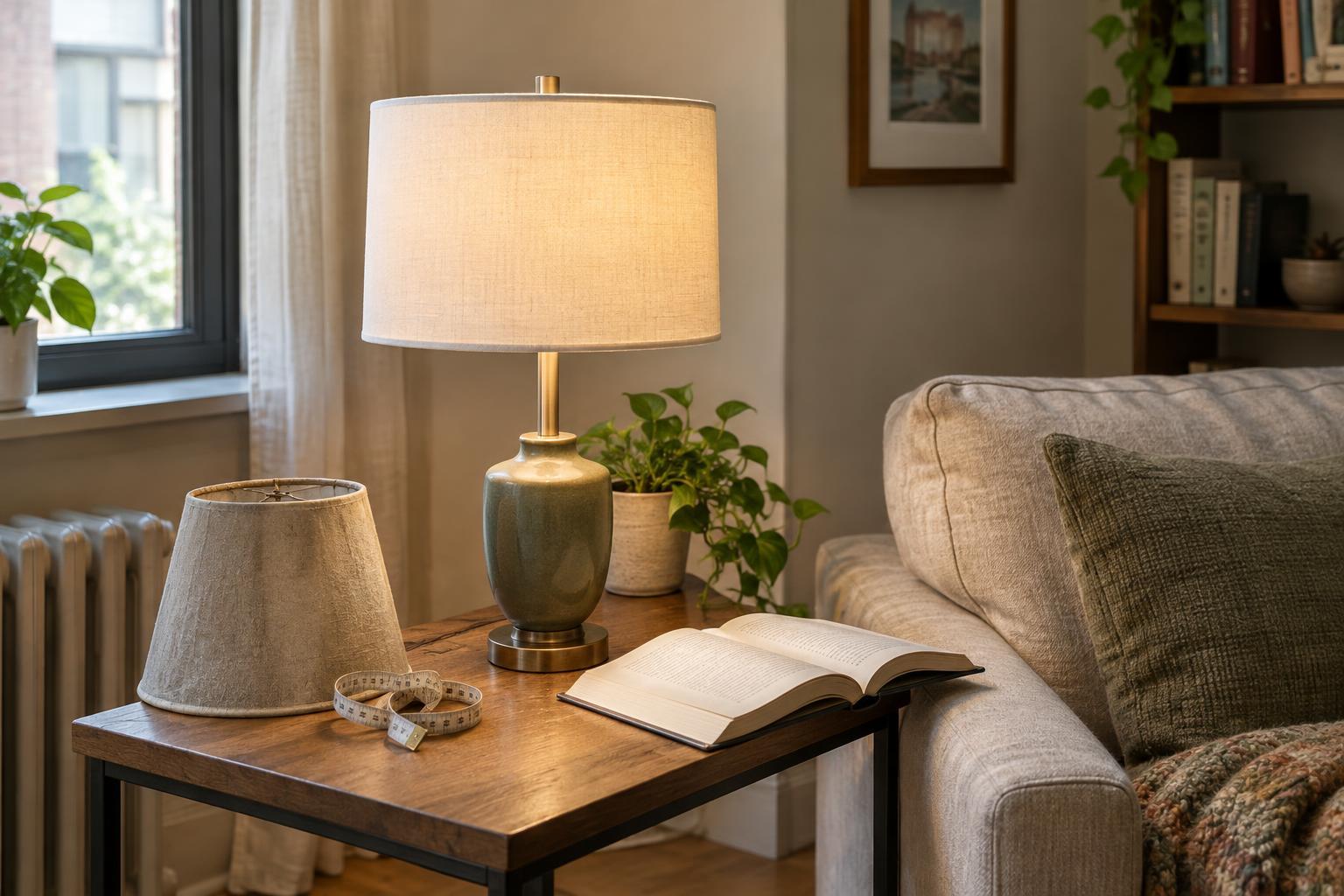
Look at the lamp from the places you normally sit or stand. A visible bulb can create glare at eye level, while a deep, opaque shade may leave a desk or side table too dim. Make a note of the shade’s current height, width and shape, even if you dislike its style. Those measurements give you a starting point rather than forcing you to guess from product photos.
Measure for a balanced size
Measure the existing shade across its widest point and from top to bottom. Then measure the lamp from its base to the point where the shade attaches. These dimensions help you compare replacements, but the most useful test is visual: the shade should look in proportion to the base, conceal the bulb from common viewing angles and leave room around nearby objects. A very wide shade can overwhelm a narrow console or take up valuable space on a bedside table.
Check clearance in the lamp’s actual location, not just on an empty worktop. Open the drawer below it, move the chair beside it and consider whether someone might brush past. If the lamp has an unusual base, rigid size rules may not help; a photo of it in place can make comparison easier. When possible, use a returnable shade and test it at home before removing any packaging you need for a return.
Match the attachment before choosing a style
Lampshades attach in different ways. Some rest on a metal frame, often called a harp, and are secured with a finial. Others fit around or sit beneath the bulb socket, while certain small shades clip onto a compatible bulb. Take the old shade off with the lamp unplugged and cool, then look closely at how it is held in place. Photograph the attachment and measure its opening before shopping.
Do not assume a shade will fit because its diameter looks right. Check the product description for the attachment type and opening size, and confirm that it will sit at the intended height on your lamp. A shade that sits too high may expose the bulb; one that sits too low may hide part of the base or crowd the socket. If the fitting is unclear, bring the old shade or your measurements to a shop rather than trying to force a mismatched attachment.
Choose material and shape for the light you want
A pale fabric shade usually lets some light pass through its sides, giving a softer glow across a room. A darker or lined shade may send more light through its open top and bottom instead. Shape matters too: a wide lower opening can spread light over a table, while a narrow shade may create a more focused pool. The result also depends on the bulb and the room’s wall colours, so treat these as tendencies, not guarantees.
If you need better task lighting, compare the bulb’s light output as well as the shade. A new shade cannot make a low-output bulb brighter. If the current lamp is comfortable for reading but looks too bright from the sofa, try a shade that screens the bulb from that angle rather than blocking light everywhere. Follow the lamp and shade makers’ guidance on bulb type and maximum wattage, and keep the bulb clear of the shade material.
Make the change count without overspending
For a low-cost refresh, keep the existing lamp and choose a shade that picks up one colour or texture already in the room. A simple neutral shade can calm a busy corner; a patterned one can add interest where there is little space for artwork. Check the price against what you need: the cheapest option is not good value if the attachment is wrong or the light becomes less useful.
Once fitted, place the lamp back in its usual position and test it after dark as well as during the day. Look for glare, shadows and enough light for everyday activities. If the shade feels awkward, try adjusting the lamp’s position before replacing anything else. One well-chosen shade can make a familiar room feel different while leaving its layout, furniture and budget largely untouched.