Start with the zone, not the rug
In a compact room, a rug does more than cover the floor. It can show where the sitting area ends and a desk, dining table or walking route begins. Before looking at sizes, decide which activity the rug should belong to. A living-room rug might connect a sofa and chairs; a dining rug should accommodate the table and chairs in use. Asking one rug to mark two separate activities can make both zones feel less clear.
Measure the furniture arrangement as it actually sits in the room. Include the space needed to pull out a chair, open a storage unit or walk past a coffee table. Then note door swings, floor vents and any places where a rug edge could become an obstacle. These practical boundaries give you a more useful starting point than the room’s wall-to-wall dimensions.
Connect the furniture so the zone feels intentional
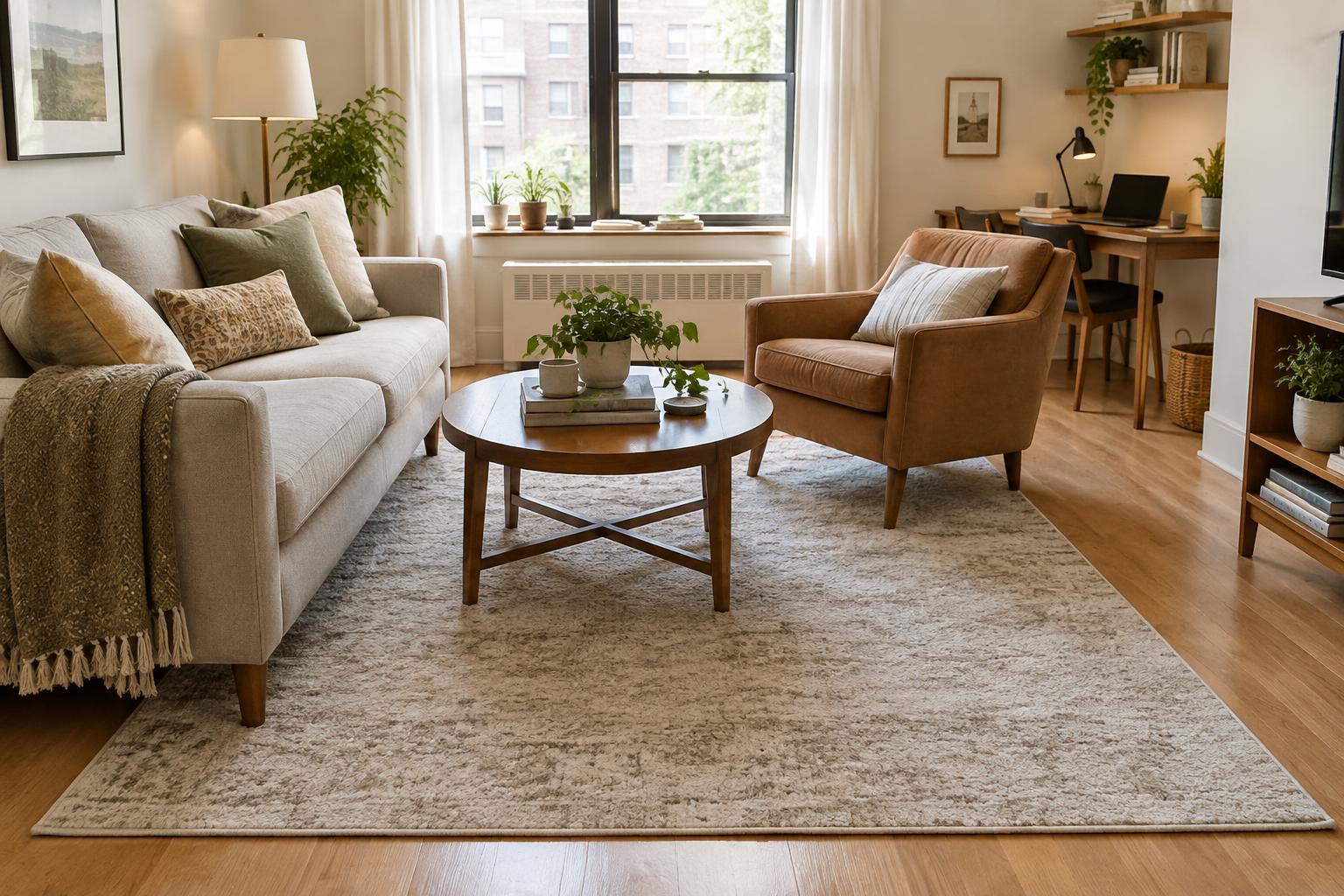
For a sitting area, try to choose a rug large enough for at least the front legs of the sofa and nearby chairs to rest on it. This connects the pieces visually without requiring the rug to extend beneath every piece of furniture. If the furniture floats away from the walls and space allows, placing all its legs on the rug can make the group feel even more settled.
A very small rug surrounded by a sofa and chairs may look like an isolated mat rather than the foundation of the seating zone. If a larger rug exceeds your budget, consider narrowing the furniture arrangement before sizing down. Moving a chair closer to the sofa or choosing a smaller side table may let a modestly priced rug connect the pieces. Leave enough clearance for people to move comfortably; a tidy-looking plan is not useful if it crowds the room in daily life.
Keep the exposed floor deliberate
Visible floor around a rug can make a room feel open, but the border should look intentional. Try to leave a reasonably consistent band of floor where the layout permits, rather than pushing the rug against one wall while leaving a wide gap at the other. In an irregular room, prioritize the edges most visible from the doorway and main seating position. The goal is balance, not perfect symmetry.
Avoid placing a rug edge exactly where people repeatedly step between zones. A slightly larger rug that carries a walkway across it, or a smaller one that stays clear of the route, may work better than a rug that ends in the middle. If the room has attractive flooring, you can let more of it show. If the flooring is visually busy, a larger, quieter rug may help the furniture group look calmer rather than making the room seem smaller.
Size for chairs, desks and flexible layouts
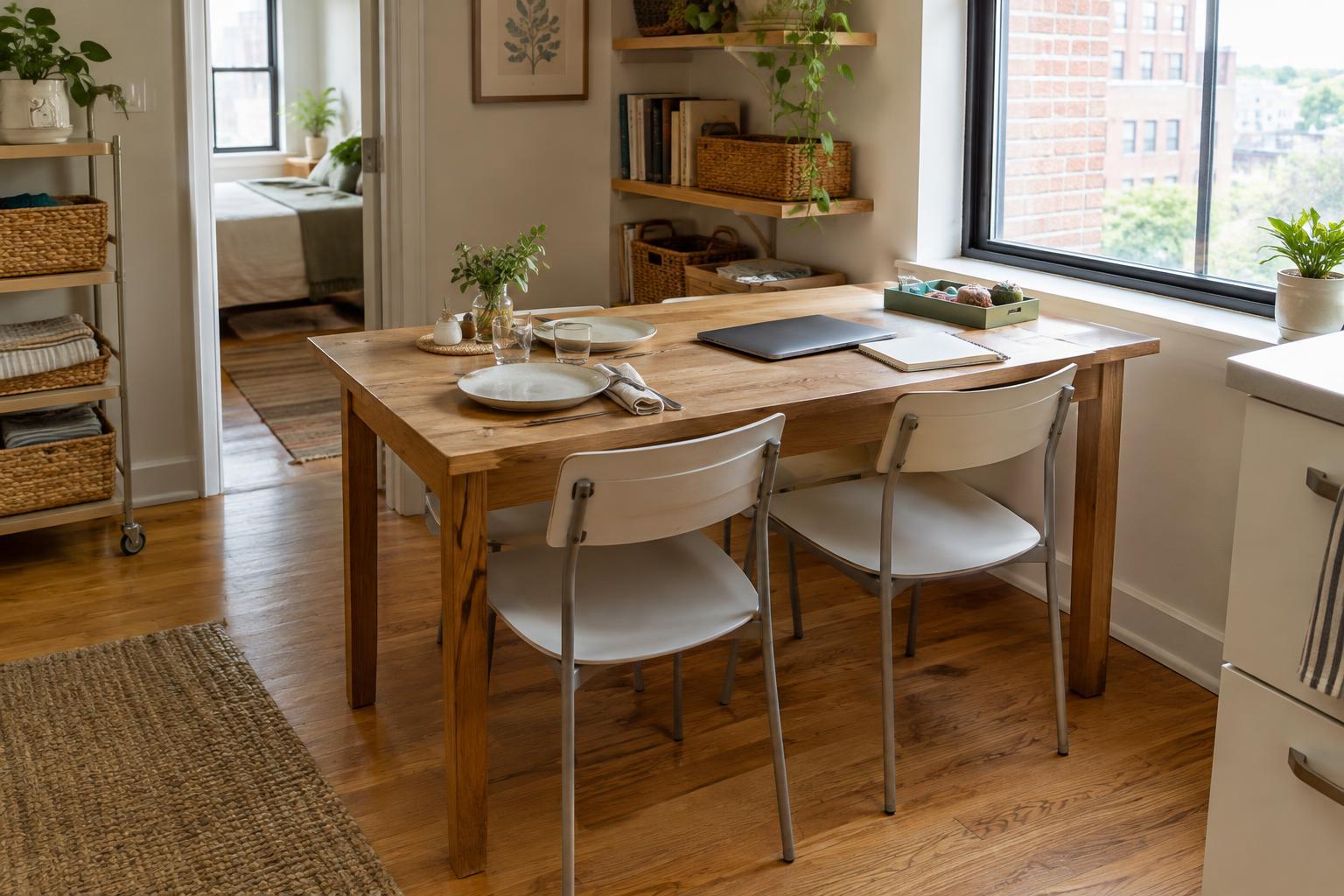
Dining areas need room for movement, not just for the table’s footprint. Check that chairs remain on the rug when someone pulls them back to sit down. A rug that fits neatly beneath a tucked-in table can feel awkward if chair legs catch its edge at every meal. In a small room, this may mean choosing a compact table arrangement or skipping the dining rug if there is not enough clearance.
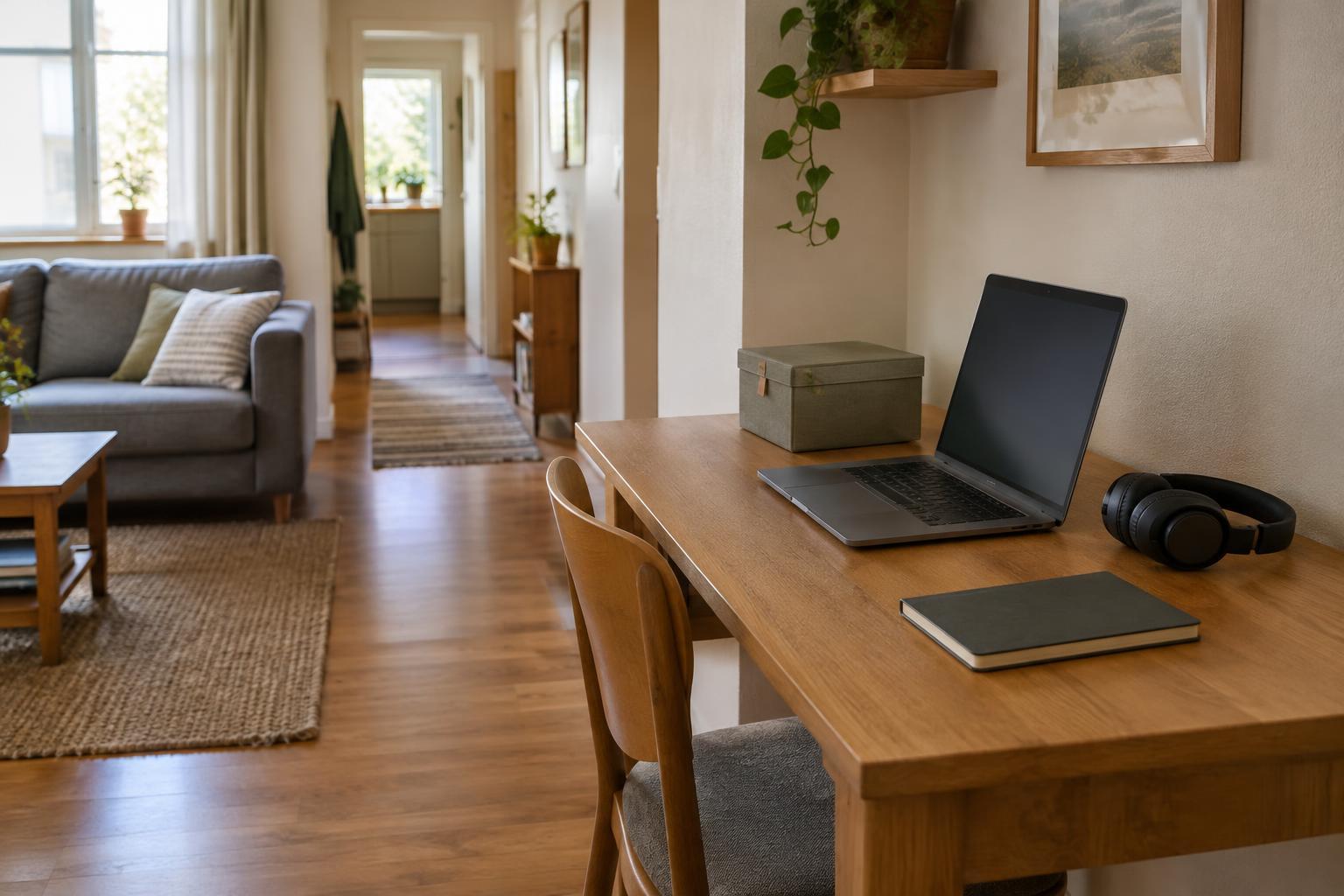
For a home-working corner, decide whether the rug is defining the whole workspace or simply adding comfort under a stationary chair. A rolling chair may move more easily on a suitable hard floor or chair mat than on a soft rug. In a multipurpose room, also consider whether furniture changes position during the week. Mark out the rug’s proposed edges on the floor with removable tape or sheets of paper, then test the layout in both its everyday and occasional configurations.
Use color and texture to support the size
Once you have a workable footprint, choose a rug that helps the zone feel connected to the rest of the room. A color close to the floor or nearby upholstery can create a gentle transition, while a contrasting rug can clearly identify a sitting or dining area. Neither approach is automatically better for a small room. What matters is whether the rug’s outline, pattern and furniture placement work together rather than competing for attention.
A low-pile rug is often easier to place under chairs and easier to clean around in a frequently used room. Check that any rug and pad you choose are suitable for your flooring, and secure edges so they do not slip or curl. Before buying, compare the marked-out footprint with available standard sizes. If none fits, it is usually better to adjust the arrangement or consider another rug shape than to buy a size that interrupts movement. The right rug should make the zone easy to recognize and the room easy to use.