Choose a dedicated zone, not an empty corner
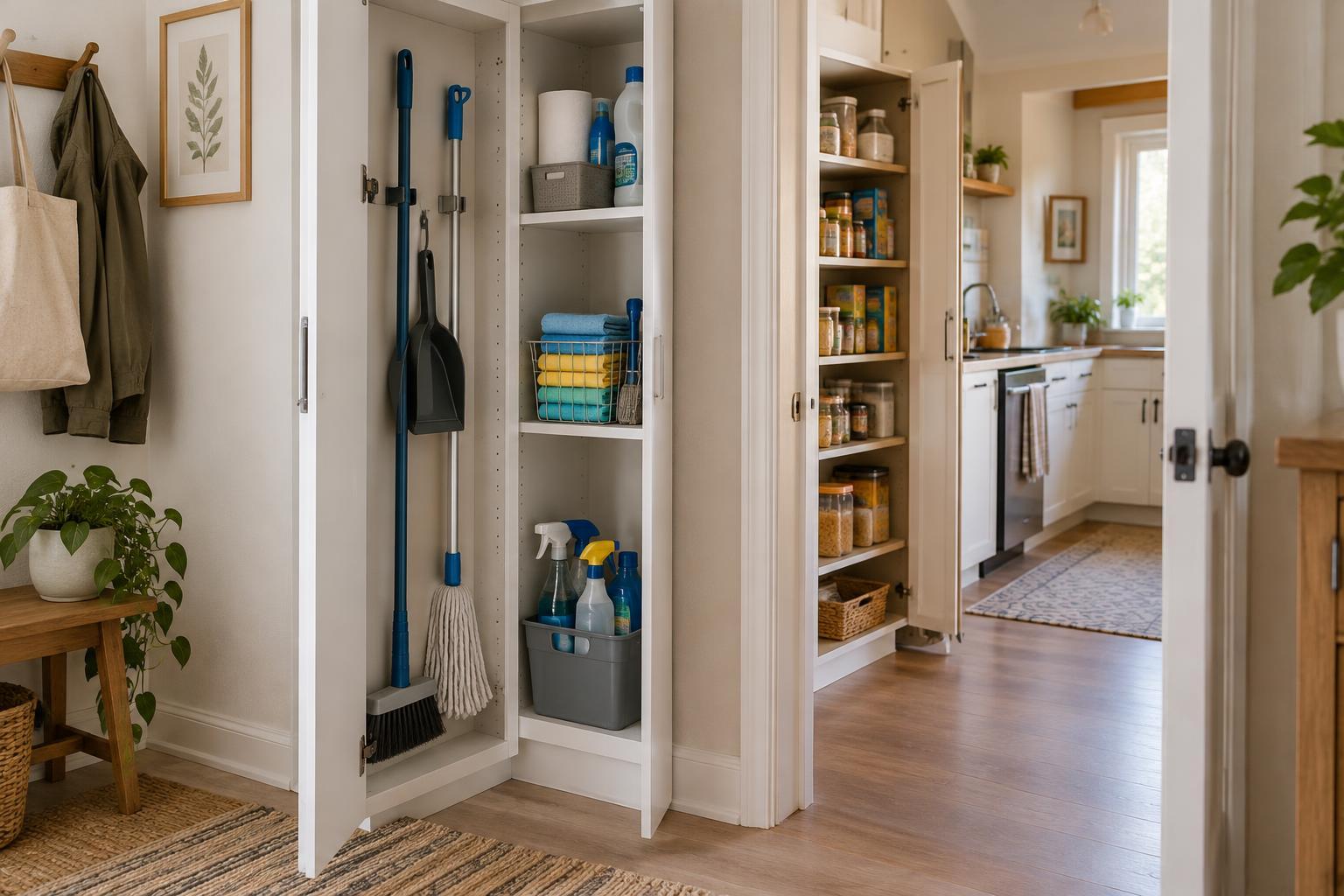
In a compact home, cleaning supplies often end up wherever there is room: beside pantry staples, under a bathroom sink or between spare towels. That may save a step today, but it makes supplies harder to find and easier to confuse with things used for eating or personal care. Start by choosing one identifiable cleaning zone, such as a utility cupboard, a section of a hall closet or a cabinet reserved for household upkeep.
The best location is one you can reach without moving a pile of unrelated belongings. Check that the door opens fully and that you can lift out a bucket or vacuum attachment without knocking other items over. If your only convenient cupboard also holds food or toiletries, keep cleaning products in a different enclosed spot rather than placing them side by side. A slim cupboard or a high, secure shelf in a suitable area may work better than a larger but crowded shared cabinet.
Separate products from the tools you reach for most
You do not need a custom storage system. Divide the zone into two simple groups: cleaning products and reusable tools. Keep bottles together in a sturdy tray that can catch minor drips and be lifted out for wiping. Give cloths, brushes and spare mop heads their own washable bin or shelf. This arrangement makes it easier to see what needs replacing without digging through damp tools or shifting bottles.
Store products upright in their original, labeled containers, and follow any storage directions on their labels. Avoid decanting them into drinking bottles or unmarked spray bottles, which can make their contents difficult to identify. Allow used cloths, sponges and brushes to dry before putting them away; a separate hook or ventilated container can help. Where children or pets can reach a cupboard, choose a more secure location and use an appropriate latch or lock.
Put everyday tools within easy reach
Accessibility is about reducing awkward steps, not fitting everything at arm’s length. Put the items you use frequently, such as a dustpan, brush or clean cloths, between roughly waist and shoulder height if your space allows. Reserve the lowest or highest positions for lighter, less-used items. Heavy buckets and machines should sit where you can lift them without reaching over bottles or pulling down a stacked pile.
Use the inside of a cupboard door for slim items only if the door still closes easily. A few hooks can hold a dustpan and brush; a wall clip can keep a mop handle from falling across the floor. Measure the space before buying organizers, especially around hinges, pipes and shelves. An inexpensive tray, two hooks and a labeled bin may solve the problem more effectively than a fitted system.
Make separation clear in shared or multipurpose rooms
Not every home has a utility room. If your cleaning zone sits in a hall, laundry nook or multipurpose closet, give it a visible boundary. A dedicated shelf and clearly labeled bins help other household members return things to the right place. Keep food, dishes, medicines and toiletries out of that zone. Do not use the cleaning tray as overflow storage for hand soap, snacks or spare toothbrushes just because there is space.
A portable caddy can make cleaning more convenient, but it needs a home too. Return it to the designated cleaning zone after use rather than leaving it on a kitchen counter or bathroom shelf. If you share the space with children or guests, keep the arrangement easy to understand: tools on hooks, products secured together, clean cloths in their own bin. Simple placement does more work than a complicated labeling scheme.
Keep the system useful with a short reset
Once the zone is set up, spend a few minutes resetting it after cleaning. Hang tools, put products back upright and move used cloths to the laundry or a place where they can dry. Wipe the tray if a bottle has dripped. Check labels before using products, and never combine cleaning products unless their instructions explicitly say to do so.
Every so often, pull out the tray and bin to see what has accumulated behind them. Remove empty packaging, replace worn tools when needed and return stray items to their proper homes. The aim is not a picture-perfect cupboard. It is a dependable place where you can find cleaning supplies quickly, put them away easily and keep them distinct from the things you eat or use on your body.