Start with the job, not the table
A movable table earns its place in a compact living room when it solves a recurring problem. Perhaps two people need somewhere to put drinks, but a permanent coffee table blocks the route to the door. Or perhaps one person occasionally uses a laptop on the sofa and wants a surface closer than a side table. Those are different needs, even if both can be met by a small piece of furniture.
Before shopping, notice where people sit, reach and walk during an ordinary evening. Mark the footprint of a possible table with paper or painter’s tape, then move around the room with a laundry basket or other bulky item. This simple trial can reveal whether the issue is the table’s size, its position or the fact that it stays out when no one needs it.
When nesting tables work better
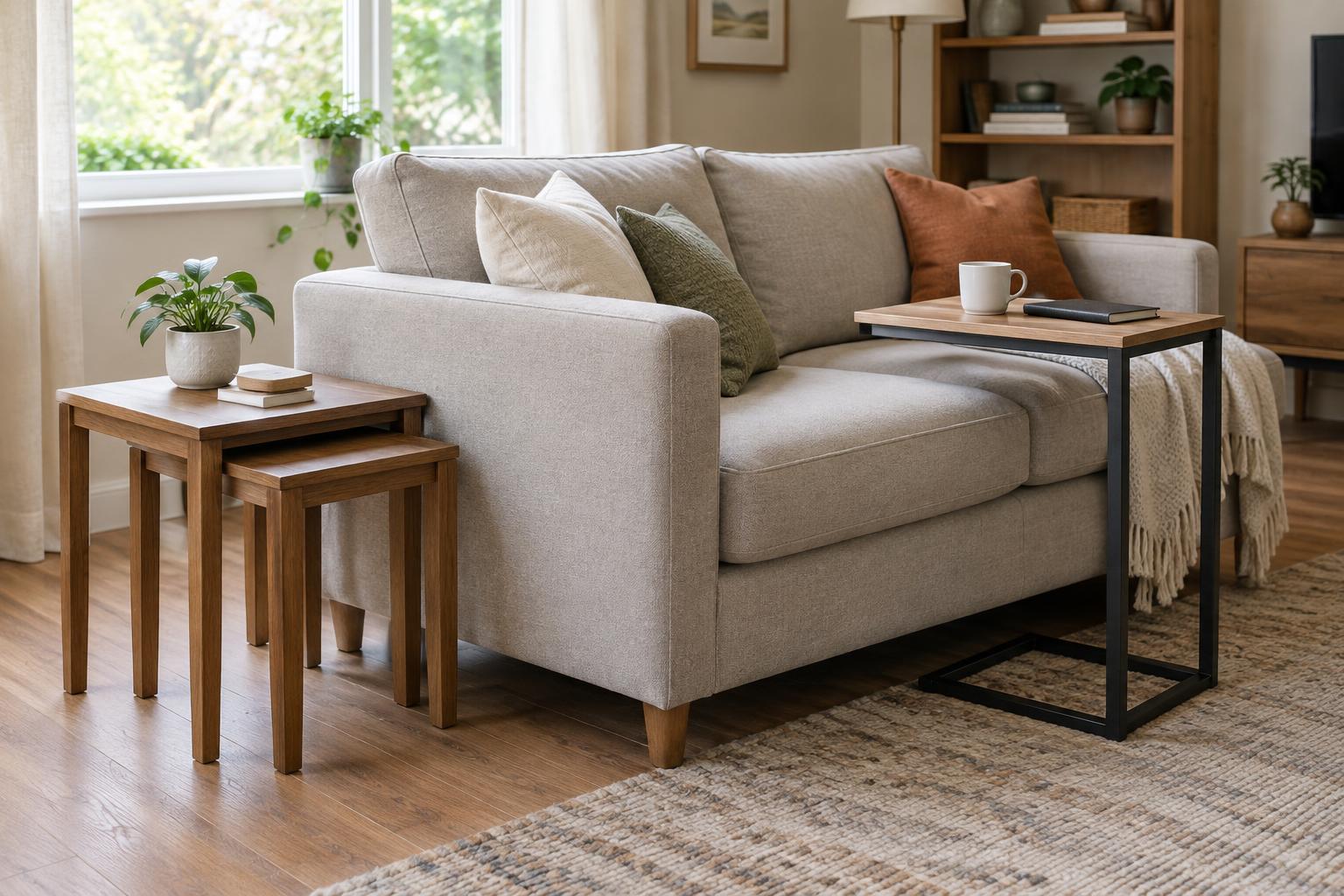
Nesting tables are a set of two or more tables designed to tuck together. Their main advantage is flexible capacity: pull out a second surface for a guest, a puzzle or a snack, then return it to the stack. They suit a room where seating changes often, especially if one table can live beside the sofa while another travels to an armchair.
The footprint is smallest only when the tables are nested. If you regularly spread out every table, plan for those positions rather than judging the set by its stacked dimensions. Check that the smaller tables slide in and out easily and that the tops remain useful when nested; some sets overlap so much that only part of each surface is accessible.
Nesting tables are often easier to place beside a sofa than directly in front of a sitter. They may be a good choice when the sofa sits low to the floor, leaving no room for another table’s base to slide underneath. They also offer a fallback: if one table is too close to a walkway, you can move it without rearranging the whole seating area.
When a C-table earns its place
A C-table has a base that extends under seating and a top that reaches over the seat edge. It can bring a drink, book or small laptop close without requiring someone to lean toward a coffee table. This makes it useful for a favorite reading chair or a sofa seat that doubles as an occasional work spot.
Fit matters more than the name. Measure the space beneath the sofa or chair, including any low frame, support bar or foot that could stop the base. Then compare the table’s top height with the seat cushion when someone is sitting on it. A top that looks well positioned beside an empty sofa may feel awkwardly high or low in use.
A C-table is not automatically a compact-room solution. Its base needs a clear path under the seat, and its upright side may catch a foot or interrupt a route beside the sofa. If children or pets often brush past the seating, consider a model with a stable base and rounded edges, and keep hot drinks away from spots where the table is likely to be bumped.
Check movement, stability and storage
For either style, imagine moving the table with one hand while carrying something in the other. Weight and grip affect whether a table is genuinely movable. A light table is convenient, but it should not wobble under the items you expect to use on it. In a shop, gently test the top and joints; when buying online, check the listed dimensions, construction and care instructions rather than relying on room photos alone.
Think about where the surface goes when the room changes purpose. Nesting tables need a home where the full set can stack without hiding an outlet or crowding a door. A C-table may tuck against a wall, but its projecting top and base can make it less tidy to park than it first appears. Check your floor finish, too: suitable foot pads can help protect a floor when a table is moved frequently, while casters need enough room to roll without catching on a rug.
Make a choice that fits your budget and habits
Choose nesting tables if you need occasional surfaces for several seats and have a reliable place to stack them afterward. Choose a C-table if one seat needs a close, reachable surface and the base fits comfortably beneath it. If both needs come up, try solving the most frequent one first; adding a second piece later is easier than finding space for two tables you rarely use.
Set a budget around the features you will actually use. A simple, sturdy table in the right dimensions may serve you better than an elaborate set with extra pieces. Before buying, compare the cost and condition of secondhand options, check for loose joints or damaged edges, and measure both the table and its intended parking spot. The best small-room surface is the one you can put to work—and put away—without making everyday movement harder.