Start with the guests you actually seat
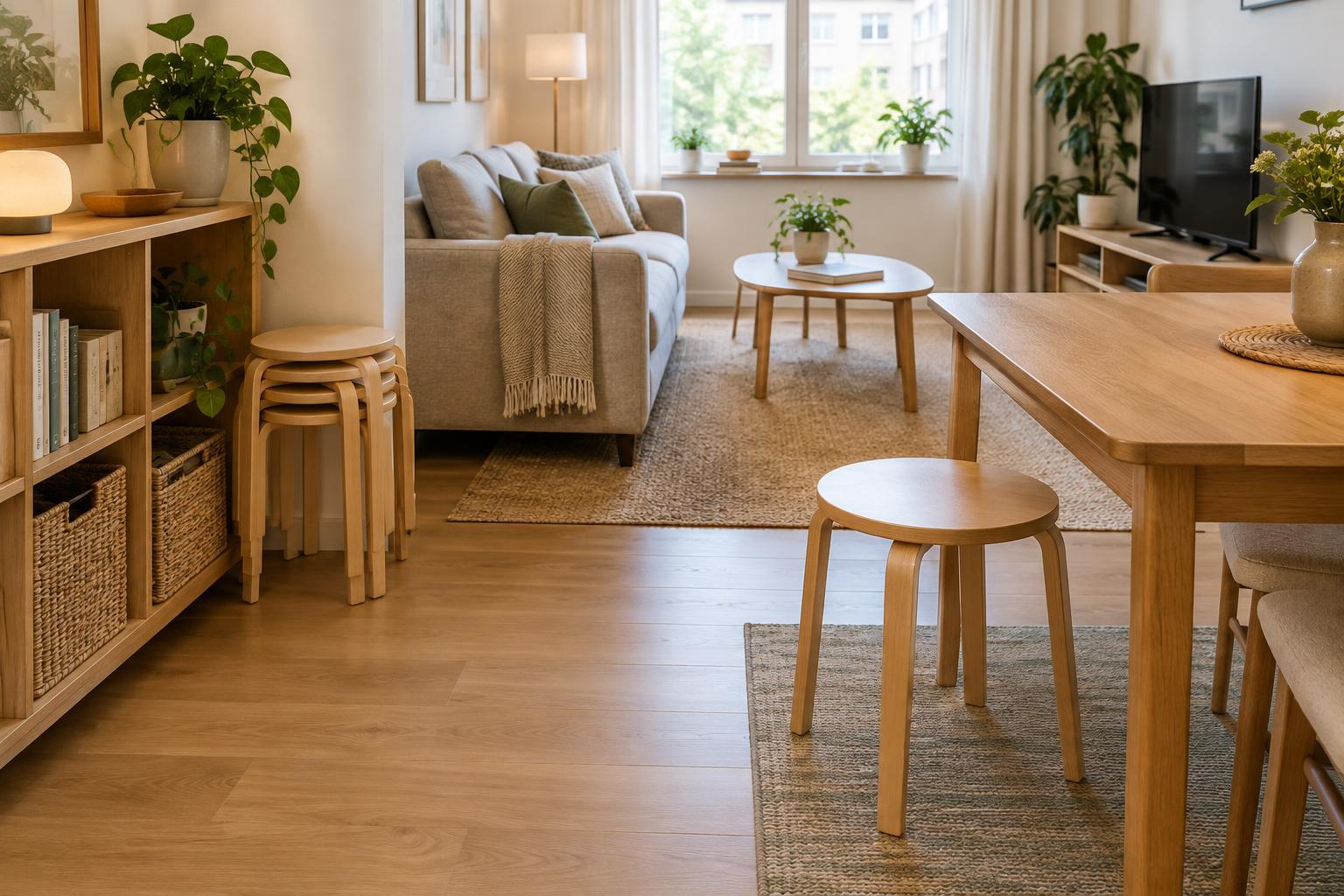
A compact room does not need to be arranged for its busiest possible day. If you usually seat two people but occasionally host four, two stackable stools may be more useful than two extra chairs that live around the table all week. They can come out for a meal, a board game or a short visit, then return to one small footprint.
Before shopping, count how many extra seats you realistically need and decide where people would use them. A stool at a dining table needs a suitable seat height and enough legroom. A low stool that works beside a sofa may be awkward at a desk. If guests tend to stay for long meals, consider whether a backless seat will be comfortable enough; a folding chair might be the better occasional choice.
Measure the stack, not just one stool
Measure the proposed storage spot before choosing a design. Check its width and depth, then look at the stacked height for the number of stools you plan to buy. Stools with wide, angled legs may stack neatly but occupy more floor space than their seats suggest. Also allow enough room to lift the top stool off without scraping a shelf or wall.
A visible stack can fit beside a sideboard or at the end of a kitchen counter, provided it stays out of door swings and walking routes. If the only available spot is in a narrow hallway, it may not be a good spot at all. In a small home, storage succeeds when the item is both easy to reach and easy to ignore during an ordinary day.
Choose for stability and easy upkeep
Try a stool on a level floor if you can, or check the maker’s dimensions and stacking guidance when buying online. Look for a stable base, a seat large enough for its intended users and a stated weight limit that suits your household. Confirm how many stools the maker recommends stacking. A tall pile that wobbles or has to be moved whenever you open a cupboard defeats the point of compact storage.
Materials affect daily use as much as appearance. A wipe-clean seat may suit a kitchen or craft area; a padded seat may feel nicer but need more care around spills. Check the feet, too. Protective pads can help reduce marks on hard floors, but they should fit securely and not make the stool unsteady. Whatever the material, use a stool as seating rather than as a step ladder unless it is specifically designed for that purpose.
Give each stool a place when it comes out
Extra seating works best when you plan its position in advance. Pull a stool to the short side of a table, angle one toward the sofa for conversation, or place one near a low coffee table for a brief activity. Leave clear access to doors, drawers and the main route through the room. A spare seat is less helpful if everyone has to squeeze past it.
Stools can take on small secondary roles between visits, but keep those uses easy to undo. One might hold a book beside an armchair or support a lightweight tray during a quiet evening. Avoid turning the whole stack into a permanent landing place for bags and paperwork. If clearing it takes ten minutes, the seating is no longer ready when someone drops by.
Test the idea before buying a set
You do not have to furnish every possible occasion at once. Start with one or two stools and use them through a normal week and one get-together. Notice whether guests choose them, whether they tuck away easily and whether you have a sensible place for the stack. This trial can help you avoid paying for a larger set that solves a problem you rarely have.
If you are shopping secondhand or comparing lower-cost options, prioritize a sound frame and a stable fit over a perfect color match. Check that the stools stack as intended and that none has loose joints or damaged feet. For a more cohesive look, choose a finish that relates to something already in the room, such as the table legs or shelving. The goal is not to hide the stools completely; it is to make occasional seating feel like a planned part of a flexible room.