Start with the job you need it to do
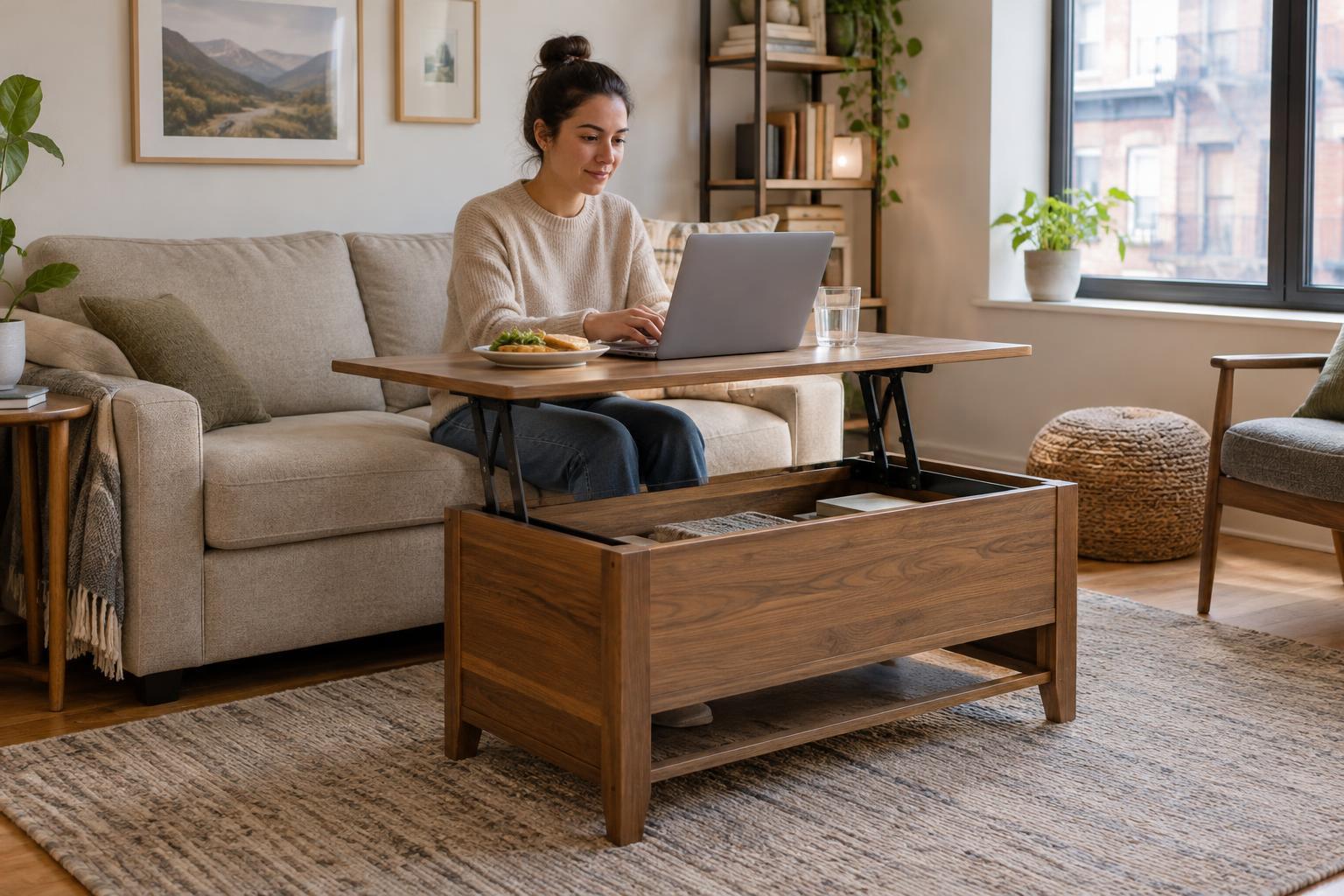
A lift-top coffee table works best when you want a surface for short, occasional tasks without keeping a separate dining table or desk in the room. Raising the top can bring a plate, notebook or laptop closer while you remain on the sofa. When the task is finished, the surface drops back to coffee-table height, leaving the room visually and physically open.
That flexibility has limits. A meal for one or two may fit comfortably, while a spread of serving dishes probably will not. A brief session of emails may be convenient, but a full day of computer work calls for closer attention to posture and screen position. Decide which activity matters most before shopping: a table that feels right for a dinner plate may not put a laptop keyboard at a comfortable height.
Check the raised position against your sofa
The useful measurement is not just the table’s height when raised. Sit where you normally sit and consider where the lifted edge will land relative to your knees, elbows and torso. You should be able to reach the surface without leaning forward for the whole meal or task. Check the depth, too: some tops move toward the sitter as they rise, while others mainly rise in place.
Allow space for the top’s full path of movement, not only its final position. A rug, nearby armchair or tight walkway can make a promising table awkward to open. If two people will use it from the same sofa, check whether both can reach useful parts of the raised surface. A large tabletop is little help if its supports or position leave one person with no comfortable place to sit.
Match the mechanism to everyday use
A raised top should feel steady enough for the tasks you have in mind. If you can try a table in person, lift and lower it several times, then apply gentle pressure where a plate or forearms would rest. Notice any wobble, abrupt movement or awkward grip points. Check whether the top stays in place during normal use and whether the manufacturer gives a load limit for the raised surface.
Think about what must be moved before opening it. If the tabletop usually holds a lamp, vase and stack of books, lifting it may become a chore. A tray can make small items easier to relocate, but the simplest setup is often one that keeps the moving top mostly clear. Storage beneath the lid is useful for remote controls or supplies you do not need during a meal; avoid treating it as space you can access easily while dishes or a laptop are on top.
Use it comfortably for meals and laptops
For meals, look for enough clear area for a plate, drink and cutlery without placing anything near the edge. A washable placemat or tray can catch crumbs and small spills. Lower the top only after clearing it, and keep fingers, cables and loose fabric away from hinges and closing gaps. If children use the table, consider whether they can operate the mechanism safely or should leave that part to an adult.
For laptop use, the raised surface may reduce the urge to balance a computer on your knees, but it does not automatically create a good workstation. If you find yourself hunching, stretching your wrists or looking sharply downward at the screen, change position or use a more suitable work surface. A separate keyboard and a raised screen can help for longer sessions, although they also require more tabletop space. Keep charging cables out of the walking route.
Know when another option is simpler
A lift-top table is a strong candidate when the sofa is your natural spot for an occasional solo meal, a shared snack or a short laptop session, and the room has enough clearance to open the top easily. It can be especially helpful when an extra permanent table would crowd a compact living area. Before buying, mark out the table’s footprint and raised position with tape or cardboard, then try moving around the room as you normally would.
Choose a different solution if you need a firm surface for daily, extended work, seating for several diners or frequent access to items stored inside the table. A compact folding desk, a wall-mounted drop-leaf surface or a small dining table may serve those routines better. Compare the total cost of the options you would actually use, including any chair, lighting or accessories needed to make the space comfortable. The best flexible furniture is the piece that makes an ordinary day easier, not one that requires a room reset every time you open it.