Set up a routine you can repeat
In a compact home, a mug on the desk, shoes by the door and dishes beside the sink can make the whole room feel crowded. The aim of a daily routine is not to clean every corner. It is to restore the spaces you use most so that cooking, working and relaxing are easier the next day.
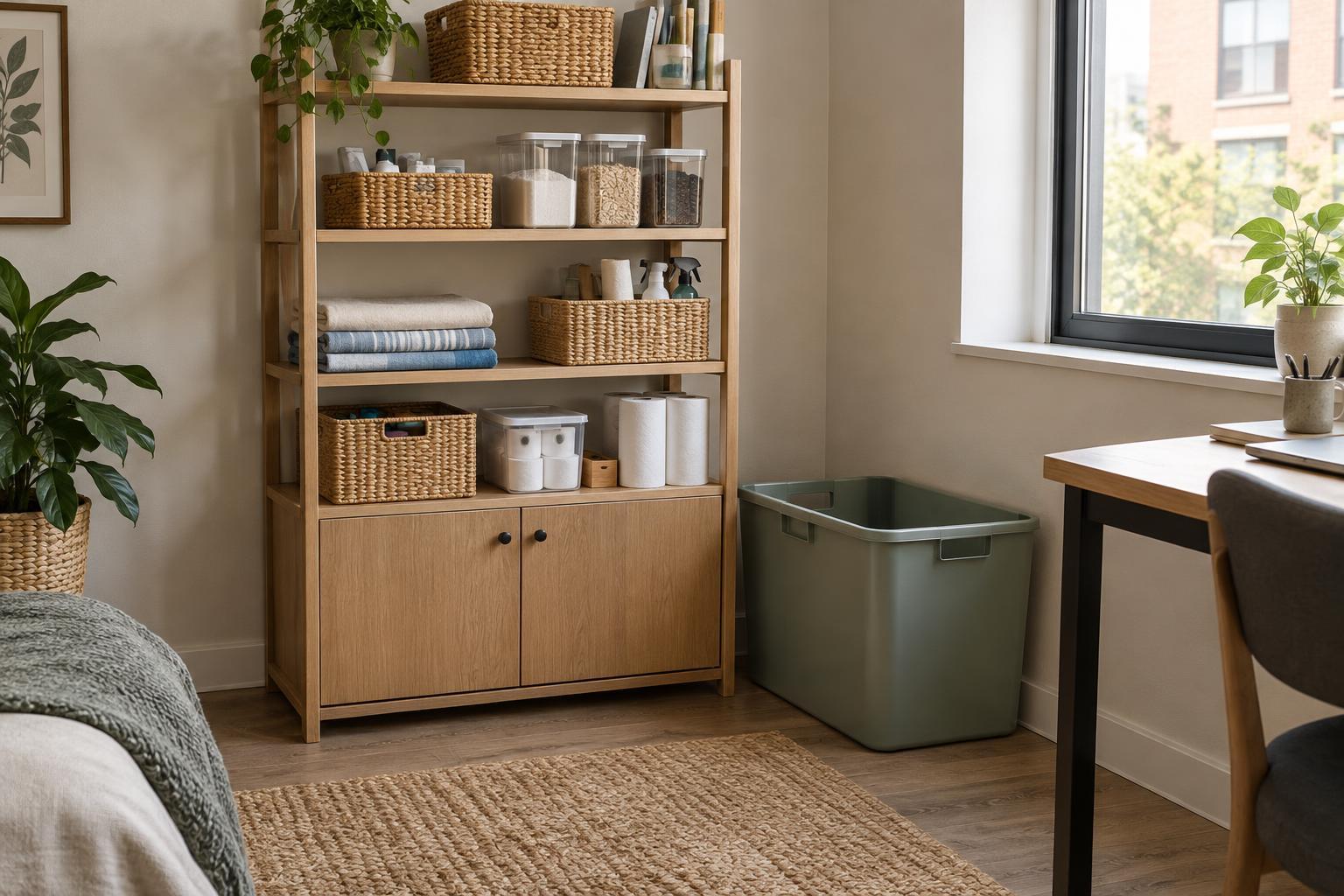
Keep basic supplies together: a cloth for kitchen surfaces, a separate cloth for the bathroom, your usual suitable cleaners and a small bin or bag for rubbish. Store them where they are easy to reach but safely away from children and pets. Follow product labels, and never mix cleaning products. A timer can help you stop when the 15 minutes are up instead of turning one task into an unplanned deep clean.
Minutes 0–2: Clear the places you use
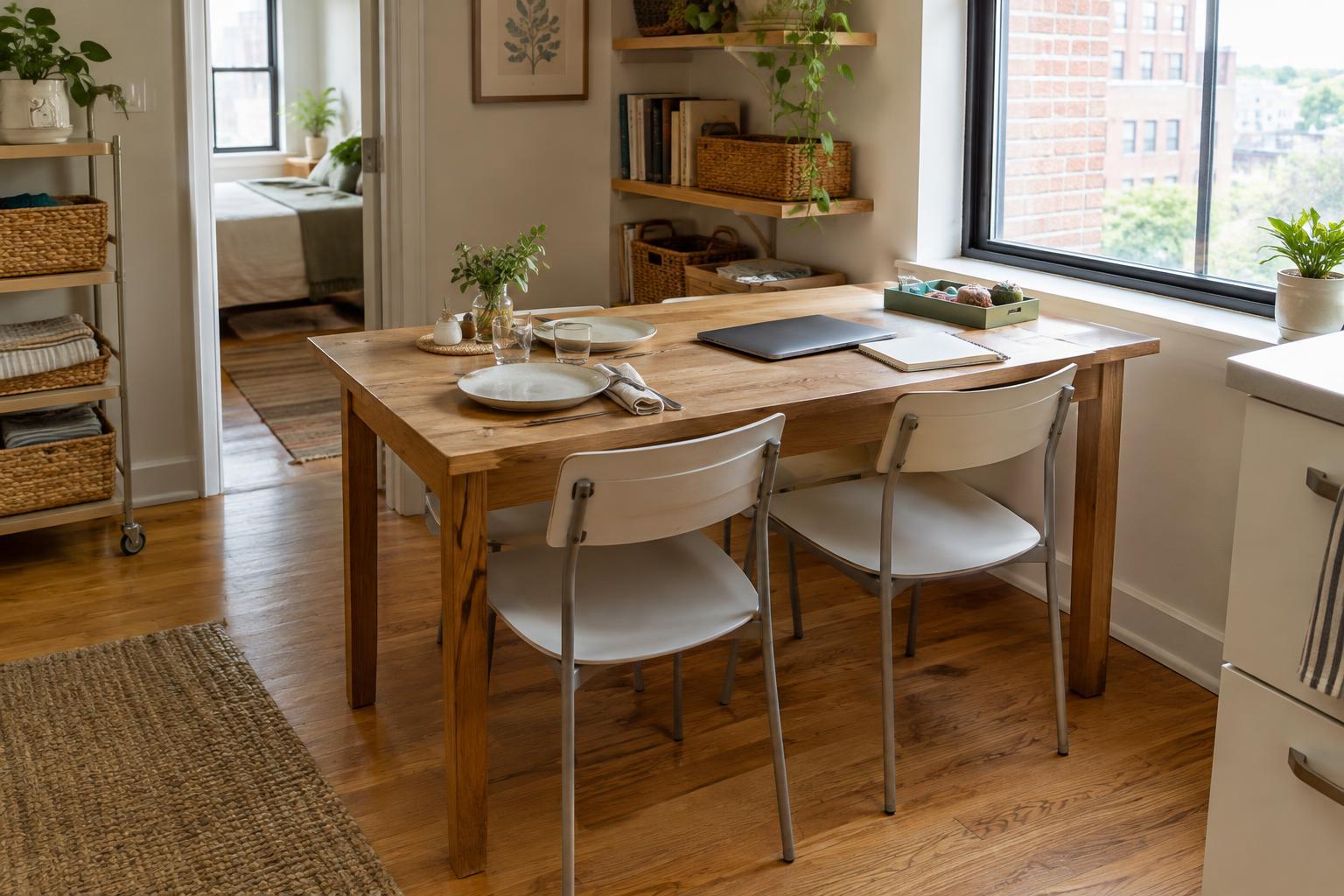
Start with a two-minute reset. Carry a basket or simply walk a loop through the room, returning obvious items to their homes: a coat to its hook, a charger to its drawer and dishes to the kitchen. Put rubbish in the bin as you go. Focus on the table, sofa, desk and entryway rather than opening cupboards or sorting a pile of papers.
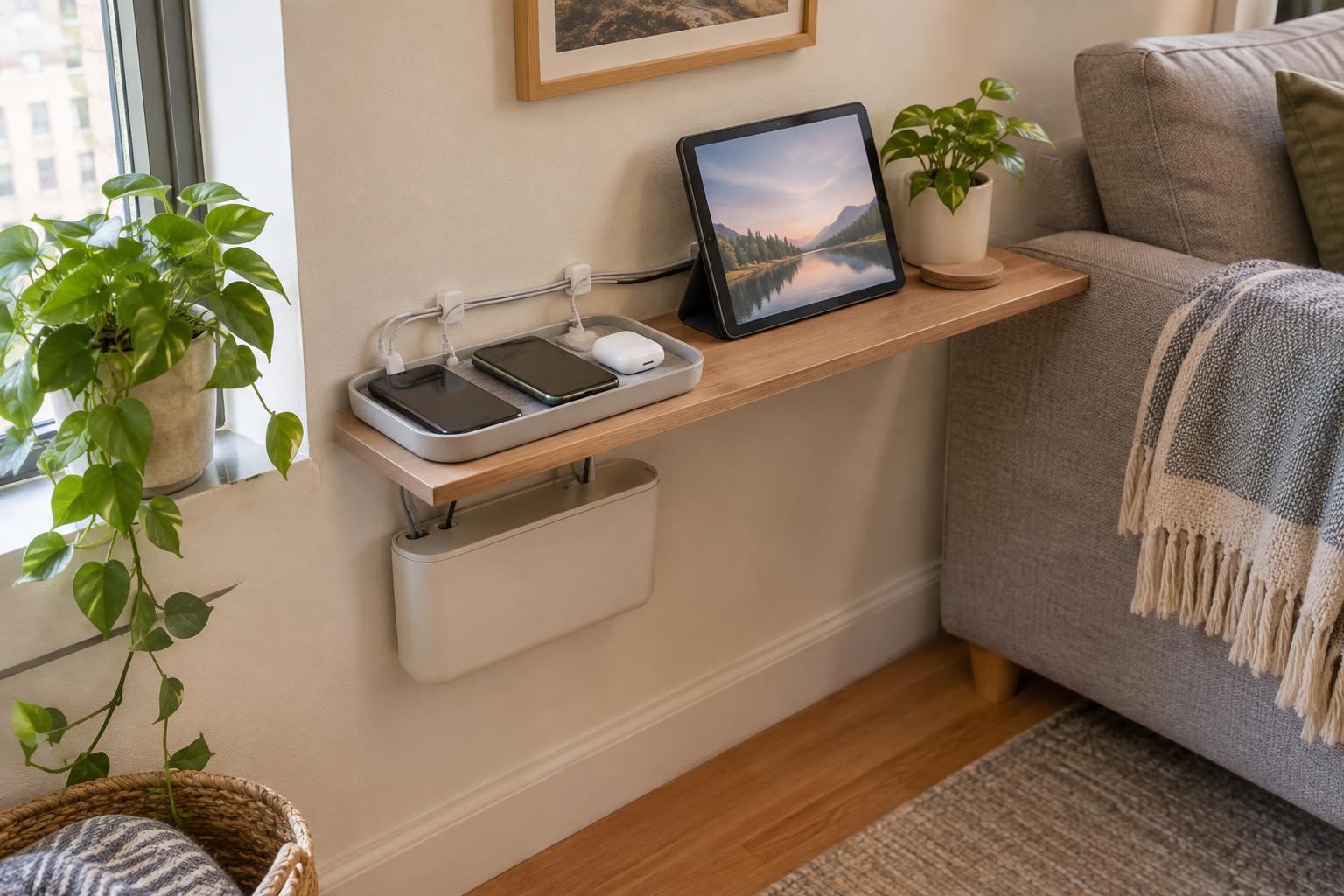
If an item has no home, put it in one temporary spot and move on. A daily timer is not the moment to reorganize storage. Notice what repeatedly lands in the wrong place, though. If keys always collect on the dining table, a small tray near the door may make tomorrow’s reset quicker.
Minutes 2–6: Restore the kitchen
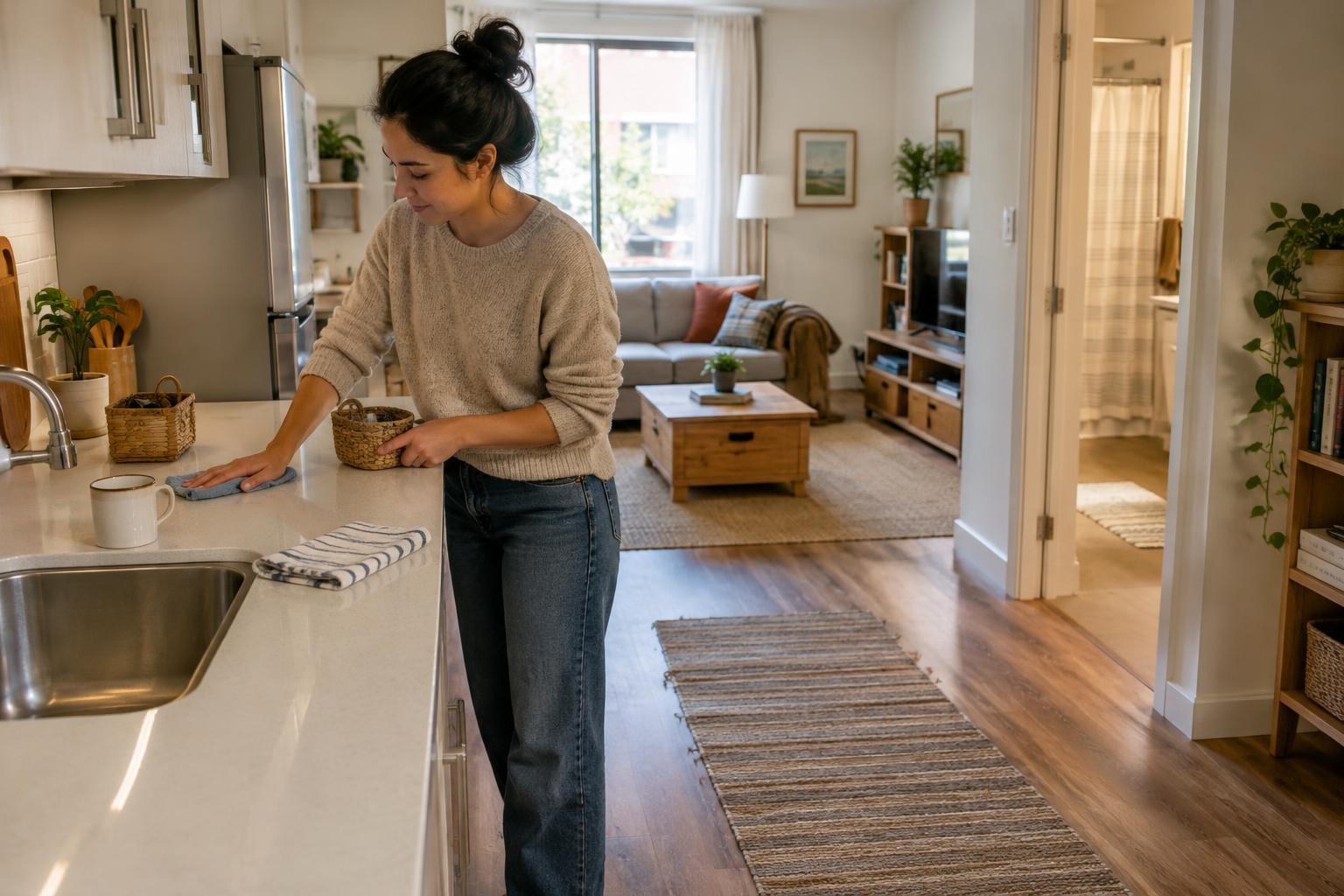
Spend four minutes on the kitchen, even if it is just one wall of a multipurpose room. Move food away, load a dishwasher or wash the few dishes needed to leave the sink usable, then wipe the main preparation surface. Give the hob a quick wipe if it is cool and needs one. Finish by checking for crumbs or spills where you will prepare the next meal.
Choose the tasks that will make breakfast or dinner easier, not the ones that look most impressive. A full sink may take longer than four minutes; if so, use this block to clear what you can and plan a separate catch-up session. Scrubbing appliances, emptying every cupboard and dealing with stubborn stains can wait for a longer cleaning slot.
Minutes 6–13: Check the bathroom and main walkway
Give the bathroom four minutes. Put toiletries back, wipe visible splashes from the sink and tap, and check the toilet for anything that needs prompt attention. Replace an empty toilet roll and put damp towels where they can dry. Use bathroom supplies separately from kitchen cloths, and follow the cleaner’s instructions for the surface you are treating.
Use the next three minutes on the floor area that collects the most daily debris. That might be the entryway, the route between kitchen and desk, or the patch beneath the dining table. Sweep, use a handheld vacuum or spot-clean as appropriate for your floor. There is no need to move furniture or cover the whole room each day. In a multipurpose space, keeping the main walkway clear often makes the biggest practical difference.
Minutes 13–15: Empty, reset and stop
Use the final two minutes to empty a small bin if it is full, return supplies and set out anything that will make the next day run more smoothly, such as a clean dishcloth. Take one look around for an urgent spill or obstruction. Then stop. A routine is easier to maintain when it has a clear finish.
Treat the timings as a guide rather than a test. If you did not cook, give those kitchen minutes to laundry or the desk. If the bathroom is already tidy, spend an extra minute on the entryway. Share tasks with other household members where possible, and keep occasional jobs such as changing bedding or cleaning behind furniture on a separate list. The daily routine works best when it stays small enough to repeat.