Start with the job, not the bottle
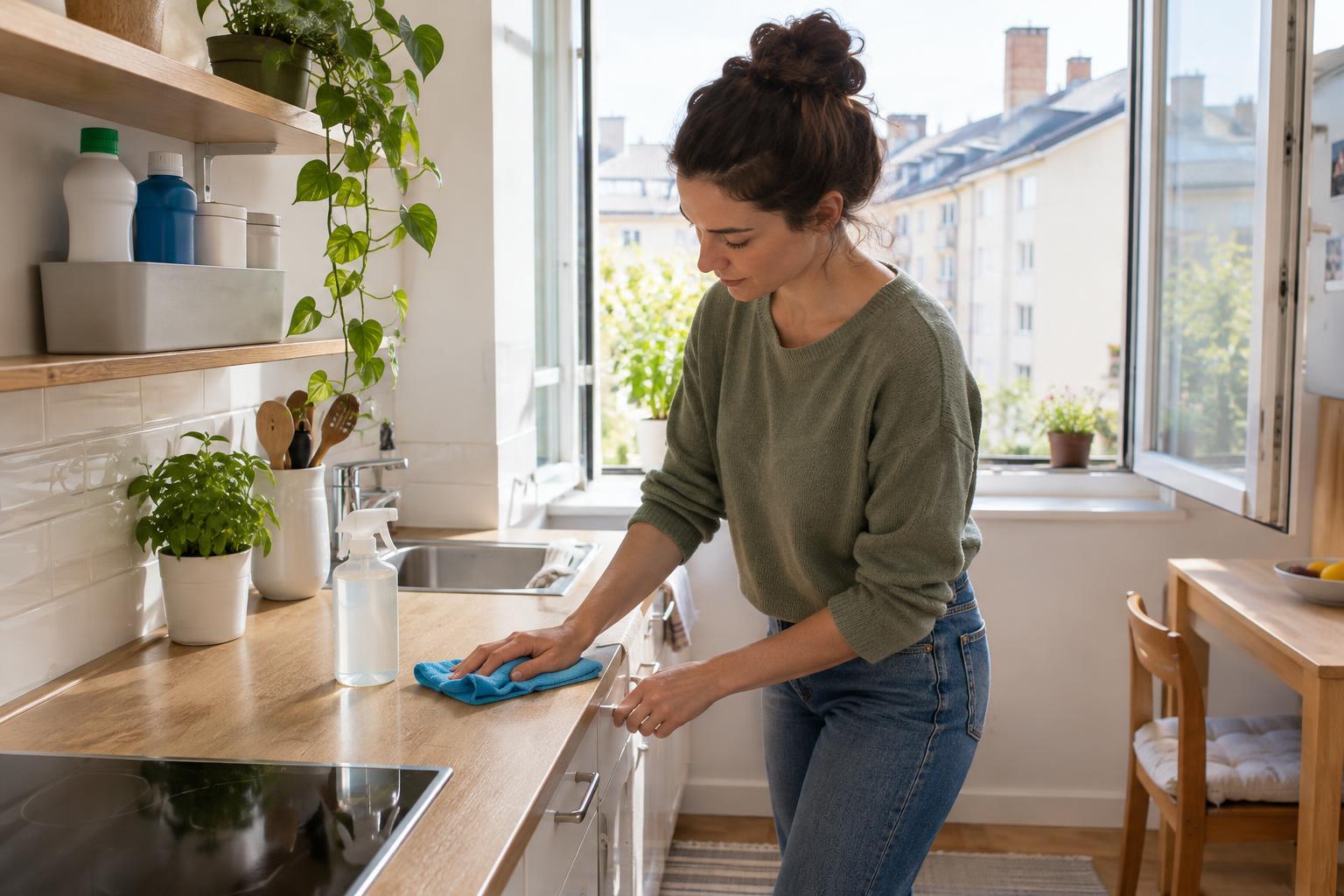
In a compact home, one counter might serve as a desk, a meal-prep area and a place to sort laundry. It is tempting to reach for the strongest product each time it needs attention. Often, though, the first step is simply to remove crumbs or dust, then clean the surface with a product suited to its material. Check the label before using a cleaner on painted wood, stone, fabric or an electronic device.
Cleaning and disinfecting are different tasks. Routine dirt usually calls for cleaning; a disinfectant may be useful when its label indicates it is appropriate for the surface and situation. If you use one, follow its directions, including any required time the surface must remain wet. Spraying and immediately wiping it away may not match the label instructions.
Never mix cleaning products
A common mistake is combining products in the hope that they will work faster. Do not mix bleach with ammonia, vinegar, acidic toilet cleaners or other cleaning products. Some combinations can release dangerous fumes. Avoid mixing products even when both are described as household staples or one seems mild. Use each product only as its label directs.
Accidental mixing can happen without pouring two liquids into the same bucket. It might occur when a second cleaner is applied to a sink, toilet or cloth that still holds the first. Finish one task before starting another: rinse the surface as directed, clear away used materials and let the area dry when appropriate. Never add a different product to a partly used spray bottle.
If products are mixed by mistake and you notice irritating fumes, leave the area and keep others away. Seek guidance from your local poison-control service or emergency services as appropriate. Do not try to counteract the mixture with another chemical.
Use the amount the label calls for
Extra cleaner can leave sticky residue, streaks or a film that attracts dirt. On floors, it may also take more rinsing and drying before the space is comfortable to use. Concentrated products are especially easy to overuse: measure any dilution according to the label rather than guessing or assuming a stronger solution is better.
For a small surface, put the recommended amount on a suitable cloth when the label permits it, instead of spraying broadly across nearby books, bedding or electronics. This gives you more control in a multipurpose room. Keep cleaning cloths separate from food-preparation cloths, and launder reusable ones according to their care instructions. A fresh cloth and the right amount of product can make a bigger practical difference than repeated applications.
Protect surfaces and give the room air
An all-purpose label does not mean a product is suitable for every finish. Abrasive powders may scratch some glossy surfaces; acidic cleaners may harm certain stone or grout finishes; moisture can damage unfinished wood or electronics. Before tackling a visible area, read both the product directions and any available care guidance for the surface. When compatibility is uncertain, test in an inconspicuous spot.
Ventilation matters, particularly in a windowless bathroom or a room where you also work or sleep. Follow any ventilation directions on the product label, open a window or door when practical, and avoid lingering in a space with strong fumes. Keep children and pets away from the work area until surfaces are ready for normal use under the label directions.
Keep a small, readable cleaning kit
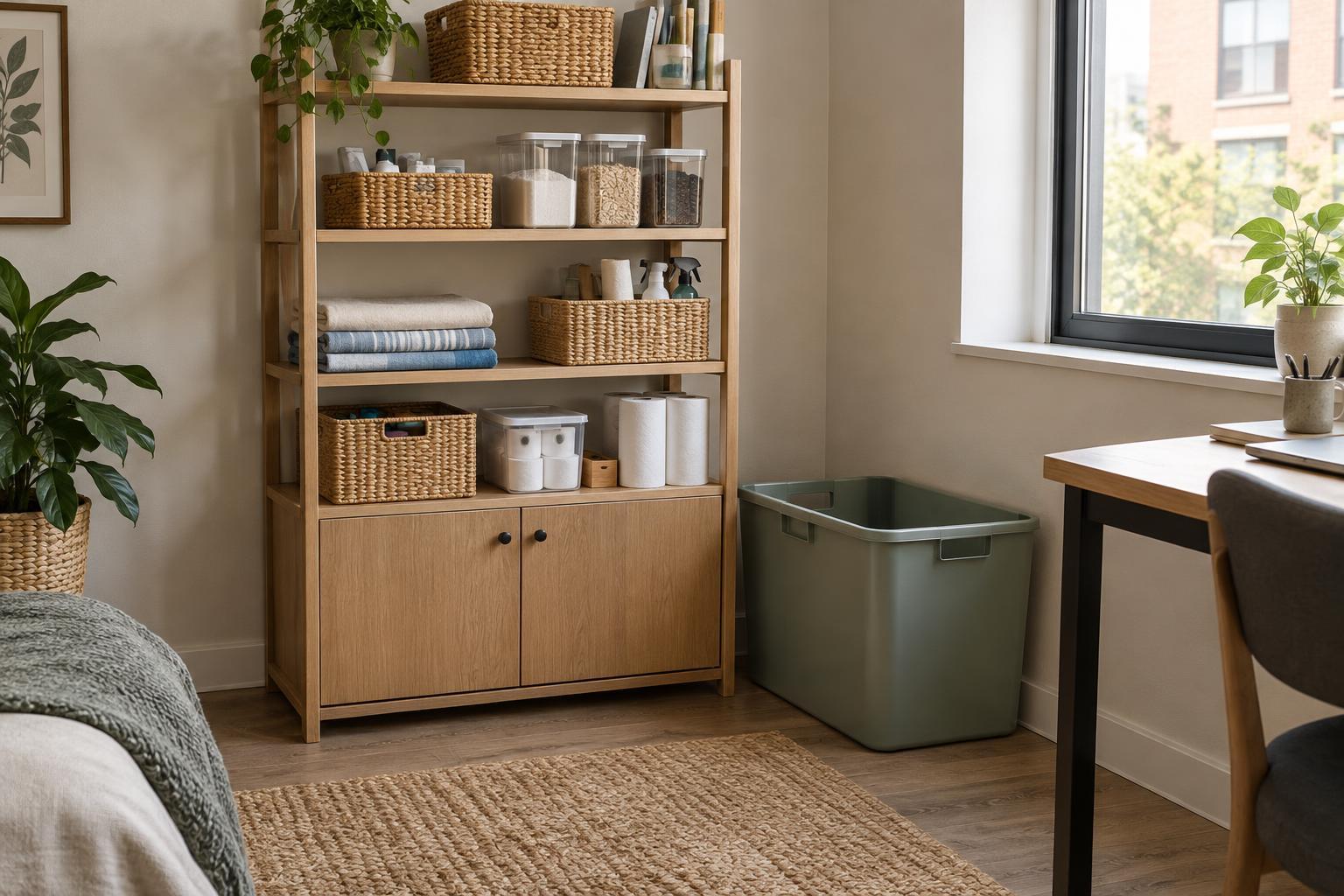
A compact home does not need a cabinet full of nearly identical bottles. Choose a few products that cover the surfaces you actually have, along with appropriate cloths and a brush for jobs that need one. Keeping the kit simple makes it easier to find the directions and less likely that you will reach for the wrong bottle while rushing between tasks.
Store products in their original, clearly labeled containers, away from food and out of reach of children and pets. Do not decant them into drink bottles or unmarked spray bottles. Before buying a replacement, check what you already own and whether it is still usable according to its label. A manageable kit, used one product at a time, supports a cleaning routine that is safer and easier to repeat.