Start with the space you need to walk through
Before buying storage, stand in the entryway with the door fully open. Notice where it swings, where people stop to take off shoes, and which parts of the floor must stay clear. Measure the available wall space and the depth a shelf or cabinet could occupy without making the route awkward. The best storage plan leaves room to come in carrying a bag, close the door, and pass another person if your layout allows it.
Next, look at what actually lands there during an ordinary week. Count the shoes and coats used regularly rather than every pair and jacket in the household. Keep everyday items near the door; move occasional footwear, spare bags, and out-of-season coats elsewhere. This reduces the amount of storage the entryway has to provide and makes the items you do keep there easier to put away.
If the entrance opens straight into another room, use the edge of a rug or a shallow wall-mounted shelf to define the drop zone. You do not need a large piece of furniture to make the area feel purposeful.
Give shoes a place that suits your habits
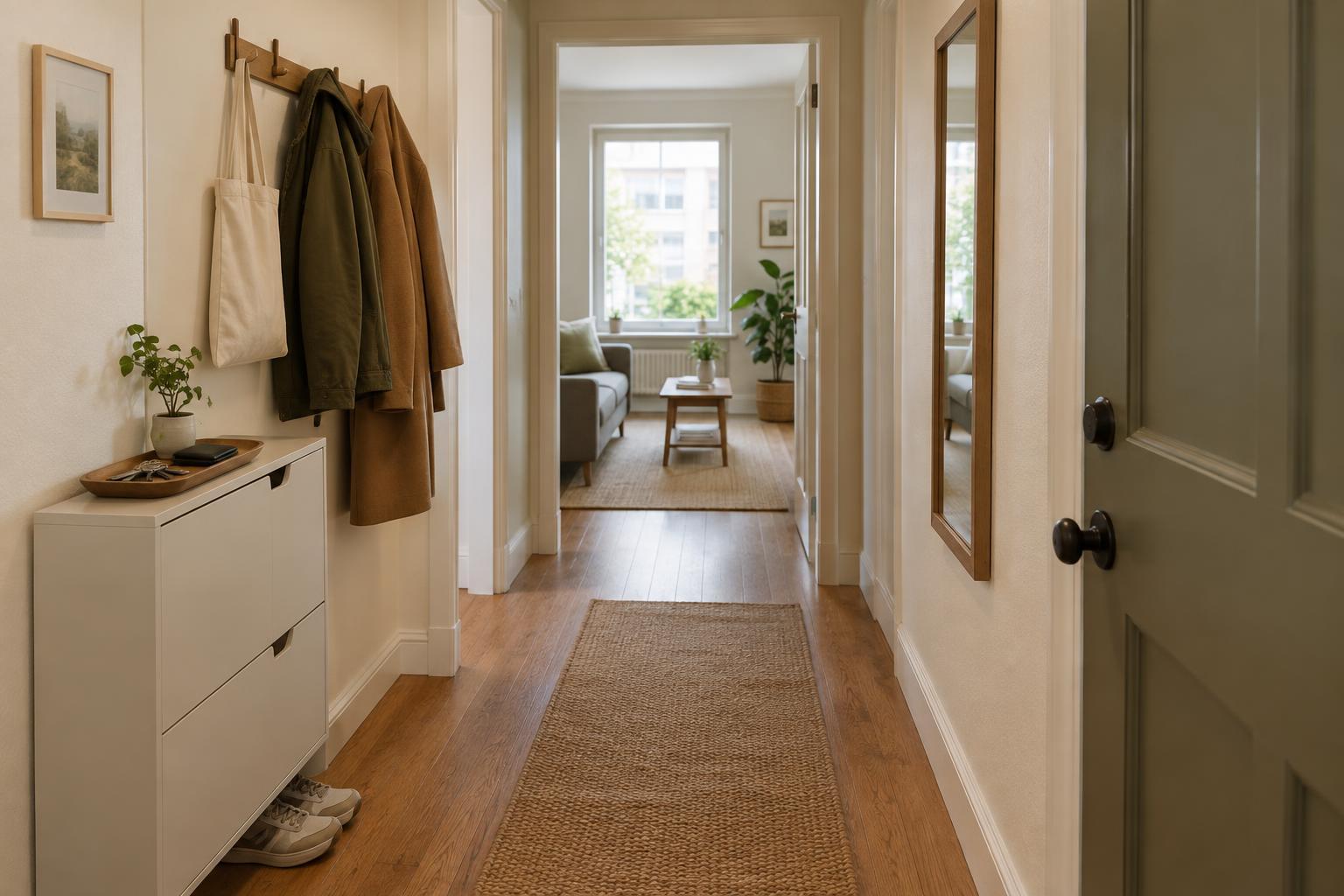
For a very tight floor plan, a slim shoe cabinet can keep pairs off the walkway, but check its depth and the space needed to open it. Open shelves are easier for children or frequent visitors to use, though visible shoes can make the area look busy. A low rack works well if you have a clear wall beside the door. Where the door swing rules out furniture, a sturdy tray for the few pairs in daily use may be enough.
Choose a limit the space can comfortably hold, such as one everyday pair per person plus room for wet shoes to dry. Store the rest in closets or bedrooms. A washable mat or boot tray helps contain grit and moisture; choose one that lies flat and does not become a tripping edge. If footwear is often damp, avoid shutting it inside a closed cabinet until it has dried.
A bench is useful only if it genuinely fits. In a narrow passage, a folding wall-mounted seat or a small stool stored nearby may be more practical than a permanent bench with shoe compartments.
Use hooks without creating a wall of coats
Hooks make good use of vertical space because coats can go up quickly, even when hands are full. Place them where the door will not hit hanging items and where the longest coat will not trail on the floor. A row at one height may suit adults, while a lower hook can help a child put away their own jacket. Keep bag straps and scarves from spilling into the walking route.
The number of hooks should reflect the number of items you want to see, not the total you own. Assign one or two to each household member, then keep spare outerwear in another closet. If several coats pile onto one hook, they become harder to grab and can pull the hook loose. Follow the fitting instructions for the wall type, and check the stated load limits before hanging heavy bags.
If you cannot drill, consider a stable freestanding coat stand only where its base will not obstruct the path. An over-door rack can work on some doors, provided it does not stop the door closing properly or interfere with hinges and trim.
Make keys and small essentials easy to drop and find
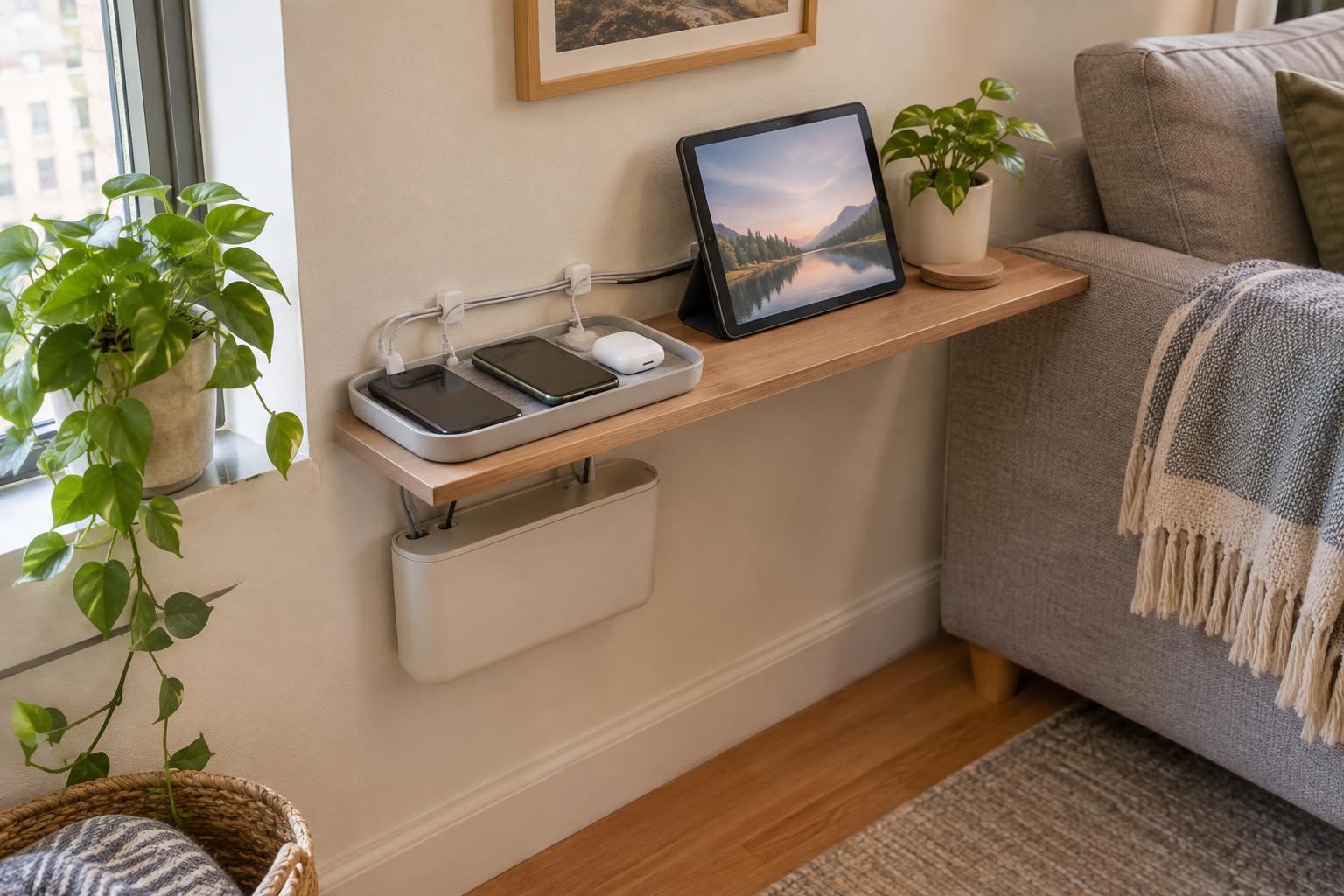
Keys need a consistent home close to the point where you enter. A shallow wall shelf with a small dish, a few dedicated hooks, or a tray on an existing cabinet can all work. Choose one spot rather than scattering dishes across the room. If you use a shelf, make sure it does not project into shoulder space or sit where it will be knocked when the door opens.
Give other small items a specific place, too. A divided tray can separate keys from sunglasses and transit cards; a small basket can hold gloves without letting them cover everything else. Keep mail out of the key dish. If letters need to pause in the entryway, use a separate holder and empty it regularly so it does not become long-term storage.
Lighting matters when you are searching for something on the way out. If the existing light leaves the drop zone dim, a compact plug-in lamp or suitable battery light may help. Position cords and fittings away from the walking route.
Build a setup you can maintain
You can improve an entryway in stages. Start at no cost by removing rarely used items and choosing a fixed place for keys. Next, try a mat, tray, or a few well-placed hooks before committing to a cabinet. If you do buy furniture, use your measurements and test the door swing again with the proposed depth marked on the floor. A narrow piece that makes daily movement frustrating is not a useful bargain.
Aim for a brief reset rather than a perfect display. Put shoes back on the rack, hang up coats, clear the key dish, and move anything that belongs elsewhere. A weekly check can catch the extra pairs and jackets that gradually creep back in. Leave a little spare capacity for a guest or a rainy day.
The entryway is working when people can move through it easily and find what they need without searching. Treat that as the goal, even if the finished space uses only a tray, a few hooks, and one small shelf.