Start with the space you actually have
Seasonal rotation works best when it reduces the number of things you handle every day. It does not mean packing away everything associated with another season. In a small closet, the goal is to keep current essentials easy to reach while giving less-used belongings a defined place elsewhere in the room. Before buying containers, look at your closet, under-bed space, high shelves and any storage furniture you already own.
Choose one small area as a sorting surface, such as a cleared bed. Group belongings by when you use them: regularly, occasionally and rarely. A light layer you wear throughout the year belongs in the regular group, even if you think of it as a summer item. If you have not used something for several seasons, decide whether it still earns space before packing it. Rotation is most useful when you store things you expect to bring back, not things you are postponing a decision about.
Keep a compact year-round core
Weather and routines do not always change neatly with the calendar. Keep a small core of adaptable items accessible: an extra layer, a rain option if you use one, and clothes suited to your usual work and household tasks. Then choose the belongings that can move out of prime closet space. Bulky coats, spare blankets, holiday linens or sport-specific gear may be better candidates than everyday basics.
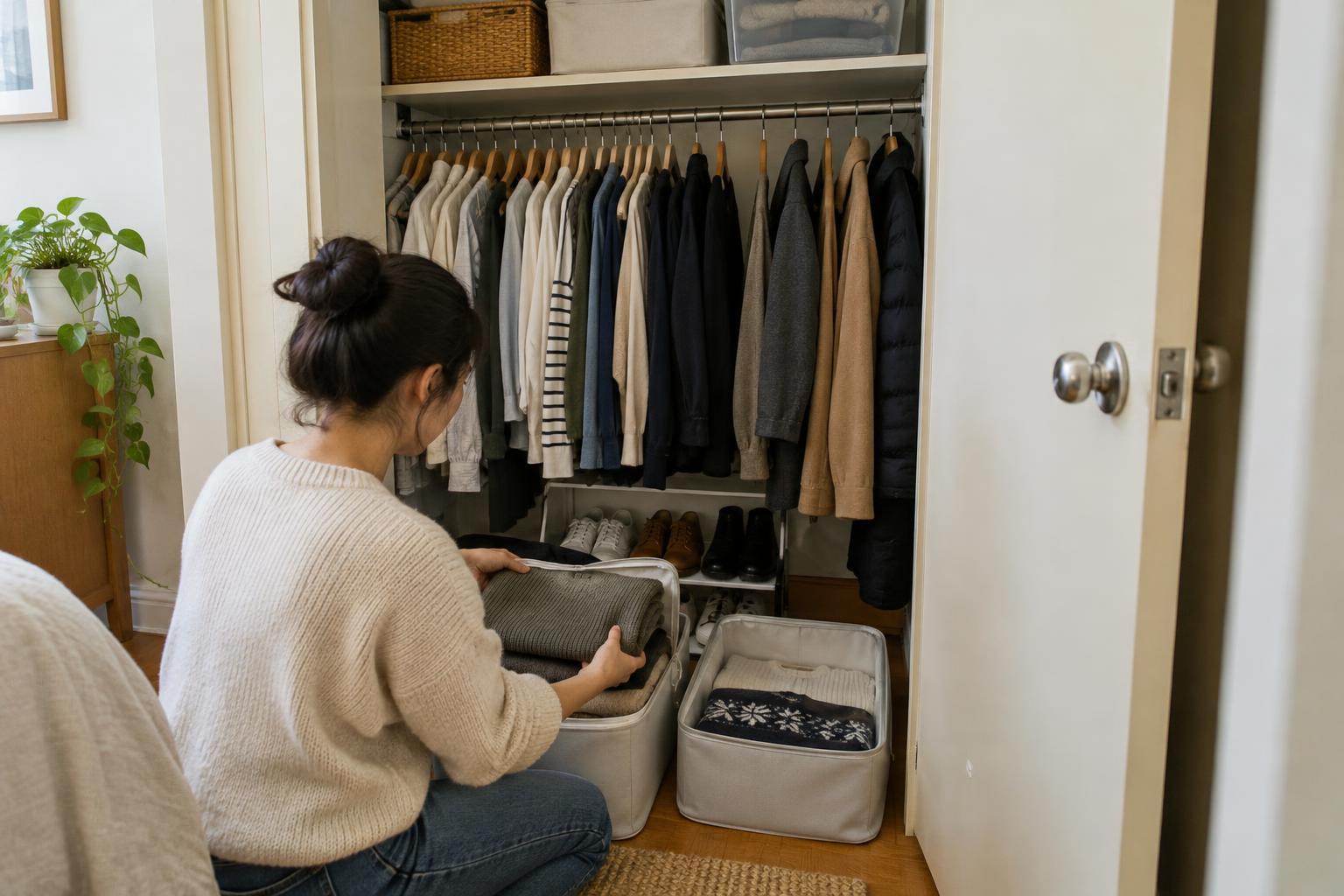
Give the accessible items the easiest positions: the middle of a hanging rail, a drawer you can open fully, or a shelf at a comfortable height. Off-season items can take less convenient spots, provided you can retrieve them without dismantling the room. If you share a closet, agree on how much reachable space each person needs before rearranging it. That prevents one person’s seasonal box from blocking another person’s daily clothes.
Pack for the next time you need the items
Clean and fully dry clothes and household textiles before storing them. A stain that is easy to address now may be harder to deal with later, and damp fabric can develop an unpleasant smell. Empty pockets, close fastenings that might snag nearby items, and fold pieces to fit their container without forcing the lid shut. For delicate or structured garments, avoid compressing them so tightly that they lose their shape.
Use containers that suit both the items and their location. A lidded bin can protect belongings from dust under a bed; a breathable fabric bag may suit textiles in a dry closet. Reused boxes are an inexpensive option in a dry, protected spot, though they are less suitable where moisture or pests may be a concern. Label each container with its contents rather than a vague word like “winter.” “Sweaters and scarves” is easier to act on when the weather changes unexpectedly.
Use overlooked space without creating obstacles
Under-bed storage, the top closet shelf and the lower section of a bookcase can hold off-season belongings without adding another piece of furniture. Measure the opening before choosing a container, including the space needed to pull it out. Two shallow containers may be easier to use than one deep box that must be unpacked to find a single item.
If your room serves several purposes, storage furniture can do double duty. A bench with a compartment might hold spare throws, while a closed cabinet can keep seasonal accessories out of sight. Do not fill every gap simply because it exists: leave doors, drawers, vents and walkways clear, and avoid stacking heavy boxes where they are difficult to lift safely. The best storage location is one you can use without turning a seasonal swap into a major moving job.
Make the next rotation a short task
Keep a simple inventory on your phone or a piece of paper inside the closet door. Note where each category lives, especially if you use more than one storage spot. When it is time to swap, bring out one container at a time. Put its contents into use, then clean and pack the items taking their place. This one-for-one approach helps keep the bed and floor from disappearing under piles.
Before returning a container to storage, check whether its contents still match the label and whether anything needs repair, cleaning or a new home. Leave a little room in each container if you can; tightly packed storage is harder to maintain. A seasonal system does not have to look perfectly uniform. If you can find what you need, reach your daily belongings comfortably and complete a swap without buying a new organizer each time, it is doing its job.