Start with the jobs your space actually creates
In a compact home, a cleaning kit has to earn the space it occupies. Before buying anything, walk through your rooms and note the recurring jobs: wiping a desk after work, clearing kitchen crumbs, cleaning a sink, dealing with bathroom moisture and picking up dust or grit from the floor. These everyday tasks should shape the kit more than an ambitious list of products for occasional deep cleans.
Check what you already own and where you would keep it. A shallow bin, handled caddy or cupboard shelf may be enough for supplies you use weekly. If there is no room for a full-size tool, look for one that folds, nests or can hang securely. The goal is not to make every item tiny; it is to make the kit easy to take out, use and put away.
Choose a few versatile tools
Start with several washable cloths, a non-scratch sponge and a small brush for edges, grout lines or fixtures. Assign separate cloths to the bathroom and food-preparation areas so they do not get mixed up. A pair of household gloves can make unpleasant jobs easier, particularly when you are cleaning a drain cover or using a product that calls for skin protection.
For floors, choose a tool that suits both the flooring and the storage space. A compact broom and dustpan may be enough for hard floors; a lightweight vacuum may be more useful if you have rugs, upholstery or a lot of tracked-in grit. A washable flat mop can handle hard floors without needing a large bucket. If you already own a vacuum that works well, there is little reason to replace it just to create a more coordinated kit.
Keep the product lineup simple
Many routine jobs can be handled with a suitable general-purpose cleaner, dish soap for appropriate washable surfaces and a bathroom product chosen for the fixtures you have. Read the labels before using a product on stone, wood, sealed surfaces or delicate finishes; an all-purpose name does not mean it is safe everywhere. Keep any product needed for a particular surface or recurring problem, but avoid buying a separate spray for every room by default.
If you refill a bottle, label it clearly and follow the product directions. Never mix cleaning chemicals, and keep them in their original containers when the label or instructions are important for safe use. Ventilate the room as directed, and store products where children and pets cannot reach them. A smaller kit is helpful only if its contents remain safe and straightforward to use.
Skip extras that duplicate a job
Specialty gadgets can be appealing, but consider how often you would use one and where it would live between uses. A separate tool for every crevice, a large mop system for a short stretch of flooring or a collection of nearly identical sprays may add more storage work than cleaning value. Try the brush, cloth or floor tool you already have before buying a more specialized version.
Disposable wipes and single-use dusters can be convenient for some households, but they need replenishing and a place to store backups. Washable cloths are often a better starting point if you have a way to launder and dry them. Likewise, do not buy a bulk pack solely because its per-item price looks attractive if it will crowd the only shelf available for cleaning supplies.
Make the kit easy to maintain
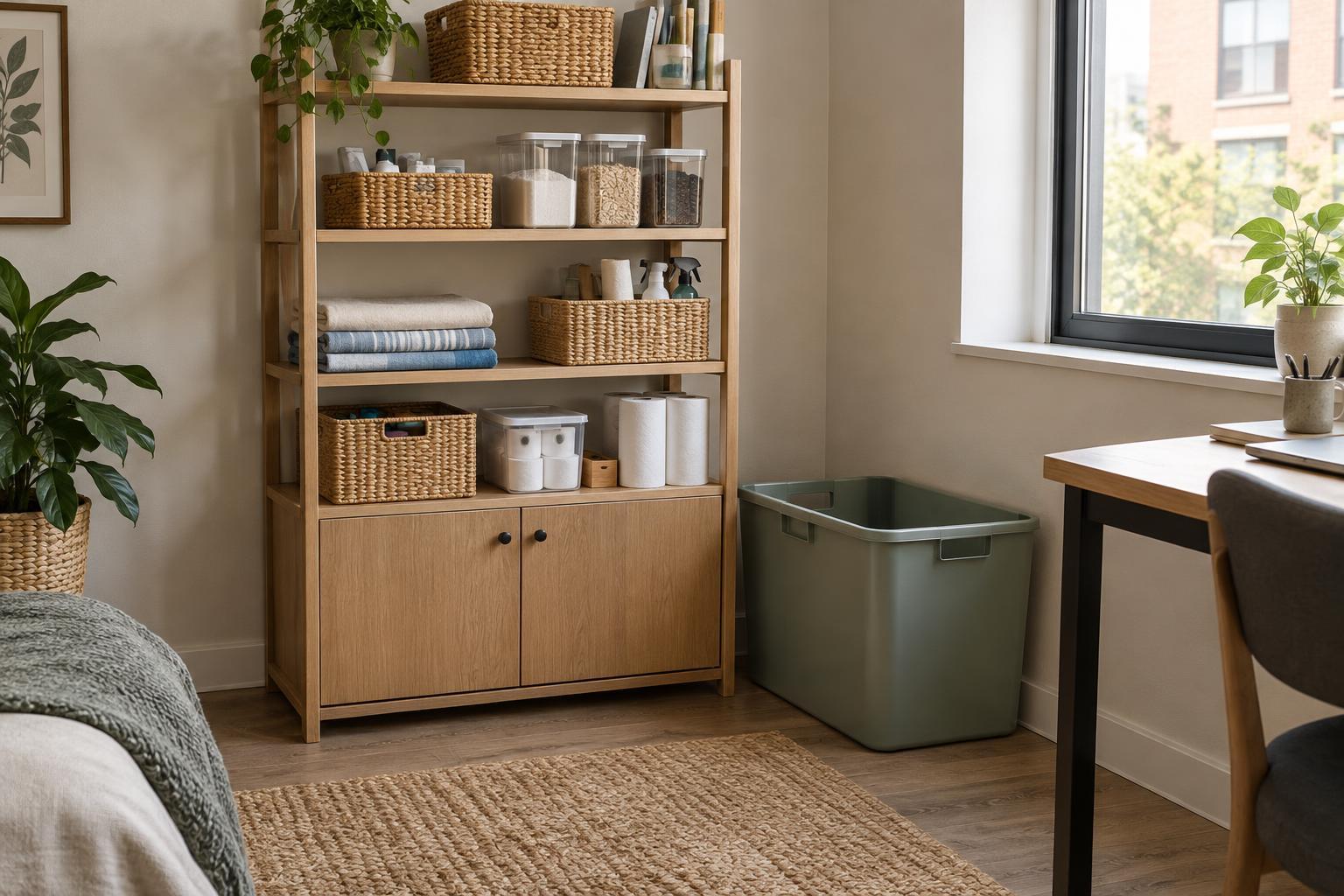
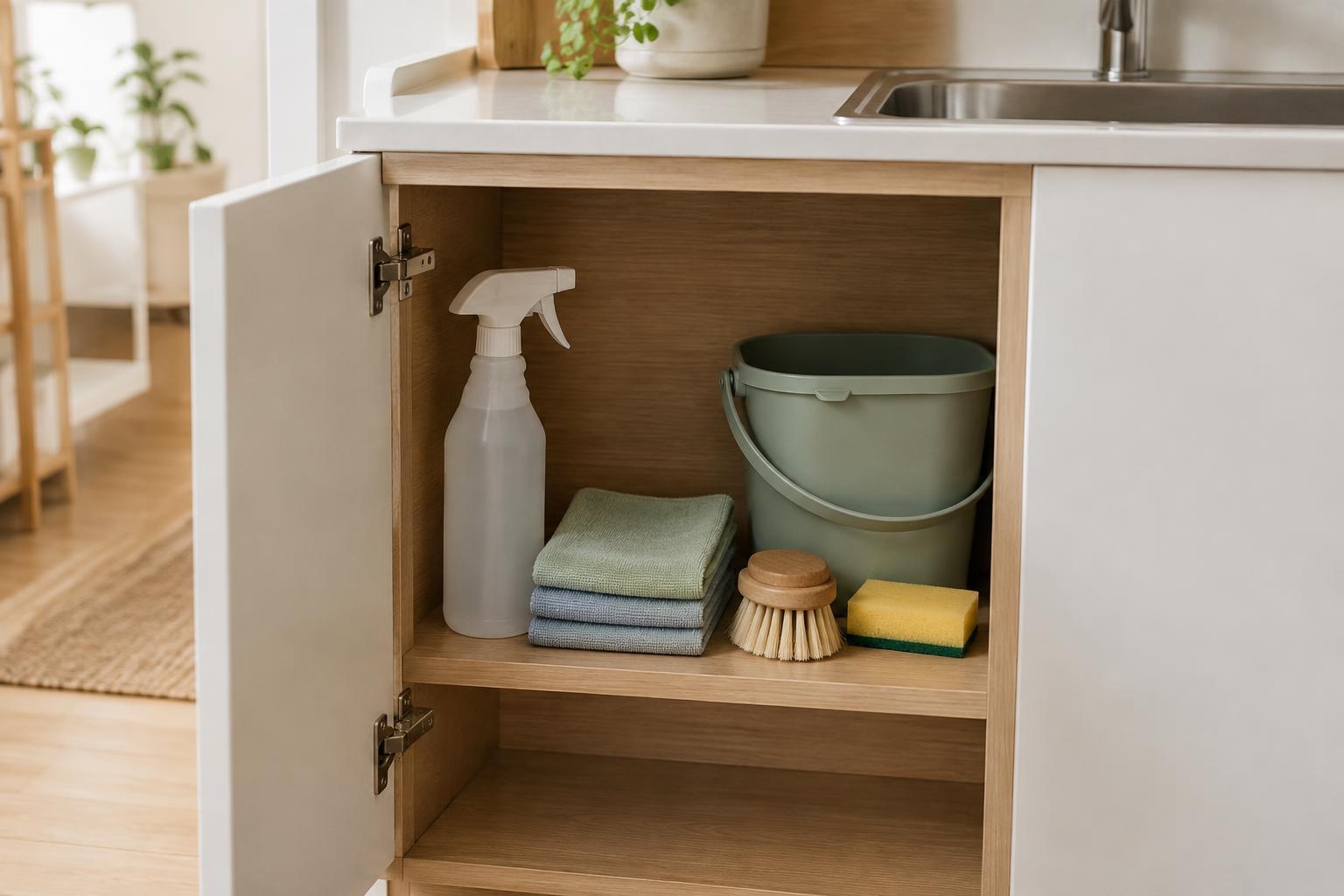
Store the core supplies together, with the items you reach for most at the front. A caddy under the sink may work in one home; in another, a high cupboard shelf and a hook for the broom will be more practical. Keep cloths dry before putting them away, clean brushes and sponges after use, and replace worn items that no longer do their job well.
Begin with the basics rather than buying everything at once. After a few weeks, notice which tasks still feel awkward. If crumbs regularly collect under a sofa, a narrow vacuum attachment might be worth storing. If the kit already handles your routine, leave the spare space empty. In a multipurpose room, that breathing room is useful too.