Measure the space you can actually use
Before buying containers, measure from the floor to the lowest part of the bed frame, not just to the mattress. Check several spots: a center support, slat, or low rail may reduce the height in one area. Leave a little room above the container so it can slide without scraping, especially if the floor is uneven or the bed shifts slightly.
Measure the open width between bed legs and note anything that blocks a straight path in or out. A container that fits beneath the bed may still be awkward to retrieve if a nightstand, rug edge, or nearby wall is in the way. If the bed has drawers or a lift-up base, check how much space you need to operate them before assigning that area to loose storage.
Make a quick floor sketch and divide the space into zones you can reach from each side and the foot of the bed. This prevents a common mistake: packing the deepest area with things you need every week. If clearance is too low for a useful container, consider storing only flat items there rather than raising the bed solely to accommodate more stuff. Bed risers need to suit the bed and remain stable on the floor.
Choose containers for the floor and the contents
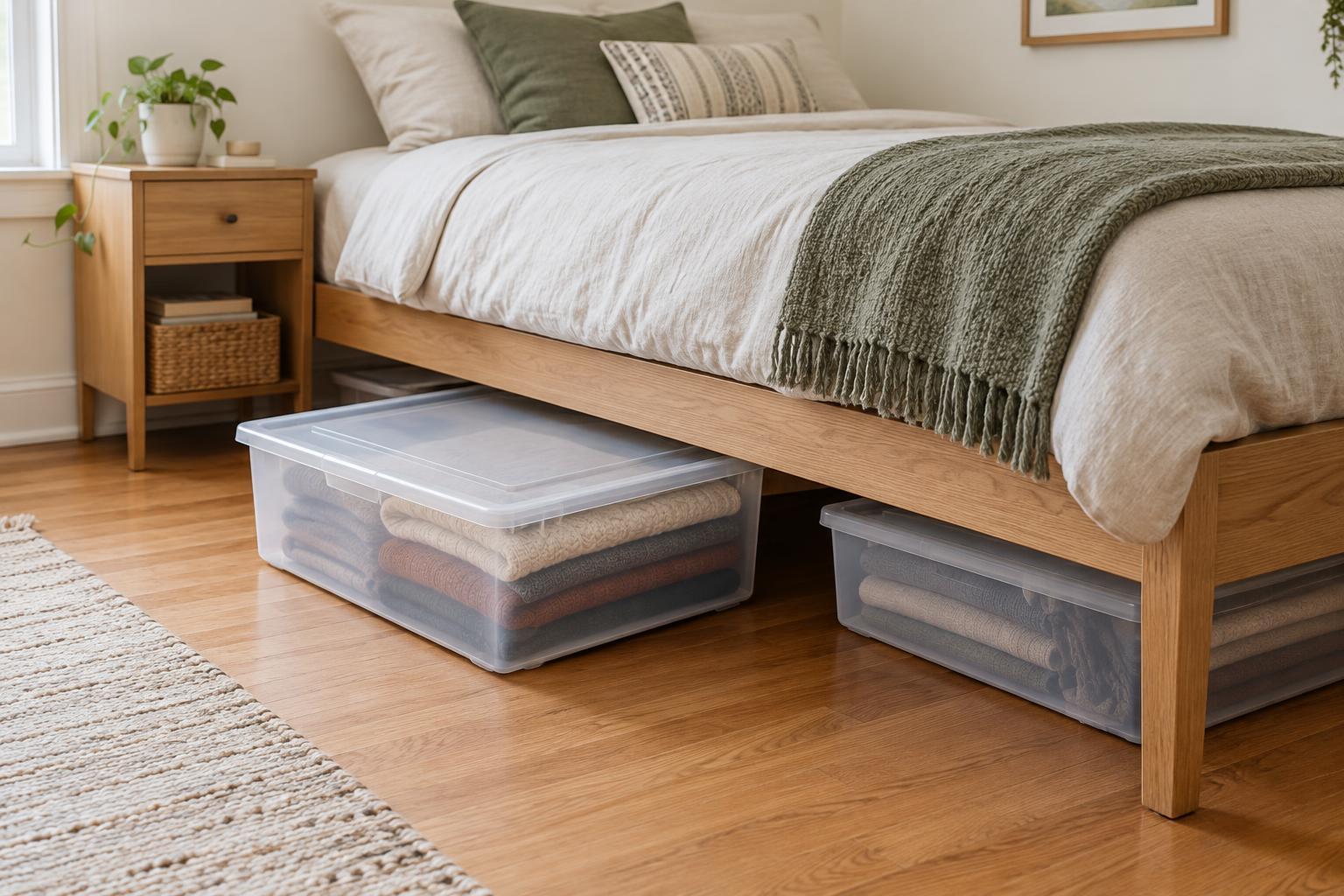
A good container needs to pass through the opening, protect its contents, and move without a struggle. Low, rigid bins are useful for shoes, spare bedding, or grouped supplies because they keep their shape when pulled out. Look for secure lids and handles you can grip from the accessible edge. A clear bin makes its contents easier to identify; an opaque one works just as well with a visible label.
Wheels can help on a smooth, hard floor, but they add height and may catch on rug edges or floor joints. On carpet, a lightweight bin with a smooth base may be simpler to pull. Test the movement with the container partly filled before committing to several matching ones. A full bin is harder to maneuver than an empty display model.
You do not need to buy a matching set at once. A sturdy box already at home can help you test dimensions and placement, though cardboard offers less protection from dust and is a poor choice where moisture is a concern. Once you know which zones you use regularly, spend on containers for those spots first. Keep heavy items in smaller bins so retrieval stays manageable.
Put frequent-use items nearest the opening
Under-bed space works best for items you want to keep but do not need constantly: off-season clothes, extra linens, guest bedding, or a small collection of rarely used accessories. Give the easiest-to-reach positions to things you retrieve most often. Reserve the back or center for items you can comfortably leave alone for months.
Group contents by purpose rather than filling every gap with unrelated objects. For example, one bin might hold winter bedding and another warm-weather clothes. Label the short end facing out, and make the label specific enough that you will not need to open three bins to find one item. If two people use the bed, agree on which side holds whose things.
Avoid treating the space as a place for anything without a home. A container packed so tightly that its lid bulges is difficult to slide, and you are less likely to put things back properly. Leave enough room to lift items out and to remove each bin without shifting all the others.
Control dust without trapping dampness
Dust gathers beneath beds even in rooms cleaned regularly. Lidded bins or washable zippered bags help keep it off stored items, but they work best when everything inside is clean and fully dry. Storing slightly damp fabric can lead to unpleasant odors, even in a well-closed container. If the room or floor tends to feel damp, address that issue before putting textiles underneath the bed.
For clothing and bedding, fold items loosely enough to avoid excessive creasing. Vacuum bags can save space for some soft goods, but compression may leave bulky bedding slow to regain its shape. Keep delicate pieces or items that need to retain their structure in a less crowded container. Whatever you choose, avoid letting loose fabric hang out where it will collect dust or catch as a bin moves.
Build a small upkeep routine
Before loading the space, clean the floor and let it dry. Then slide containers out when you clean beneath the bed, wiping their lids and handles as needed. An occasional check is also a chance to spot a damaged lid, a bin that has become too heavy, or an item you no longer need to store.
When seasons change, swap the most useful items to the accessible edge and return the rest neatly. This takes less effort than reorganizing everything at once. The goal is not to fill every inch under the bed; it is to create storage you can use without moving furniture, raising dust, or forgetting what is there.