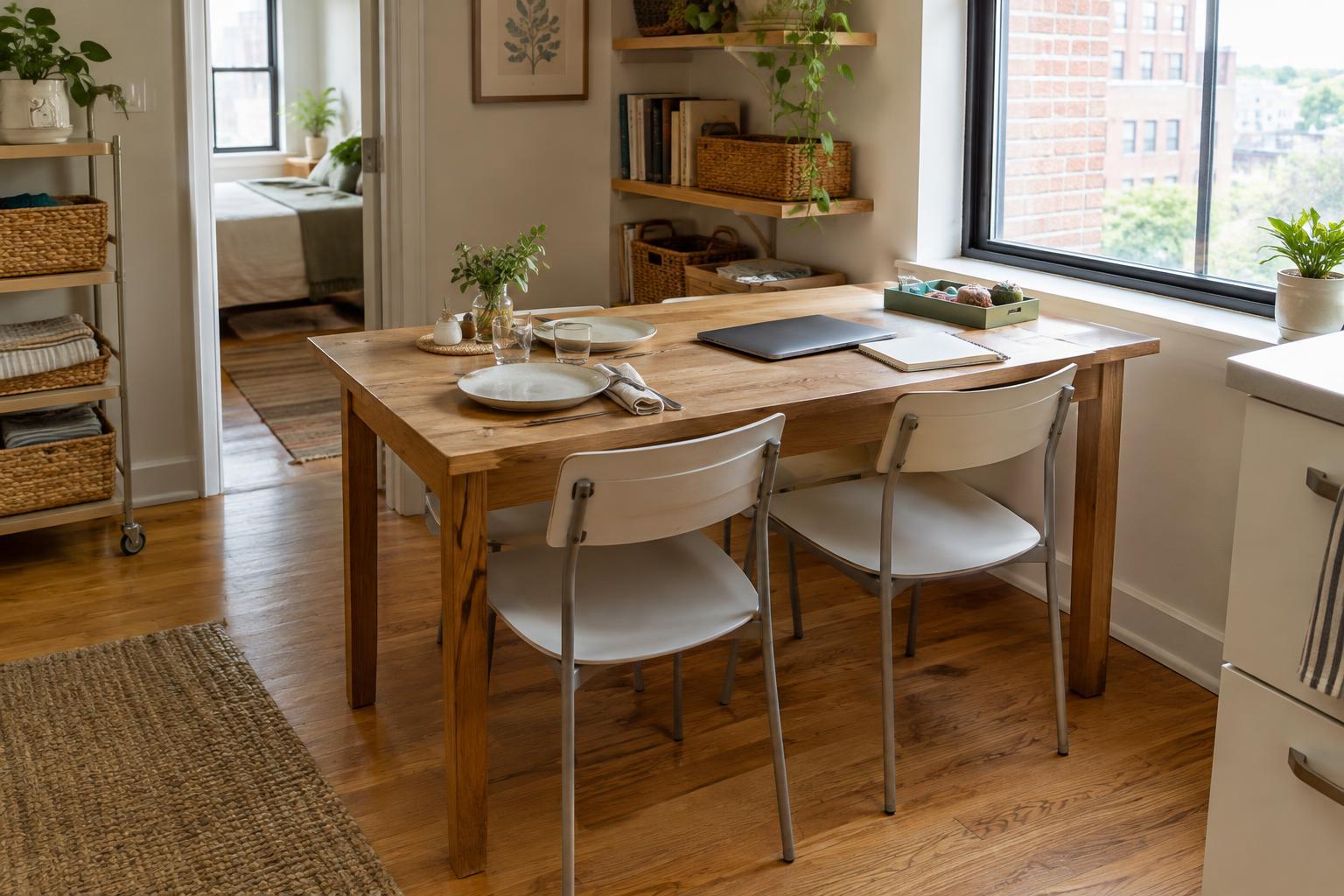
Start with the linens you actually use
Before buying a basket or clearing a shelf, gather the towels and spare bedding in one place. Separate everyday towels from guest towels, and complete bedding sets from loose pillowcases and worn-out pieces. This shows how much space you need and keeps useful storage from filling up with duplicates you rarely reach for.
Set aside enough towels for your household’s washing rhythm and a practical number of spare bedding sets for each bed. There is no universal target: a household with frequent overnight guests may need more than one with limited laundry space. If you have extras in good condition that you do not use, consider passing them on. Reducing the pile is often more effective than finding a cleverer way to squeeze it in.
Choose a dry place before choosing a container
A storage spot should be dry, reasonably clean and easy to check. Look at upper wardrobe shelves, a bedroom drawer, a hallway cupboard or space beneath a bed that stays dry. A bathroom may be convenient for towels, but a cupboard that feels humid after showers is a poor choice for long-term storage. Likewise, avoid pressing linens against a wall or floor where you have noticed condensation.
Check a proposed spot before moving everything in. Does it smell musty? Do nearby items ever feel damp? Can you reach the shelf without pulling down a stack of unrelated belongings? If moisture is an ongoing problem, deal with its cause rather than hiding linens in a sealed box there. Always let freshly washed towels and bedding dry completely before putting them away; storage cannot make a slightly damp item dry.
Give everyday towels the easiest access
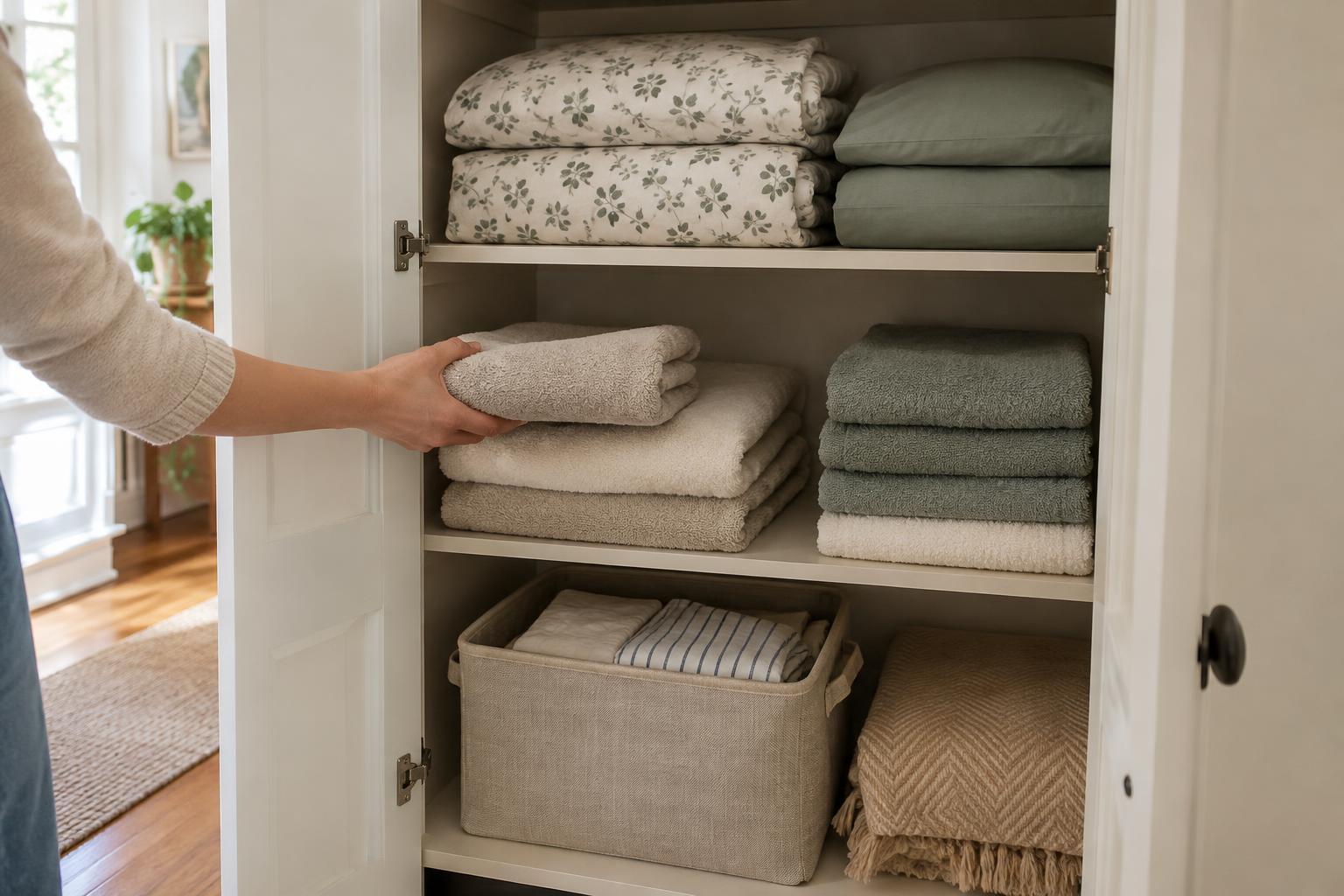
Reserve the most convenient space for towels used each week. A narrow shelf in a hallway cupboard, a small drawer near the bathroom or a basket on a dry, open shelf can work better than a deep cupboard where the clean towels disappear behind other supplies. Fold towels to the depth of the shelf so you can see what you have without disturbing the whole pile.
If you use an open shelf, choose a spot away from splashes and keep only a modest number of towels there. Store the rest elsewhere if the bathroom is often steamy. Hooks and rails are for towels in use, not for building up a reserve: used towels need room to dry between uses. Put clean towels behind or beneath the remaining stack when you refill it, so the same few do not always get used first.
Store bulky bedding as complete, reachable sets
Spare sheets take less room when each set stays together. Fold the fitted sheet and flat sheet, then place them inside a matching pillowcase. You can stack these bundles on a wardrobe shelf or stand them in a shallow drawer. A simple label identifying the bed size saves time if your home has more than one mattress size.
Duvets and blankets need a different approach. A breathable fabric bag or a clean, dry cupboard shelf can protect them from dust without forcing them into a tight corner. A lidded container may be useful under a bed, provided that spot stays dry and you can slide the container out easily. Vacuum bags can reduce bulk temporarily, but they are not necessary for every item; check care labels and avoid compressing bedding you expect to use soon or that does not recover its shape well.
Make the arrangement easy to maintain
Keep seldom-used guest bedding higher up or farther back, and place seasonal blankets where you can retrieve them without emptying a cupboard. Leave enough room around each stack to lift out one item. In a compact room, that small amount of unused space makes storage more practical than a shelf packed edge to edge.
Once or twice a year, take stored linens out, check for any damp smell or marks, and make sure the storage area is still dry. Wash items when needed and dry them fully before returning them. You can start with shelves and containers you already own; add a basket, shelf divider or under-bed box only after you know which awkward space it will solve.