Start with the room, not the ottoman
Before shopping, decide where the ottoman will sit most of the day. In a small living room, it might rest in front of the sofa as a footrest, then move beside an armchair when guests need a seat. Measure that everyday position and the path people take around it. Mark its footprint on the floor with paper or painter’s tape, then check whether you can still reach doors, drawers, and nearby seating comfortably.
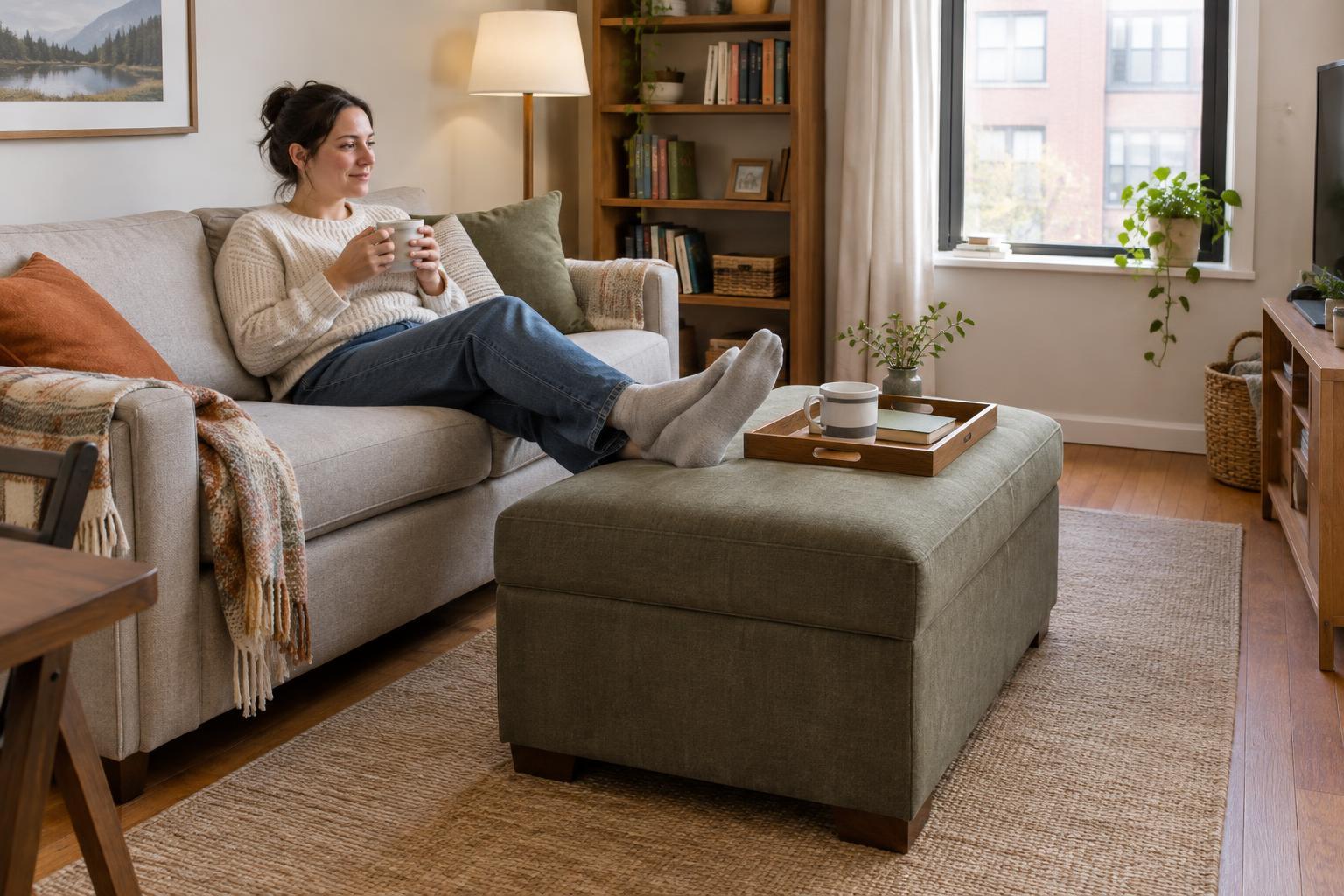
Think about which of its three jobs matters most. If you put your feet up every evening, comfort and height deserve priority. If guests regularly need somewhere to perch, look closely at seating support. If it will often hold drinks or a laptop, you will need a stable top or room for a sturdy tray. An ottoman can do all three jobs, but choosing around your most frequent use makes compromises easier to judge.
Get the height and shape right
For a footrest, compare the ottoman’s height with the seat of your sofa or chair. A similar height may feel natural, but the best match depends on how you like to sit, so try the pairing if you can. Leave enough space to move your legs and stand up without shifting the ottoman each time. A piece that looks neatly proportioned in a listing can still feel intrusive once it is in front of your furniture.
Shape affects flexibility. A rectangular ottoman can serve two people on a sofa or sit against a wall when not in use. A round one may be easier to walk around in a tight layout, though it can offer less usable space for a tray of the same overall width. Square styles often pair neatly with sectional seating. Choose a footprint based on the room’s circulation rather than trying to fill every open patch of floor.
Check that it is genuinely suitable for seating
Not every ottoman is intended to hold a seated adult. Check the maker’s stated use and weight guidance, and look for a frame and legs that feel solid when you press on the piece. If you can inspect it in person, sit near the edge as well as in the middle: excessive wobble or a lid that shifts is a warning sign. Avoid treating a decorative pouf or a lightly built storage box as dependable guest seating.
Consider the cushion, too. Very soft padding can be pleasant under your feet but awkward for someone trying to sit upright. A firmer, flatter top usually makes an extra seat more useful and gives a tray a better base. If the ottoman has storage, test how its lid opens and closes. You should be able to get inside without moving heavy items from the top, and the lid should stay manageable during everyday use.
Make the table function practical
Upholstery is not a reliable surface for an uncovered drink. A rigid tray creates a defined spot for cups, remotes, or a book, while keeping spills farther from the fabric. Pick one that sits flat with some clear ottoman surface around its edges; an oversized tray can tip when someone brushes past. Move the tray elsewhere before using the ottoman as a seat or footrest, and keep hot or easily spilled items on a more secure table.
Material choice should reflect the way you live. A textured or patterned upholstery may be more forgiving of minor marks than a pale, smooth fabric, while a removable cover may simplify routine cleaning. Check care instructions before buying, especially if pets or children share the room. Legs can make the piece look lighter and help with floor cleaning, but they also need to be stable and suited to your flooring.
Spend on the features you will actually use
Set a budget for the complete setup, not just the ottoman. Include a tray if table use matters, and consider whether you need floor protectors or a washable cover. Storage can be valuable in a multipurpose room, but only if you have something suitable to keep inside and will use the compartment often. Otherwise, a simpler, sturdier design may offer better value than paying for a lid you rarely open.
When comparing options, revisit your measurements and rank your priorities: comfortable footrest, trustworthy extra seat, easy-to-use table surface, and any storage you need. A secondhand ottoman can be worth considering if its frame is sound, upholstery is clean and serviceable, and its dimensions fit. The best choice is not the one with the most features; it is the one you can use without repeatedly rearranging the room.