Start with the room, not the shop
Cushions and throws can change the feel of a neutral room without paint, tools, or a large project. They are also easy to overbuy. Before choosing anything new, look at the room in daylight and in the light you normally use at night. Notice the existing undertones: a cream sofa and warm wood may suit different colours from a cool grey sofa and white walls. You do not need a perfect match, but it helps to know what is already there.
Next, decide what you want the textiles to do. Is the sofa looking flat? Does a reading chair need a comfortable layer? Do you want to bring colour into a room used for both work and relaxing? Choose one main purpose and one place to focus on. In a compact room, updating the sofa and the chair and the bed at once can make the space feel busier rather than more finished.
Shop what you own first
Gather the cushions and throws already in the room, plus any stored elsewhere in your home. Remove everything from the seat you are updating, then put back only the pieces you use or enjoy seeing. A cushion from the bedroom might bring the right colour to the sofa; a folded blanket could work better on a chair than across the back of a couch. Moving things around costs nothing and makes it easier to see what is missing.
Check the covers, too. If an insert is still comfortable and holds its shape, a new cover may be more useful than a whole new cushion. If you have spare covers, try them before adding to the collection. Set aside extras rather than immediately finding a place to display every piece. The goal is a seating area that still has room for people.
Build a small, repeatable palette
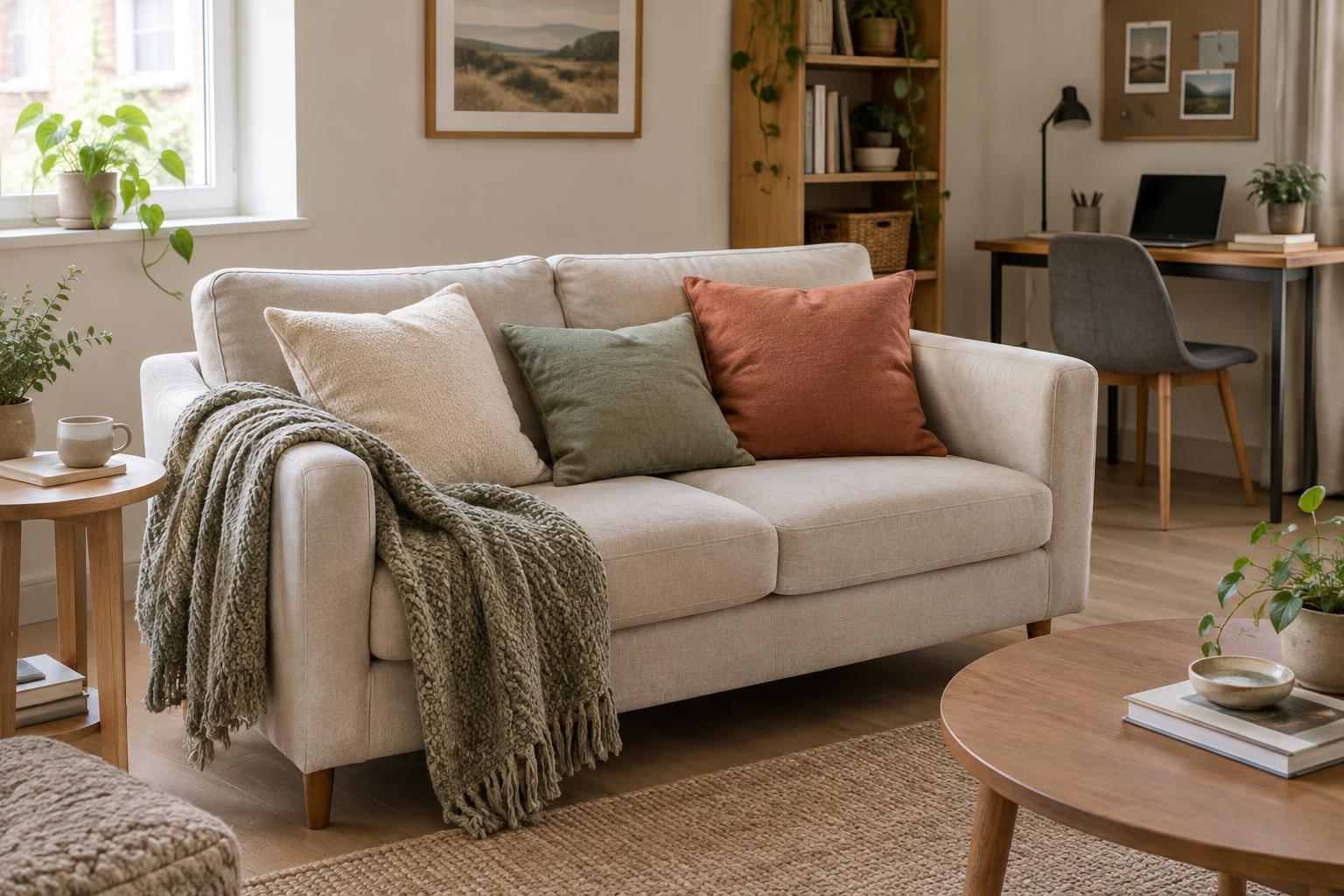
Pick one accent colour and, if you like, one quieter supporting shade. You might pair a muted green with an existing warm beige, or use rust as a small accent against cream and brown. Repeat the accent at least once within the arrangement so it looks intentional. That repetition can come from a patterned cushion and a plain throw; it does not require two identical items.
Texture can do as much work as colour in a neutral room. A smooth cotton cover beside a woven or softly textured one creates contrast without adding another shade. Try to vary texture in a way that suits how the room is used: a delicate fabric may be lovely to look at but less practical on a seat used every day. If a pattern appeals to you, choose one that includes a colour already in the room. This helps it connect to the furniture rather than compete with it.
Choose a quantity the furniture can handle
There is no required number of cushions. On a small sofa, two cushions and one throw may be enough. On an armchair, one cushion or one throw may do the job on its own. Sit down after arranging them. If you have to move a pile before you can get comfortable, edit the pile. The same test matters in a multipurpose room, where seats may also be used for reading, working, or hosting guests.
Give the throw a job as well as a look. If you regularly reach for a blanket, keep it where you can grab it and choose a fabric that feels pleasant and is manageable to wash or care for. If the throw is mainly decorative, try folding it over one arm or placing it in a nearby basket instead of draping it across the whole sofa. Leaving some of the neutral upholstery visible keeps the update light.
Buy for a specific gap, then stop
Once you have tested an arrangement with what you own, name the gap before spending: perhaps you need one washable cover in your accent colour, or a throw large enough to use on chilly evenings. Measure your existing cushion inserts before buying covers, and check care instructions for anything new. A simple spending limit can help you compare options, but the more useful limit is the number of items you have decided the room needs.
If you are unsure about a colour or pattern, live with the rearranged room for a few days. You may find that the change you wanted has already happened. If you do buy something, bring it home and try it in the actual space before adding anything else. A restrained update leaves room for the furniture, the people using it, and the next small change you may want to make.