Start with the wall and the job
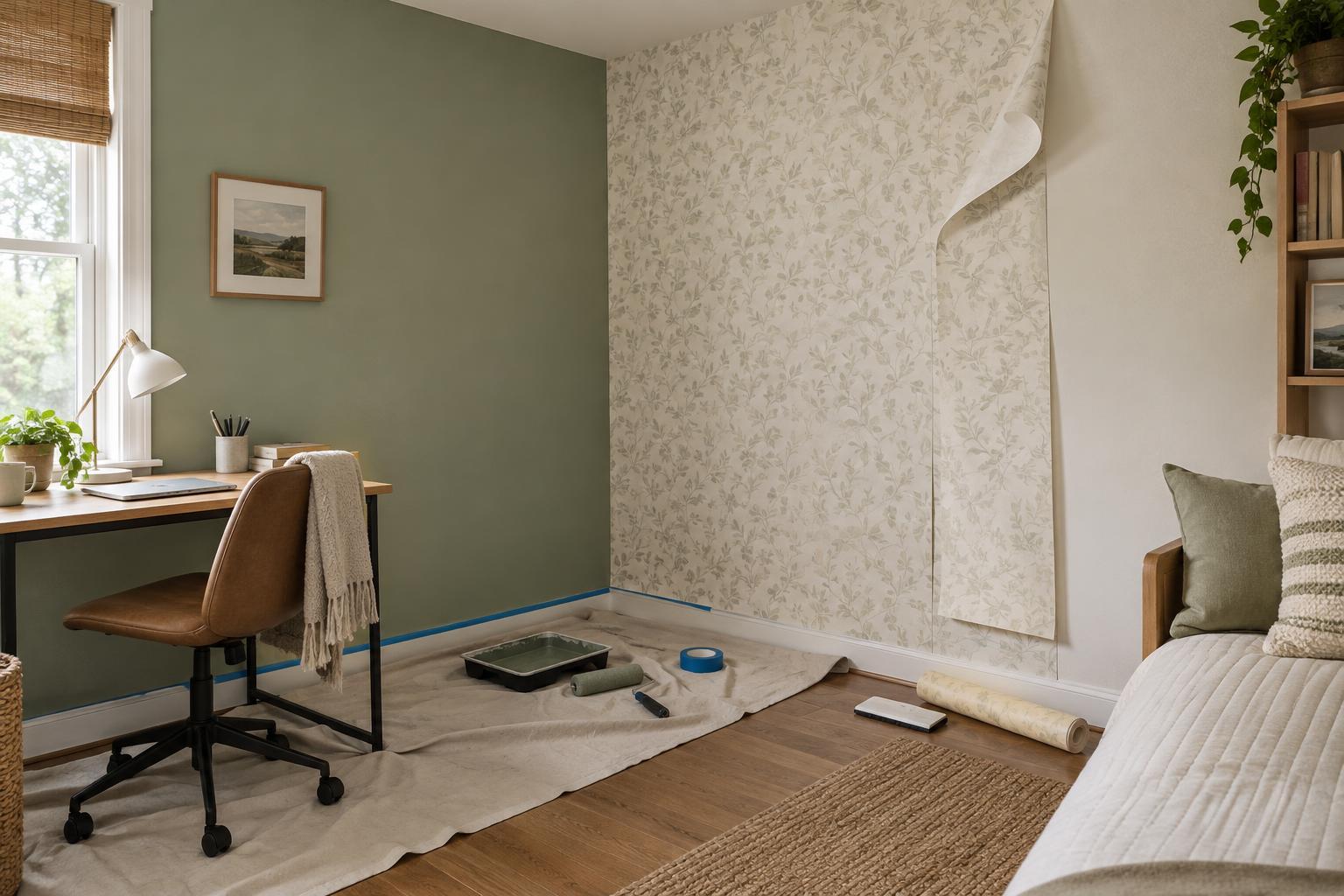
In a compact room, one changed wall can have a big visual effect. Paint is useful for a consistent color across an entire room, including awkward corners and narrow strips beside doors. Peel-and-stick wallpaper works well when you want a pattern or a distinct area behind a desk, bed, or dining table without decorating every wall.
Before comparing finishes, check the surface. Paint and adhesive wallpaper both look better on clean, smooth, sound walls. Wallpaper is particularly sensitive to bumps and texture, which can show through the material or reduce contact with the adhesive. A freshly painted wall may also need time to cure before wallpaper is applied; follow the product’s instructions rather than assuming it is ready when it feels dry. If you rent, check what changes are permitted before buying either product.
Compare the full cost, not just the container or roll
Paint is often the more economical choice for covering a whole room in a solid color, especially if you already own brushes, rollers, trays, and drop cloths. Its total cost may also include primer, filler, tape, and enough paint for more than one coat. The wall’s existing color and condition affect how much you need.
Peel-and-stick wallpaper can be cost-effective for a small feature area, but a roll’s listed coverage is not always the usable coverage. Measure the wall, then allow for trimming, pattern matching, and mistakes. A large repeating pattern may create more offcuts than a simple design. Check that rolls are compatible before ordering; color can vary between production batches.
For a fair comparison, price the same finished area, not one can against one roll. Include tools you do not own, preparation supplies, and a modest margin for errors. If you expect to change the look soon, also consider what it may take to restore the wall afterward.
Decide which kind of effort suits you
Painting usually involves moving or covering furniture, cleaning and patching the wall, protecting edges, applying coats, and allowing drying time. The work can be spread over several sessions. It is relatively forgiving while the paint is wet: you can smooth a drip or correct an uneven edge, although a tidy result still takes care.
Wallpaper avoids paint splashes and drying between coats, but installation asks for precision from the start. Panels need to hang straight, meet neatly, and align at the pattern. Working around outlets, corners, and shelves can be fiddly. In a small home, clearing enough floor space to cut and position long panels may be the hardest part.
A single rectangular wall with few interruptions is a manageable first wallpaper project. A room with many doors, sloped surfaces, or tight corners may be simpler to paint. Whichever you choose, prepare the wall and test a small, inconspicuous area when the product instructions allow it.
Think carefully about removal
Peel-and-stick wallpaper is sold as removable, but that does not guarantee damage-free removal from every wall. Adhesion varies with the product, paint finish, wall preparation, and time in place. Removal can pull up weak paint or leave adhesive behind. Testing a sample on the actual wall and following the manufacturer’s removal directions can reduce surprises, though a short test cannot predict every long-term result.
Paint does not peel away for a change of mind. Changing the color usually means cleaning, patching, possibly priming, and repainting. That can be straightforward if the wall is in good shape, but covering a strong color may take extra work. For renters, a repaint may be required even if the current color is attractive; confirm the expectations for the space rather than assuming one finish is automatically safer.
Neither option hides a failing surface. If existing paint is flaking or the wall has an unresolved moisture problem, address the cause before decorating. Covering it may make the next repair more difficult.
Choose for the way the room is used
For a busy multipurpose room, paint is a practical default when you want a calm, continuous background or expect to touch up scuffs. Peel-and-stick wallpaper offers more visual detail in a defined spot, such as a workspace backdrop. Placement matters: check product guidance before using adhesive wallpaper where it will face frequent splashes, steam, or heat.
If you are undecided, keep the project small. Price and measure one feature wall, compare it with painting that same wall, and consider the effort of changing it later. The better choice is not simply the one that goes on fastest. It is the finish you can afford, apply to your actual wall, and live with—or remove—when the room’s purpose changes.