Start with what the wall has to handle
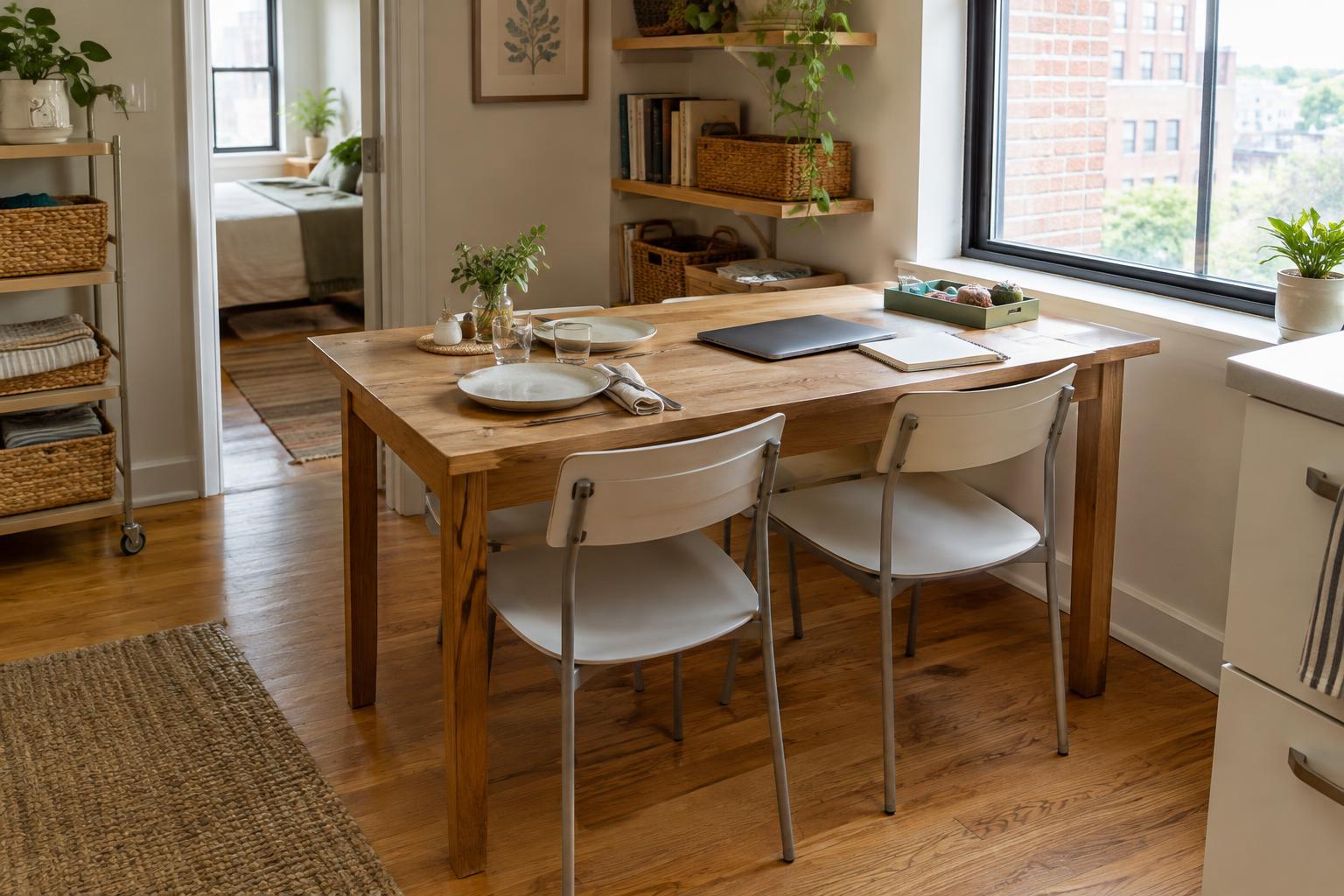
A wall beside a desk chair has a different job from one behind a sofa. Before choosing a finish, notice where bags brush against corners, hands touch the wall, or furniture gets moved. In a compact room, a single wall may serve several purposes, so the busiest spots matter more than the room’s name.
Think about cleaning, too. Occasional dusting asks less of paint than frequent wiping around a dining table or entryway. Sheen can affect how readily marks wipe away, but the paint’s formulation matters as well. Check the product label for its intended use and cleaning guidance rather than assuming every paint with the same finish will perform alike.
Matte: soft-looking, with some trade-offs
Matte paint reflects relatively little light. Its subdued appearance can make minor bumps and patched areas less noticeable, especially on a wall that receives light from the side. That can be helpful in an older room where perfectly smooth walls are not a realistic weekend project. A matte finish also keeps glare down near a screen or reading corner.
Traditional matte finishes can show rub marks and may be harder to wipe without changing the appearance of the surface. Some products are sold as washable or durable matte, so compare the specific paints available rather than ruling matte out altogether. It is a sensible choice for a low-contact wall or a room where a calm, even look matters more than frequent scrubbing. If a wall gets marked often, consider keeping a little paint for touch-ups.
Eggshell: a middle ground for mixed-use rooms
Eggshell has a slight sheen, usually noticeable when light catches the wall rather than from every angle. For many multipurpose rooms, it offers a practical balance: it tends to be easier to wipe than basic matte paint without making every surface look shiny. It can work well in a living room that doubles as a workspace, where chair backs, shelves, and daily activity create occasional marks.
There are still trade-offs. Eggshell can draw more attention to dents or uneven repairs than matte, and a touched-up patch may be visible in angled light. Sheen names also vary between paint ranges. If you are comparing brands, do not rely on the word “eggshell” alone; look at sample finishes in the light where the paint will actually be used.
Satin: useful where wiping is routine
Satin has a more noticeable sheen and is often chosen for walls that need regular wiping, such as a small entryway or a dining area where chairs sit close to the wall. Its smoother-looking surface can suit a busy household, provided the particular product is intended for walls and the cleaning it will receive. For bathrooms or other damp spaces, choose a paint labeled for those conditions rather than relying on sheen alone.
The extra reflection makes surface preparation more important. Patches, roller marks, and uneven texture may stand out, particularly near a window or lamp. Before painting a whole room in satin, try a sample on the wall most exposed to sideways light. If the shine feels distracting, eggshell may be a better compromise. Satin is also an option for just the hardest-working wall, though adjacent finishes can look different even when the color matches.
Test, prepare, and spend where it counts
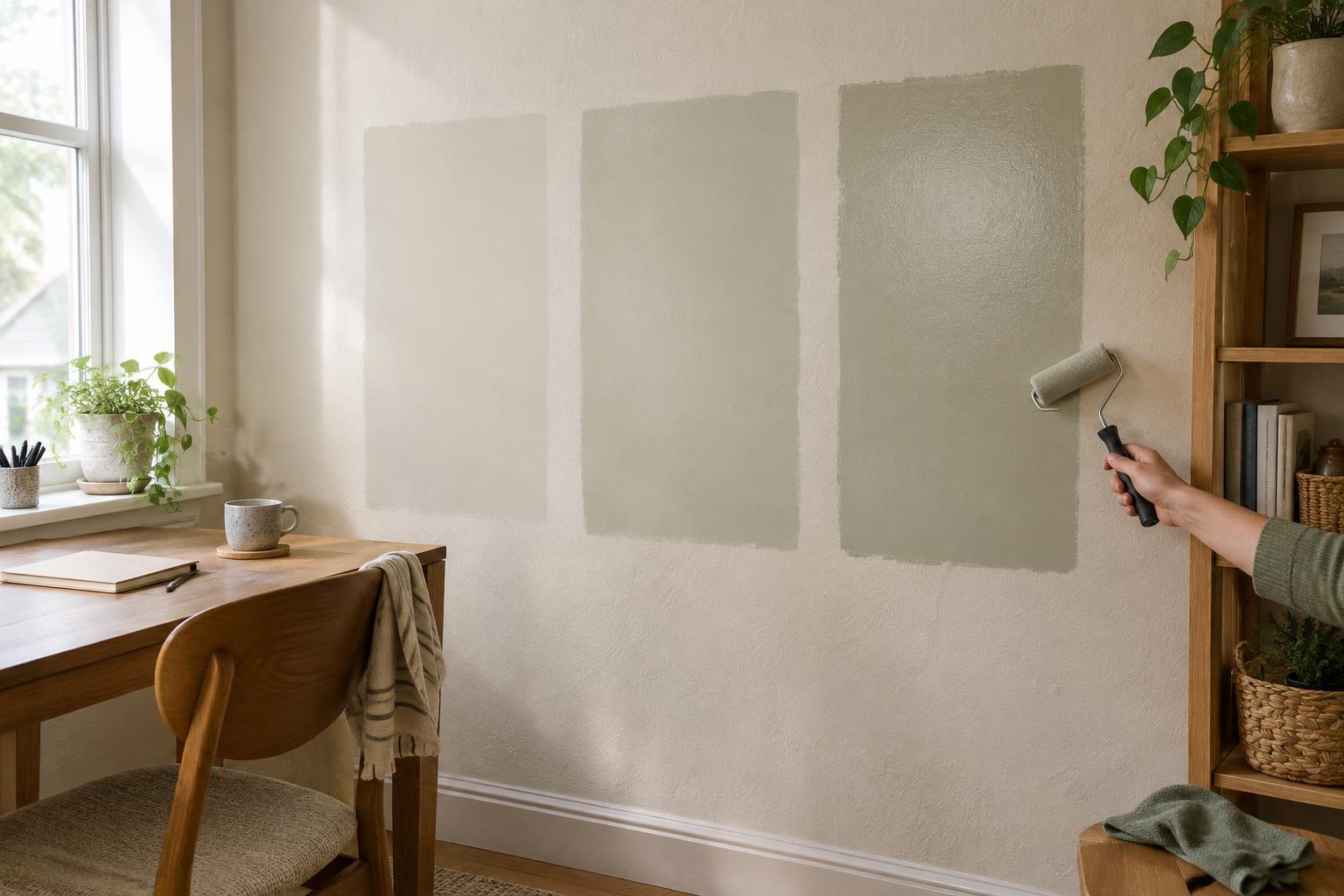
Paint small samples on more than one wall, or use movable sample boards, and check them in daylight and under your usual lamps. Look from the doorway as well as up close: a finish that seems subtle on a small patch can feel brighter across an entire wall. Let samples dry as directed before judging their sheen. If you plan to wipe the finished wall regularly, check the paint’s instructions for curing time before cleaning it.
Good preparation often makes a bigger difference than moving up a sheen level. Clean greasy or dusty areas, fill obvious holes, sand repairs smooth, and use primer where the product instructions call for it. For a limited budget, you could spend on a suitable, cleanable paint for the busiest walls and use a simpler finish in low-contact areas. Keep a record of the color, finish, and product so future touch-ups are easier to match. The best choice is the one that fits both the wear a wall receives and the amount of maintenance you are willing to do.