Start with the work, not the desk
Before moving furniture, list what each person does on a typical workday. Note who needs a monitor, who makes frequent calls, whether either person handles paper, and which hours you both need a quiet seat. This helps you avoid buying a long desk that fits the wall but not the way you work.
Measure the available floor area, including space to pull out chairs and open nearby doors or drawers. Check where outlets and daylight are, but also notice glare on screens and traffic through the room. A corner that seems unused may be awkward if someone has to pass behind a chair all day.
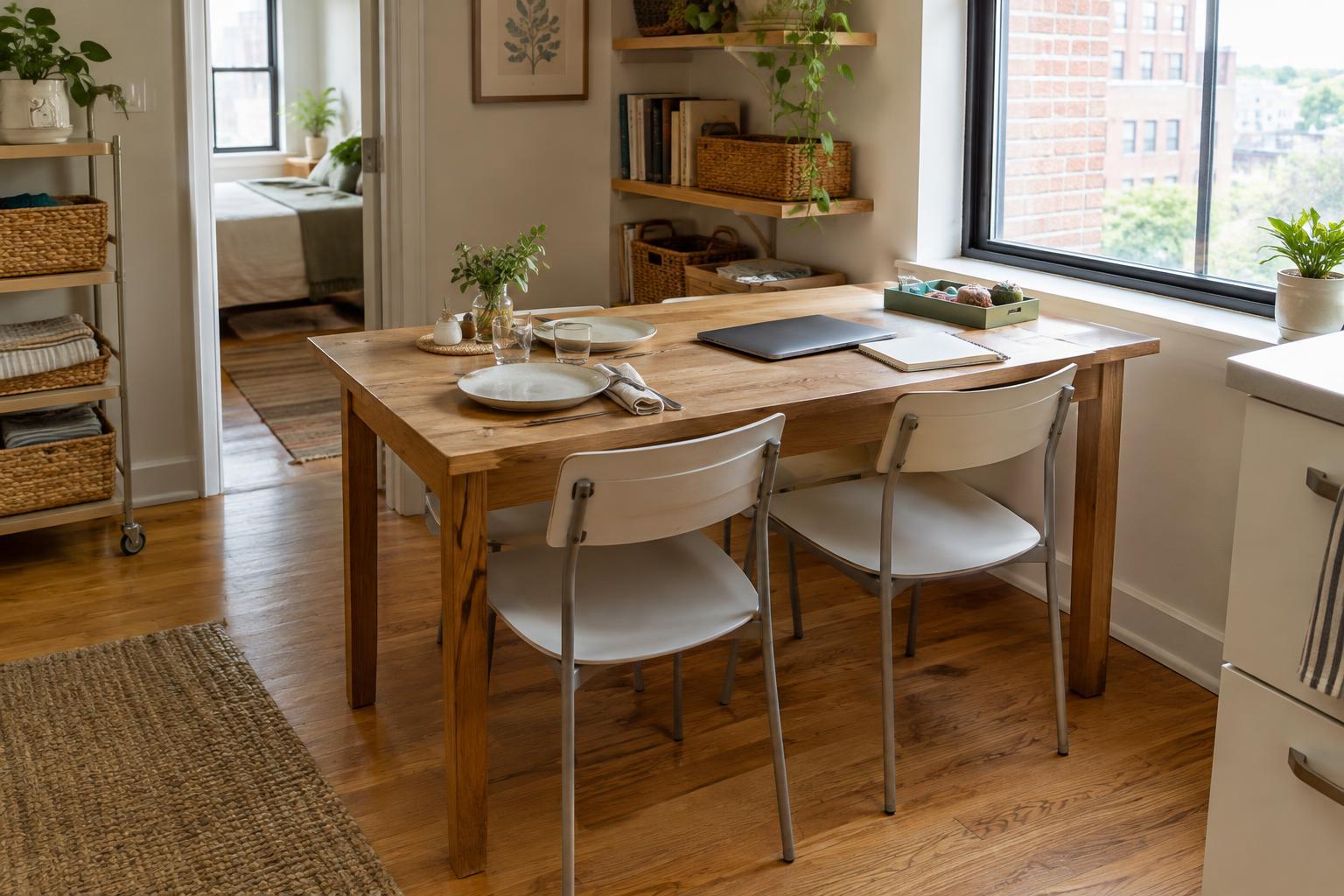
If you cannot give both people a dedicated desk, decide which tasks truly require one. One person might use the main work surface for focused computer work while the other uses a cleared dining table for short sessions. The goal is a reliable place to work for each person, even if those places serve other purposes later.
Choose a layout that gives each person room
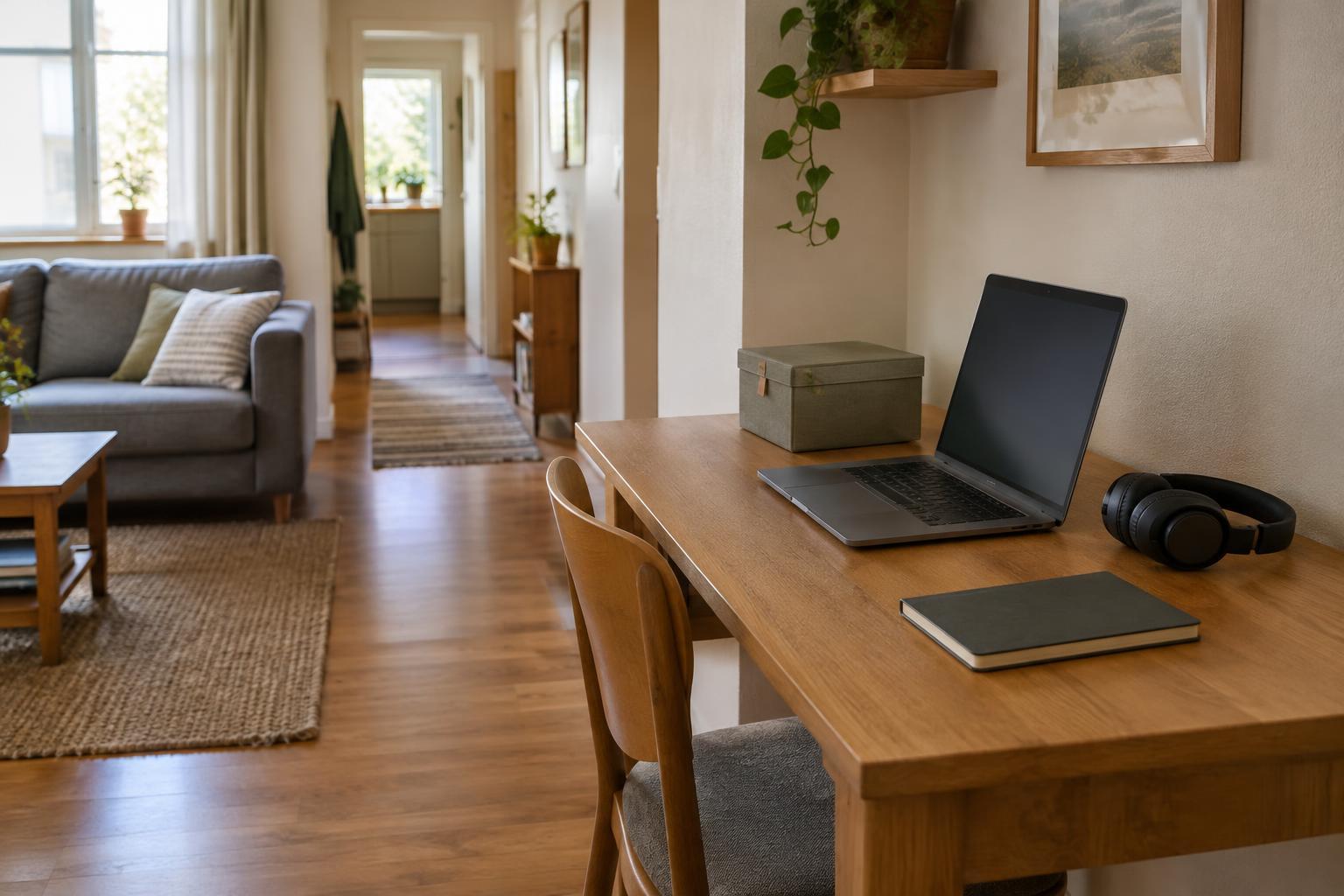
A straight desk along a wall is simple to share when both people mostly use laptops. Mark out two work zones before you buy or build anything, allowing room for each person’s hands, equipment and frequently used items. A shallow table or sturdy secondhand desk may be enough if bulky storage moves elsewhere.
If two chairs side by side feel cramped, consider an L-shaped arrangement or two small desks on different walls. This can reduce elbow bumps and keep screens from facing each other. In a living room, separate work surfaces may also be easier to fold away or disguise than one large office setup.
Try the layout with furniture you already own before committing to new pieces. Sit in both positions, pull the chairs back, and pretend to retrieve supplies or join a video call. If one person blocks a doorway or has to squeeze past the other, adjust the arrangement while it costs nothing.
Make calls and concentration compatible
Even a well-sized desk can fail when two people need to talk at once. Compare schedules and agree on a simple call plan: who takes the quieter spot for important meetings, where the other person can go for a short call, and when headphones are expected. A shared calendar can make conflicts visible before the workday starts.
Soft furnishings such as a rug, curtains or upholstered seating may make a hard-surfaced room feel less echoey, although they will not soundproof it. If calls regularly overlap, separating work positions may be more useful than adding a screen between two chairs. A folding screen can offer visual privacy, but check that it does not block light, airflow or access.
Set small courtesy rules that fit your household. For example, agree whether a closed door means no interruptions, how to signal that a call is starting, and where to take a break without disturbing the other person. Clear habits often do more for a shared workspace than another accessory.
Keep equipment and storage manageable
Give each person a defined place for everyday items: a drawer, a portable tray or a labeled shelf. Keep shared supplies, such as spare paper and charging cables, in one separate spot. This prevents the desk from becoming a negotiation every morning and makes it easier to reset a multipurpose room after work.
Look for storage near the work area before adding a cabinet. Wall shelves, an existing bookcase or a rolling cart may hold supplies without taking up much chair space. Put heavy or frequently used items where they are easy to reach, and avoid stacking equipment where it could be knocked over.
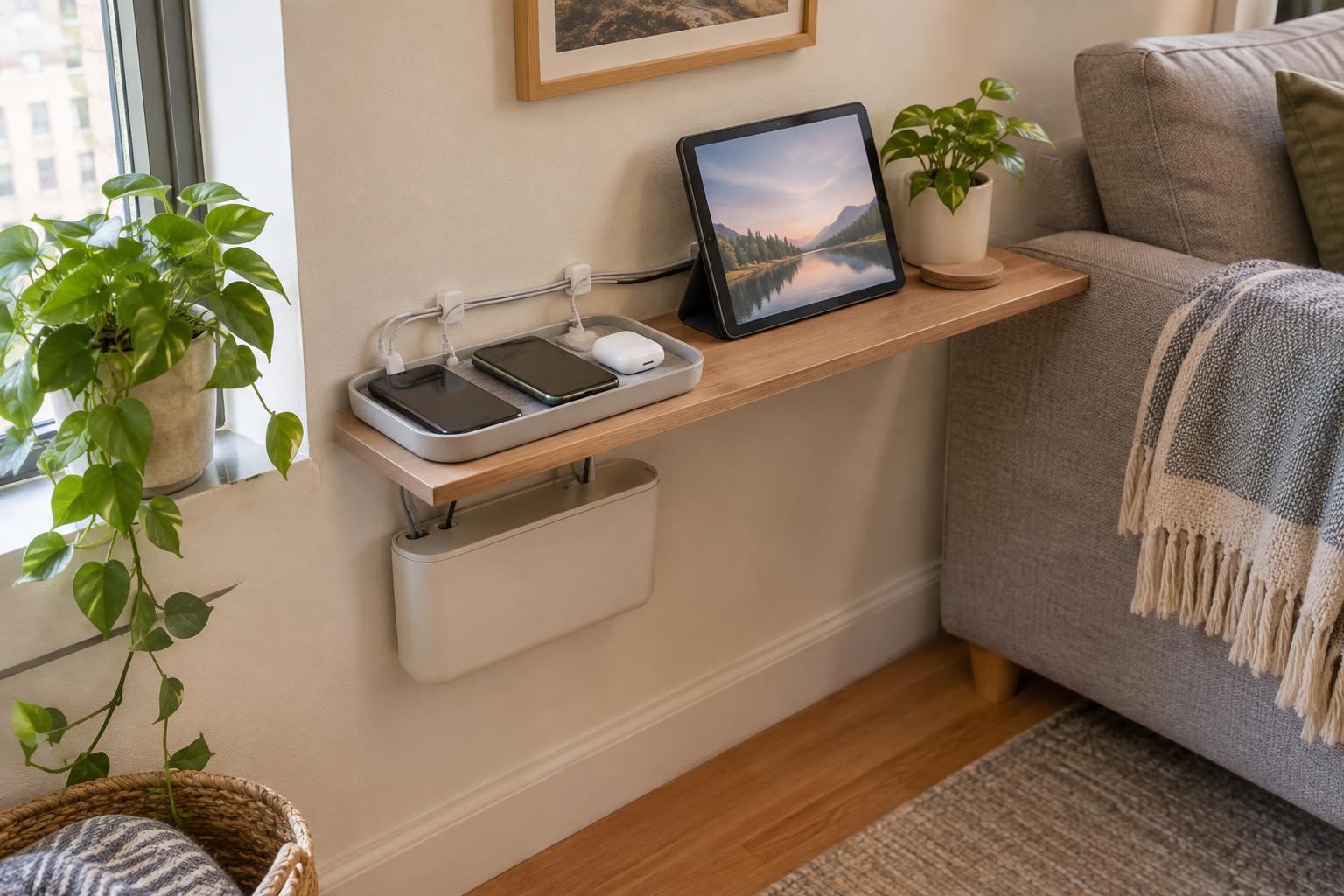
Plan the cable route as part of the layout. Place desks close enough to suitable outlets that cords do not cross walkways. Follow the instructions for power strips and equipment, and avoid covering cables with rugs. If one person needs more equipment, it is fine for the two work zones to have different storage rather than forcing a perfectly matched setup.
Spend in stages and review the setup
Start with changes that cost little: rearrange furniture, move rarely used items out of the work zone, and test a borrowed or existing chair. Then prioritize the purchases that solve a problem you have actually noticed. For one household, that may be a second work surface; for another, it may be better task lighting or a way to store work materials at the end of the day.
Leave some flexibility in the budget for adjustments. A compact setup often needs a week or two of use before you notice that a drawer hits a chair or afternoon light falls directly on a screen. Make one change at a time so you can tell whether it helps.
Finally, agree on an end-of-day reset. Clear cups and loose paper, return shared items, and leave both work positions ready for the next morning. In a small home, a workspace for two succeeds when it supports the working day without taking over the room the rest of the time.