Give the workday a visible beginning
A separate office provides an obvious cue: you enter it to work and leave it when you are done. At a dining table or in a living room, you may need to create that cue yourself. Keep the start of the day short and repeatable. Open the blinds, bring out your work supplies, fill a glass of water and write down the first task. The sequence matters more than the particular steps.
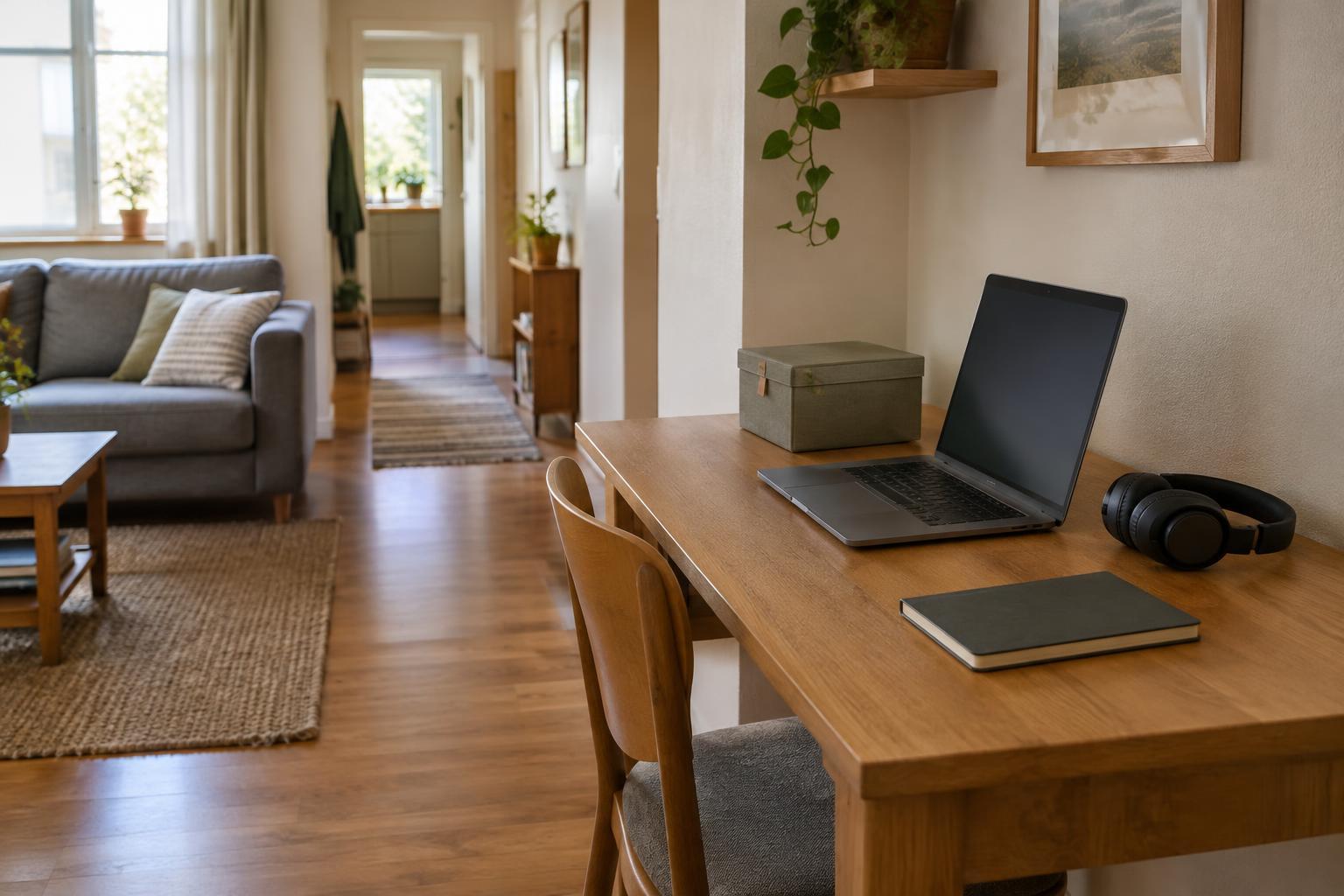
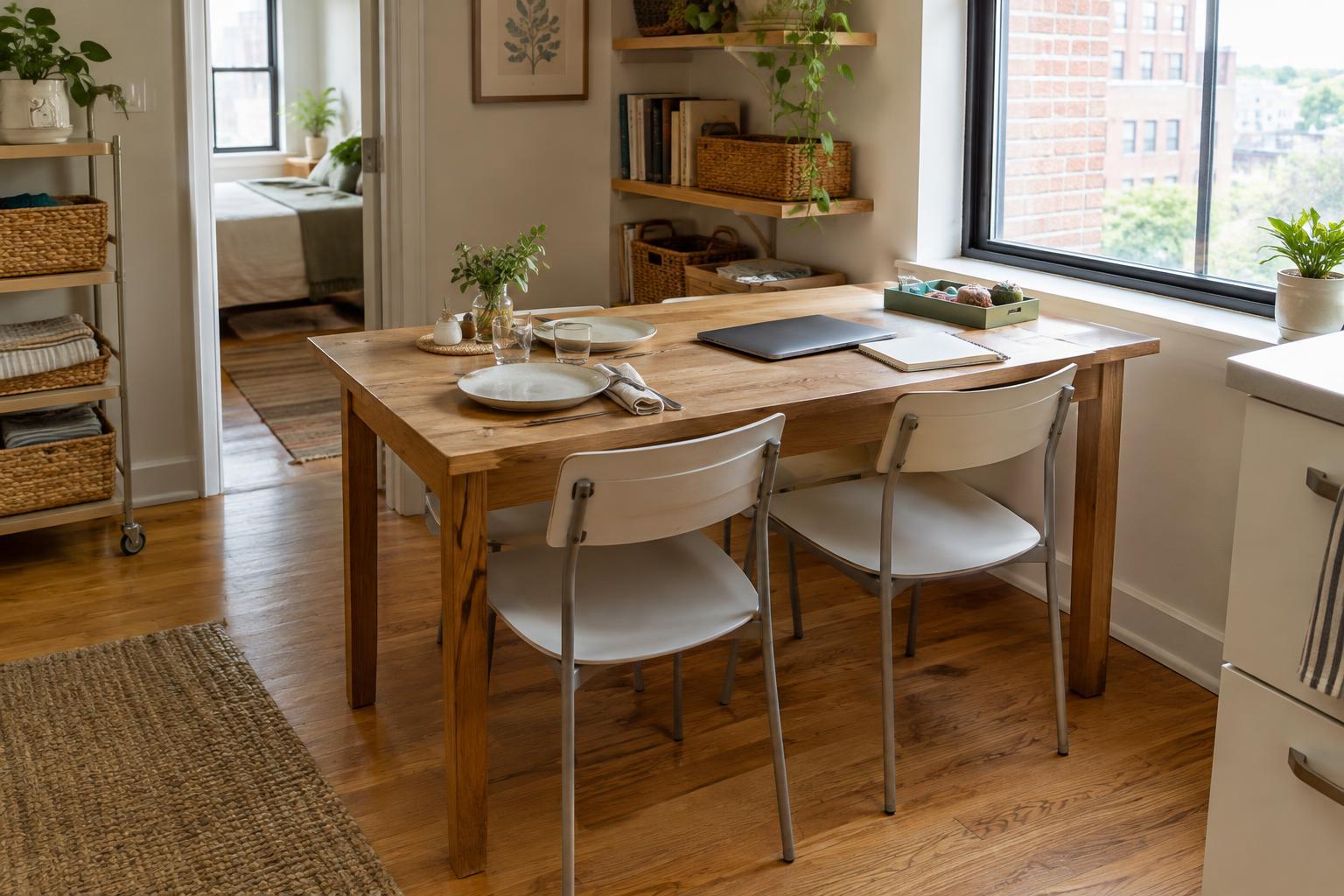
Choose a start routine that fits the room rather than one that requires rearranging it. If your laptop lives in a cupboard, setting it on a clear placemat may be enough to mark the table as a temporary workspace. If you use a living room corner, switching on a task lamp can serve the same purpose. You do not need to buy anything new to make the transition noticeable.
Keep setup small enough to repeat
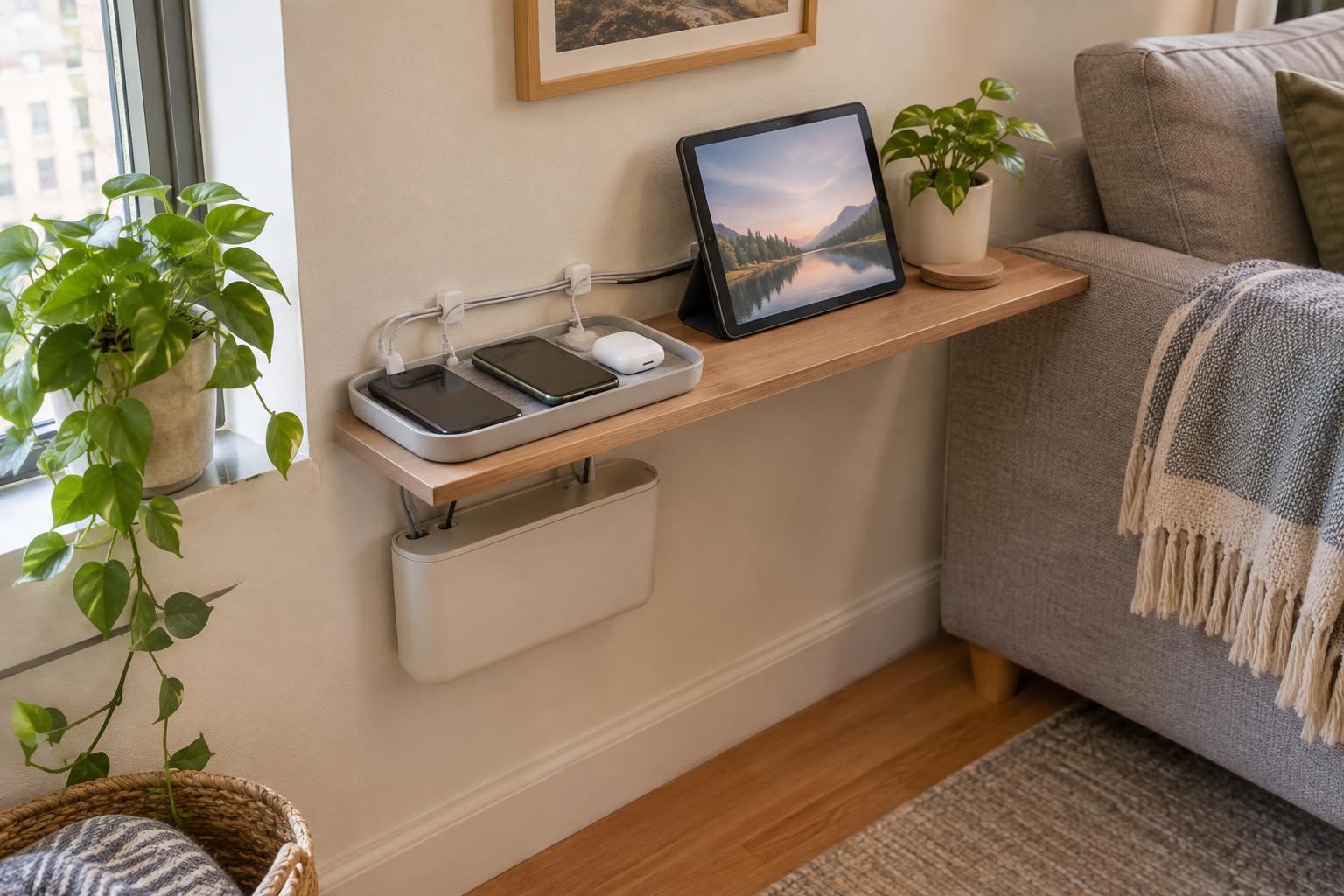
A routine becomes difficult to maintain if starting work means moving half the room. Identify what you actually use most days: perhaps a laptop, charger, notebook and headphones. Give those items one portable home, such as a basket, tote or drawer. Store less-frequent supplies nearby but outside the daily setup. This keeps the work surface useful without letting equipment spread across it.
Make the setup comfortable as well as tidy. Clear enough space for your arms and any paper you need, position the screen where you can see it easily, and use a chair that feels supportive for the time you expect to sit. If the table also hosts meals, a wipeable mat can protect it and give your supplies a defined area. These small choices reduce the friction of setting up again tomorrow.
Mark pauses without abandoning the room
When the kitchen, sofa and desk are close together, a break can blur into either more work or a household chore. Give short pauses a simple boundary. Close the laptop or turn the screen away, stand up and move to another spot for a few minutes. If you cannot leave the room, changing your posture or looking away from the work surface can still help distinguish a pause from another stretch of desk time.
Household tasks can be tempting because they are always in view. If you notice one while working, add it to a separate home list instead of automatically doing it. Then decide during a planned break whether it is worth your time. This approach leaves room for real-life interruptions without making every visible dish or stray item part of the workday.
Use a short shutdown sequence
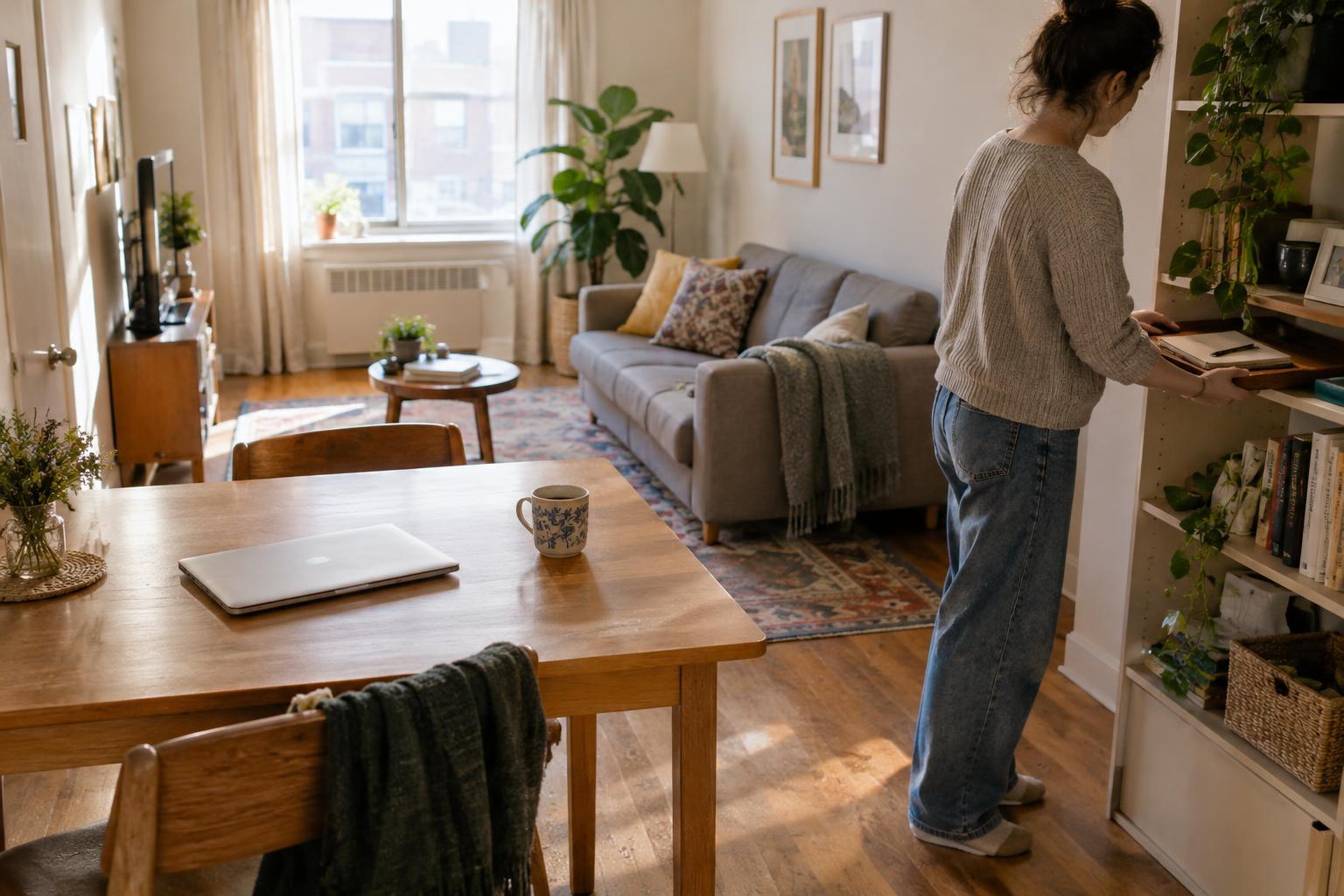
Finishing work is more than closing a laptop. Spend a few minutes noting what needs attention next time, including the first task you will tackle. Put away work materials, clear cups or scraps of paper, and return the surface to its other purpose. A brief sequence can prevent an unfinished task from remaining physically in front of you all evening.
You can make the end of the day visible without staging a dramatic reset. Move the work basket off the table, turn off the task lamp or fold away a laptop stand. If you share the room, agree on where equipment goes so that putting it away does not shift clutter into someone else’s space. On days when you must stop quickly, prioritize securing your work and clearing the area you need for the next household activity.
Adjust the routine to the household
A shared room will not always be quiet or available on schedule. A dining table may be needed for a meal; a sofa corner may be the only comfortable place for someone else to relax. Talk through the times when the room changes use and which items can stay out. A portable setup is particularly useful when you need to move without losing track of your work.
Try a modest version of the routine for several workdays before adding steps. If packing away takes too long, reduce the number of supplies you bring out. If you keep returning to work after dinner, choose a clearer finishing cue, such as putting the laptop in its storage spot. The goal is not a perfectly separated home and work life; it is a room that can change purpose with less effort.