Start with the clothes you actually store
Before buying organizers, take everything out of the closet and group it by how it needs to be stored. Put shirts, trousers, dresses, and coats in separate hanging piles. Group knitwear, T-shirts, and other foldable pieces together, then gather shoes, bags, belts, scarves, and smaller accessories. This quick inventory shows which categories need the most room. It also reveals items that could live elsewhere, such as out-of-season bedding or luggage.
Measure the closet’s width, depth, and usable height, including the space above the door opening. Note hinges, sliding doors, baseboards, and anything that blocks access. Measure a few of your longest garments while they are on hangers so you know how much clear space they need. Sketch a simple front view of the closet and mark the areas you can reach comfortably. The easiest-to-reach space should go to the clothes you use most often.
Give hanging clothes the right amount of room
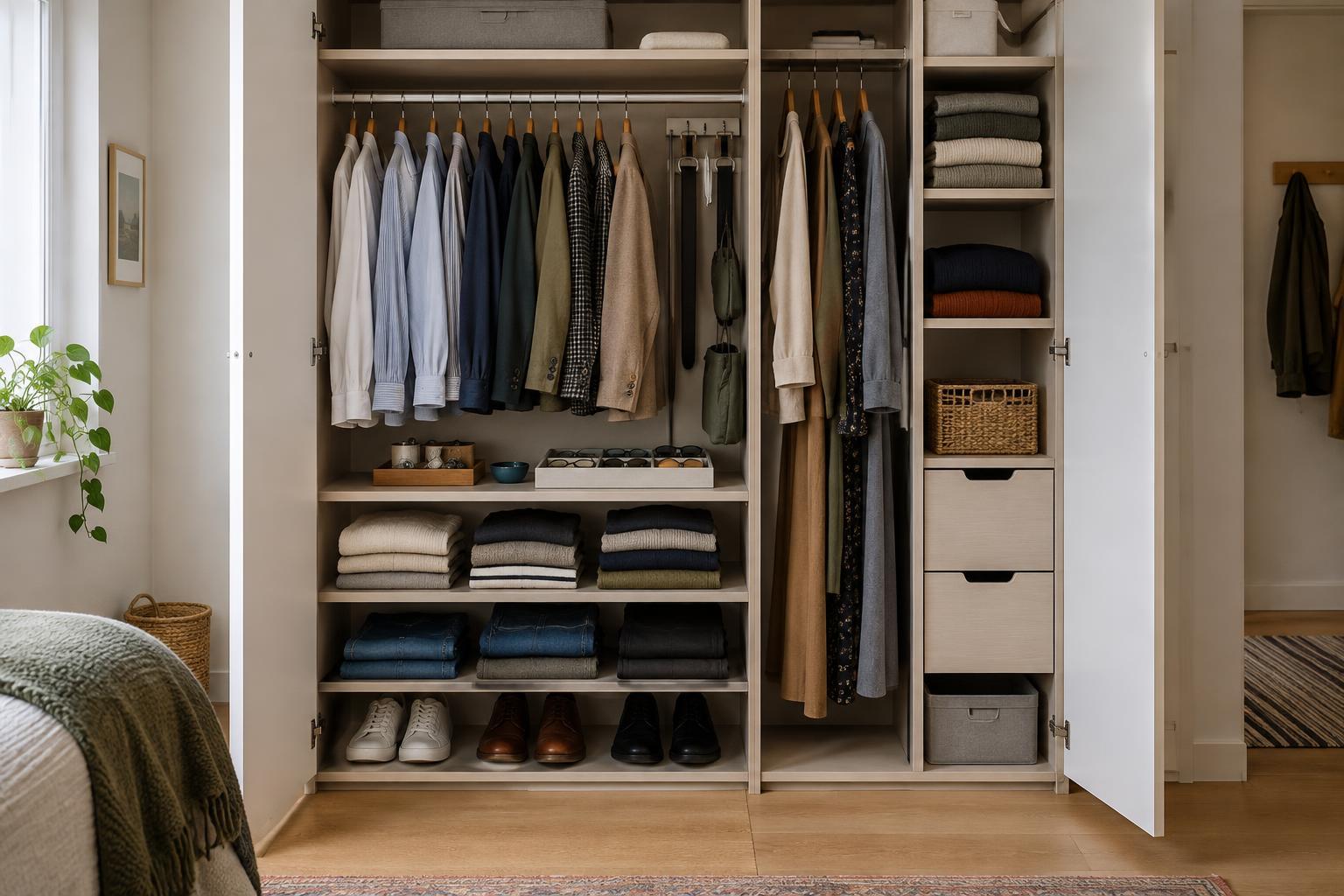
Hanging space is often the hardest part of a compact closet to change, so plan it first. If most of your clothes are shirts, jackets, or folded-over trousers, two shorter rails can make better use of the height than one rail above a large empty space. Keep one full-height section if you regularly hang dresses, long coats, or trousers by the waistband. There is no benefit to doubling the rails if it leaves your everyday clothes dragging on the shelf below.
Allow enough width for garments to move along the rail without being crushed. Matching slim hangers can help create a tidier row, but they cannot fix a rail that is too full. Keep the current season’s most-used clothes toward the front or center. If the closet is shared, give each person a clear portion of the rail rather than mixing everything together; that makes it easier to see when one section needs editing.
Use shelves and drawers for folded items
Folded clothes need a surface that is easy to reach and does not encourage tall, unstable piles. A narrow shelf may work well for one stack of sweaters, while a wider shelf can hold two distinct stacks or a pair of bins. If shelves are deep, place less-used items at the back and everyday pieces at the front. Avoid filling the full depth with loose layers that require you to remove everything to find one shirt.
Drawers or pull-out baskets can be useful for socks, underwear, and small folded items, but they need room to open. In a closet with tight door clearance, labeled bins on shelves may be simpler and less expensive. Keep heavier items on lower shelves and leave the uppermost shelf for light, occasional-use belongings. If you are adding a freestanding shelf unit, check that it fits around the door opening as well as inside the closet.
Assign small accessories a visible home
Accessories tend to spread into whatever gaps are left. Give them specific homes instead: a shallow tray for watches and small items, hooks for frequently used belts or bags, and a divided box for scarves or other soft accessories. Mount hooks where they will not catch on hanging clothes or stop the door from closing. A hanging organizer can work for shoes or small items, provided it does not take space needed for the rail.
Use the floor deliberately rather than treating it as overflow. A low shoe rack may keep everyday pairs visible; a single bin might be better if you store only a few pairs there. Leave a clear path to anything at the back. For seldom-used accessories, a labeled box on the top shelf is usually easier to manage than several small containers whose contents you cannot see.
Test the layout before making it permanent
You can try the plan before installing new fittings. Arrange existing bins and shoes in their proposed positions, and use removable labels to mark shelf categories. Check whether you can reach folded items, slide hangers, open drawers, and close the door without moving something else first. If one task feels awkward, adjust that zone before spending money on a permanent solution. A compact closet should support your normal routine, not demand a careful rearrangement every morning.
Start with changes that solve a measured problem: an extra rail when short garments dominate, a shelf when folded piles lack a home, or a few hooks when bags land on the floor. Leave a little unassigned space so clean laundry can be put away easily. Once the closet is in use, notice which items repeatedly end up outside their zones. Moving a bin or changing a category is often more effective than adding another organizer.