Choose a table worth refreshing
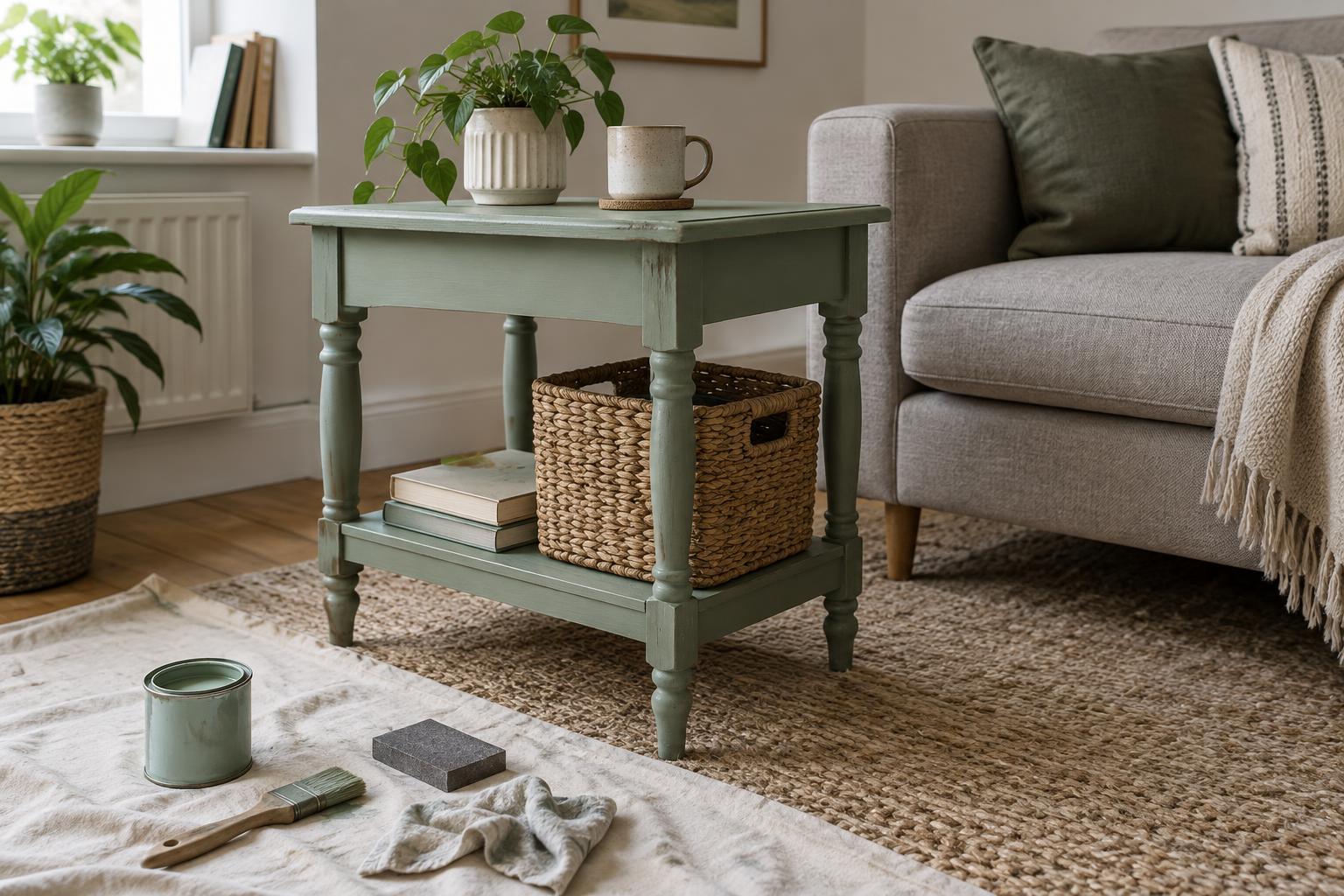
A side table is a manageable painting project: it is small enough to move, yet prominent enough to change how a corner feels. For a compact room, look for a piece that does more than hold a lamp. A lower shelf can store books or a basket, while a narrow top can fit beside a sofa without blocking the walkway. Measure the available space before buying, including the clearance needed to open a drawer or walk around the table.
Check that the table stands level and that its joints, legs and drawer are sound. Paint can improve a worn finish, but it will not fix a wobbly frame or swollen particleboard. Minor scratches are usually easier to deal with than peeling veneer or water damage. If you already own a table, decide whether its shape and size work where you need it before spending anything on supplies.
Plan the look and the spending
Pick a finish that suits both the table and its surroundings. A colour repeated in a cushion, rug or print can help the table feel intentional. In a busy room, a quieter shade may be more useful than a bold accent. You can also paint the base and leave a sound wood top as it is, provided the existing finish is in good condition. Test your colour choice with a sample or a painted piece of card held near the table in the room.
For a low-cost project, take stock of what you have before shopping. You may be able to reuse a brush, tray, drop cloth or leftover paint if the products are suitable for furniture and still in usable condition. Prioritise the cleaner, primer and paint needed for the table’s surface rather than buying decorative extras. Check product labels for compatibility and coverage so you buy an appropriate amount, not simply the largest container.
Clean and prepare the surface
Remove any drawer and hardware, then photograph the table if you think you may need a reminder when putting it back together. Clean the entire piece, especially around handles and edges where hands leave grease. Let it dry fully. Tighten loose screws and fill small dents with a suitable filler if you want a smoother painted finish; allow the filler to dry as directed.
Preparation depends on what the table is made from. Solid wood with a sound finish may need light scuffing so the primer can grip. Veneer has a thin surface layer, so work gently. Slick laminate may need a primer labelled for difficult surfaces. If an existing coating is peeling, do not paint straight over it: the new finish may lift with the old one. Follow the instructions for your chosen products, including any cleaning or sanding steps.
Work in a ventilated area and protect the floor. If the table has an old or unknown coating that could be hazardous to disturb, avoid sanding or scraping it until you have checked appropriate local guidance. This is a good point to choose a different piece if safe preparation would be beyond the scope of a simple refresh.
Paint in thin, patient coats
Apply primer where the paint system calls for it, paying attention to edges, drawer fronts and the underside of any visible overhang. Once it has dried according to the label, paint the table in thin coats. A small brush helps around corners and legs; a suitable small roller can make broad, flat surfaces more even. Check for drips beneath the tabletop and along the lower edges before each coat begins to dry.
Allow the recommended drying time between coats. If the surface feels rough, follow the product directions for smoothing it before the next coat, then remove the dust. Two careful coats often look neater than one heavy coat, but the number needed depends on the colour, surface and paint. If you plan to add a protective topcoat, confirm that it is compatible with the paint. Keep the table lightly used while the finish cures as directed, even if it feels dry to the touch.
Put it back to work in the room
Reattach the hardware once the finish is ready to handle. Keeping the original knob costs nothing; cleaning it may be enough to make it look at home with the new colour. Set the table in place and check that a lamp cord, if there is one, can run safely without crossing a walkway. Use the top for a small number of items you reach for often, and keep heavier clutter off the freshly painted surface while it finishes curing.
The most useful decorative refresh is one that still serves the room. A tray can gather remote controls or reading glasses, while a basket on a lower shelf can hide small items without adding another piece of furniture. If the corner starts to feel crowded, remove something before buying a new accessory. The painted table should make the space easier to use as well as nicer to look at.