Start with the space you actually share
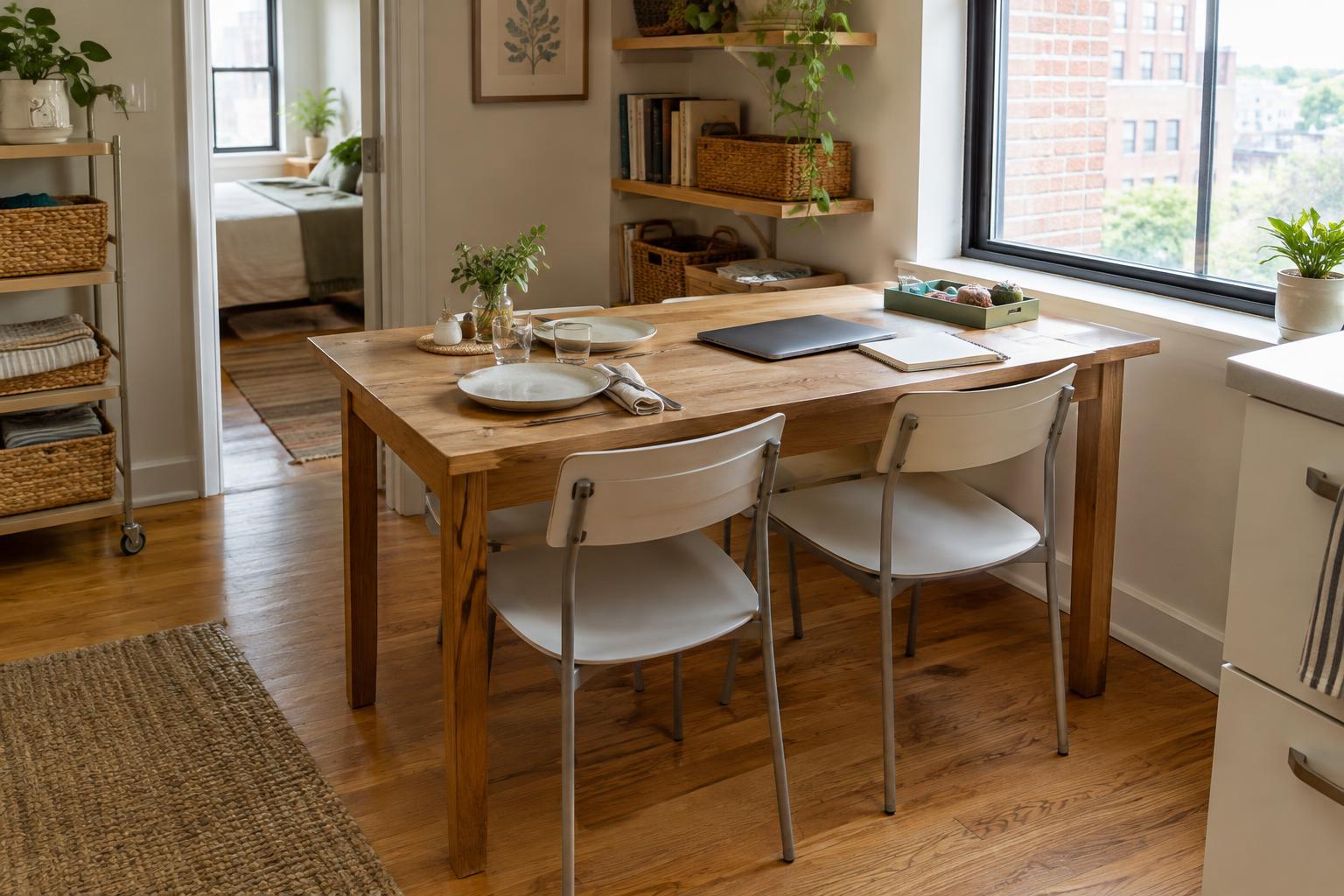
When your desk is also the dining table, work boundaries cannot depend on a closed door. Start by identifying what each person needs from the room. You may need a quiet hour for a call; a housemate may need the table for lunch. Both needs are easier to manage when they are said aloud rather than discovered in the middle of the day.
Choose a calm time to talk, not the moment someone interrupts you. Explain the work activities that are difficult to pause, such as calls or focused writing, and ask when others most need the space. Keep the conversation about practical constraints rather than who is making the most noise. The aim is an arrangement everyone can use, not a rule that turns a common room into your office all day.
Put predictable times on a shared schedule
A simple schedule can remove much of the guesswork. Mark meetings that need quiet, the hours you expect to work and any time when you need the table cleared. A note on the fridge or a shared calendar is enough; the best system is one your household will actually check. You do not need to list every task or explain your whole working day.
Make requests specific. “Could we keep the living room fairly quiet from 10 to 10:30 while I take a call?” is easier to act on than “Please don’t interrupt me while I’m working.” Give as much notice as you can for unusual needs, and agree on exceptions. If someone needs to enter the room to collect something, they should not have to wait for your permission to use their own home.
Build in time when the workspace returns fully to household use. If you work at the dining table, for example, agree when you will pack away your laptop and papers. A clear finish time helps housemates plan meals and helps you stop treating every free moment as work time.
Use visible signals, but define what they mean
A pair of headphones, a small desk sign or a lamp can signal that you are concentrating. Pick something easy to notice and explain it to your housemates. For example, headphones might mean “Please message me unless it is urgent,” while a sign could mean “I am on a call until noon.” Without an agreed meaning, a signal is only a guess.
Decide what counts as an interruption that cannot wait. A delivery needing an answer may qualify; a question about dinner might be better sent by message. Also say when you will respond. If you promise to check messages at your next break, housemates have a way to reach you without having to decide whether to speak over your work.
Signals should work in both directions. You might ask housemates to tell you before they need the room for a guest or a noisy task. You can then move, pause or rearrange work if possible. This makes the arrangement a shared coordination tool rather than a one-sided demand for silence.
Make a plan for sound, calls and privacy
Shared rooms will never be silent all the time. For routine tasks, try moving your seat away from a television or kitchen doorway, using headphones, or scheduling work that needs less concentration during busier periods. These adjustments may be more realistic than asking everyone to change their normal activities for an entire workday.
For calls, tell housemates the start and end time, and use a less-used corner if one is available. Consider what your camera or microphone could pick up: other people should not feel they are unexpectedly part of your meeting. If a conversation is sensitive, look for a more private place or another suitable way to take it rather than assuming a shared room will stay private.
Agree on a backup for days when plans collide. If a housemate needs the table or the room becomes noisy, could you work from a portable lap desk, shift a non-urgent task, or take a short break? A backup will not solve every conflict, but it can keep a small disruption from becoming an argument.
Review the arrangement before frustration builds
Try the agreement for a week or two, then ask what worked. Perhaps the quiet period was too long, the sign was hard to see, or you regularly left work materials on the table after hours. Change one or two details rather than abandoning the whole plan. Different work shifts, visitors or changing household routines may call for another adjustment later.
Keep your requests reciprocal and realistic. Thank housemates for making room for an important call, and respect their own need for quiet, access and downtime. You do not need a perfect home office to establish boundaries. You need clear requests, a way to communicate when plans change and a shared understanding that the room remains everyone’s space.