Start with the mess, not the tool
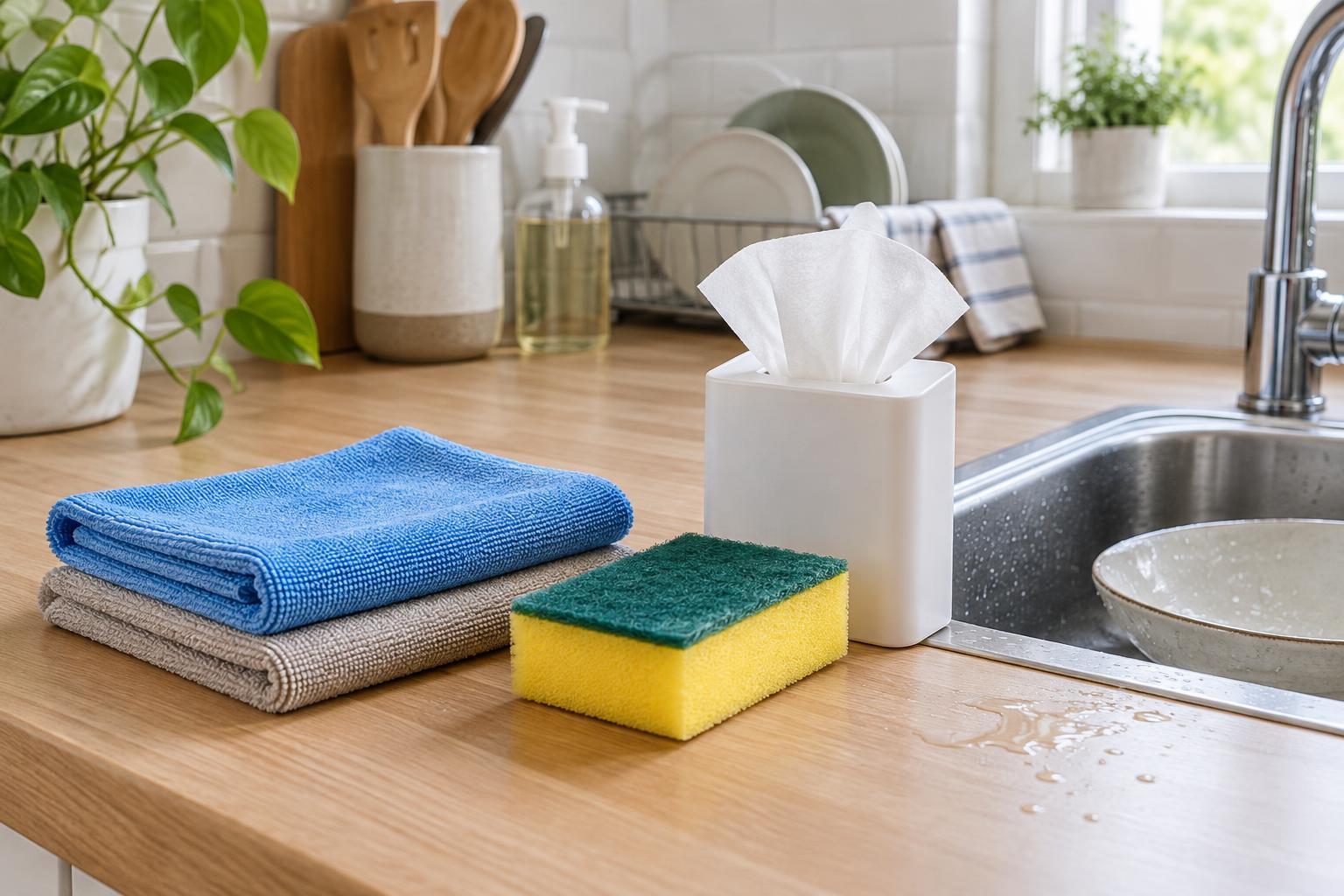
Microfiber cloths, sponges, and disposable wipes all have a place in everyday cleaning, but they are not interchangeable. A cloth is useful for collecting dust and wiping broad surfaces. A sponge is better suited to dishes and stuck-on food. A disposable wipe can be convenient for a quick, contained job when washing a reusable tool is impractical. Choosing by task helps you avoid buying a large collection of products for a small home.
It also helps to distinguish cleaning from disinfecting. Wiping away crumbs, grease, and visible dirt is ordinary cleaning. If you need to disinfect a surface, use a product labeled for that purpose and follow its directions, including any required wet contact time. Neither a damp microfiber cloth nor an ordinary sponge disinfects a surface simply by wiping it.
Microfiber cloths: versatile if you can wash them
A microfiber cloth is a useful default for counters, desks, shelves, mirrors, and many other smooth surfaces. It can pick up dust when used dry and handle routine marks when lightly dampened. Fold the cloth into quarters so you can switch to a clean side as you work. For delicate finishes or screens, check the surface maker’s care instructions before using water or a cleaning product.
The trade-off is laundry. Set aside used cloths rather than leaving them damp in a pile, and wash them according to their care labels. You can keep a few cloths for different jobs—for example, one set for the kitchen and another for bathroom surfaces—without needing a complicated color-coded system. In a compact space, a small washable bag or ventilated container can hold dirty cloths until laundry day.
Sponges: helpful for scrubbing, less useful for dusting
Sponges are handy at the sink because they hold water and help loosen food from dishes, cookware, and washable counters. A soft side can wipe up spills; a textured side may help with tougher residue. Test abrasive surfaces cautiously, since they can scratch some finishes. For a dried-on spill, letting it soak briefly or using the appropriate cleaner may work better than scrubbing harder.
A sponge needs more attention between uses because it often stays wet and collects food particles. Rinse it thoroughly after use, squeeze out excess water, and let it dry where air can circulate. Replace it when it smells unpleasant, falls apart, or no longer comes clean. Avoid using the same sponge for dishes and tasks such as wiping up raw-meat juices. For those messes, use a separate cleaning method and clean the affected surface appropriately.
Disposable wipes: convenient, but check the label
Disposable wipes can earn a place in a routine when speed and portability matter: a small bathroom touch-up, a spill away from the sink, or a task you would rather not add to your laundry. Their limits are cost per use, packaging, and waste. In a small home, an opened pack can also become clutter if you rarely reach for it.
Read the package before assuming a wipe is suitable for every job. Some are intended for general cleaning, while others are labeled as disinfectants and have specific use directions. Check surface compatibility, and avoid using a household cleaning wipe on dishes or food-contact areas unless its label allows it and you follow any rinsing instructions. Put used wipes in the trash rather than the toilet, even if a package suggests they are flushable.
Build a small, workable cleaning kit
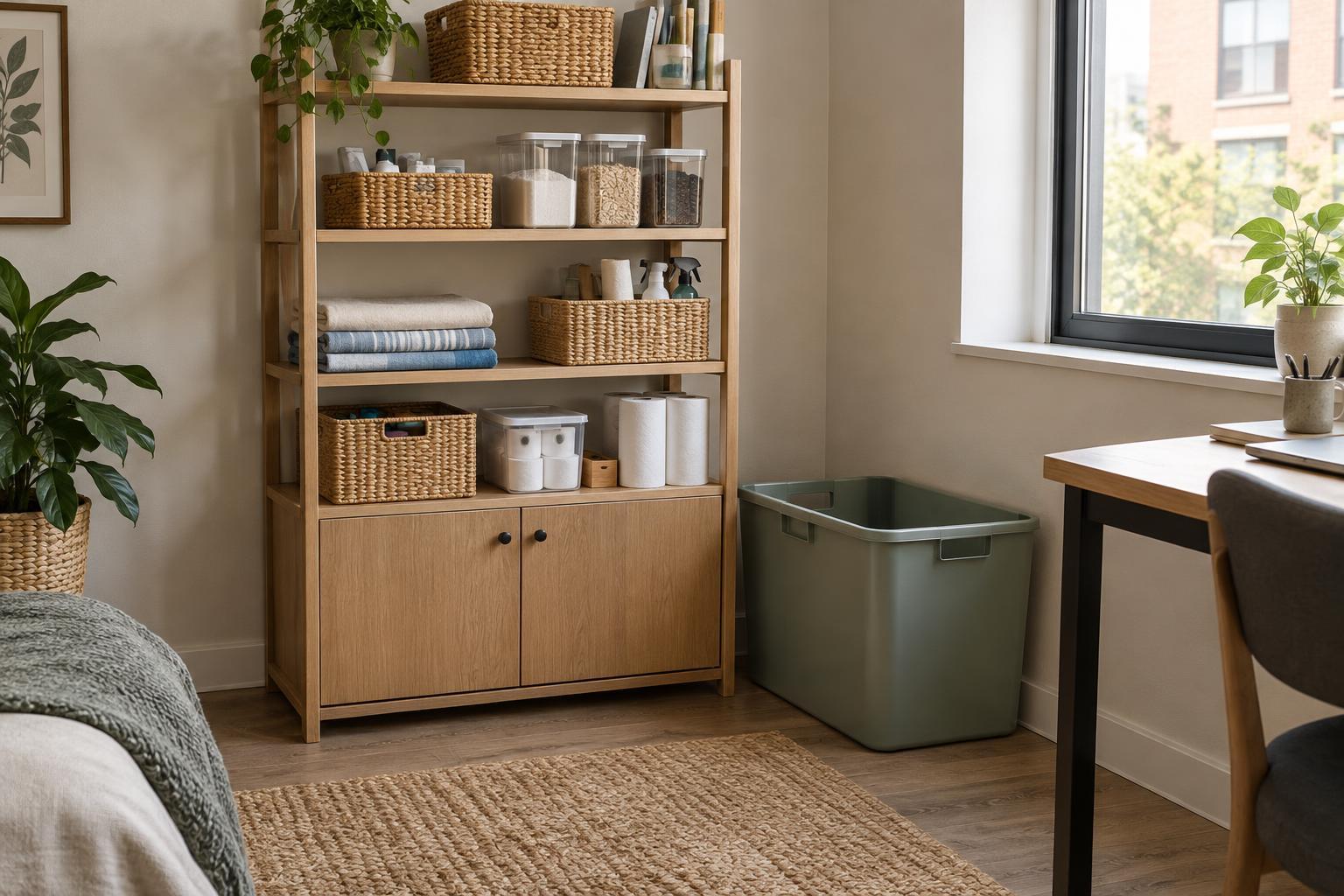
For many compact homes, a modest kit is enough: several microfiber cloths for general surfaces, one or two sponges for sink-side work, and perhaps a small pack of wipes for occasional use. Store clean cloths dry, give the sponge a place to drain, and keep cleaning products where their labels recommend. If you share a multipurpose room, a small caddy makes it easier to move supplies between the desk, kitchen, and bathroom without leaving them on display.
Consider your habits as well as the purchase price. Reusable cloths are only convenient if you have a way to wash and dry them; sponges work best if you can keep them clean and replace them as needed. Wipes may save effort on a particular day but can become an expensive default. Choose the simplest combination you will maintain, and adjust it when you notice a tool regularly sitting unused.