Decide what the divider needs to do
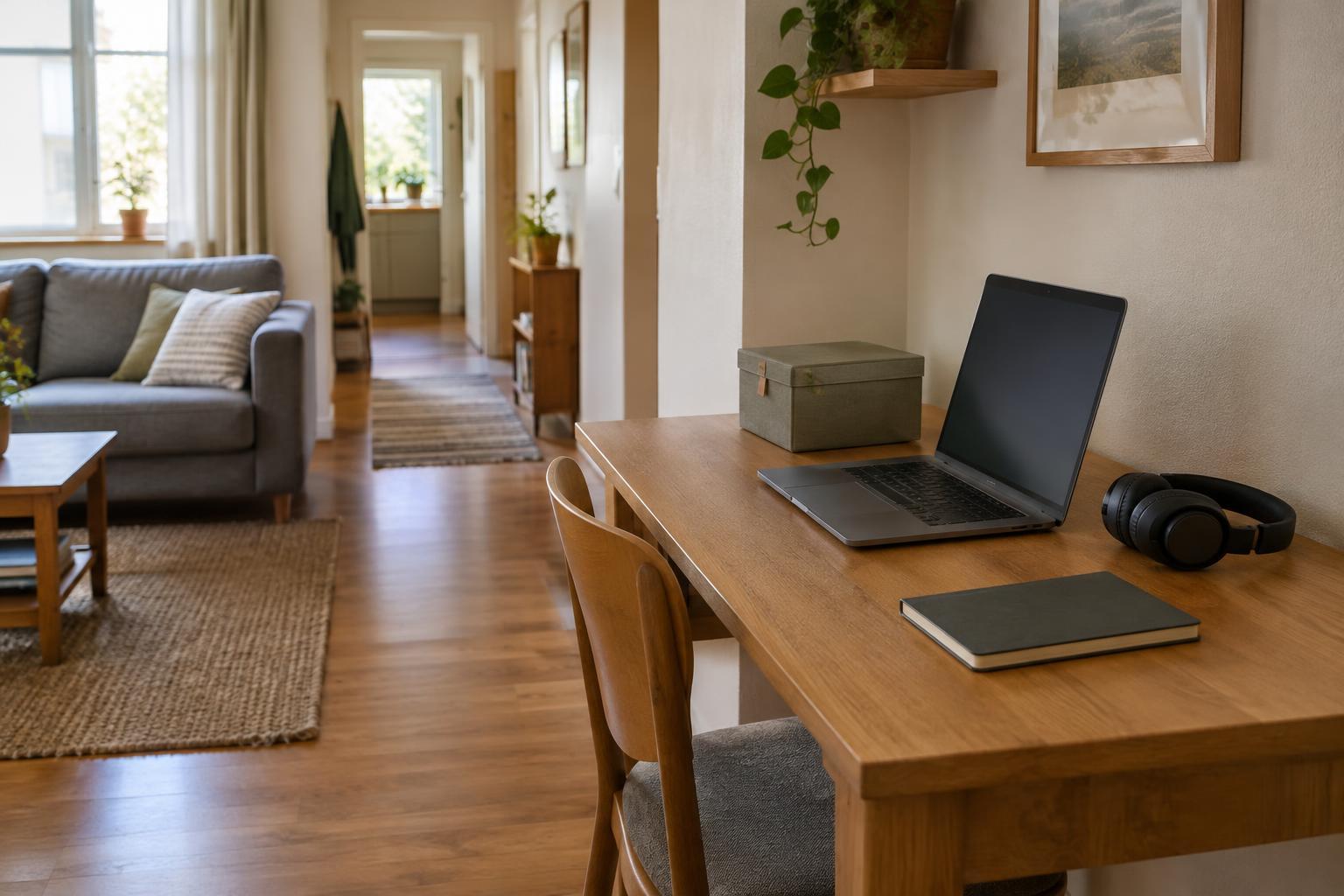
A divider works best when it solves a specific problem. Perhaps your desk faces the sofa and you want to stop looking at work after hours. Perhaps two people use the same room for different activities, or you want guests to see a sitting area rather than a laundry rack. These goals call for different levels of coverage. A partial visual boundary may be enough to mark a work zone; concealing clutter calls for a taller, more opaque surface.
Before shopping, mark the proposed position on the floor with removable tape. Walk the route you normally take through the room, open nearby doors and drawers, and sit in the places you use most. Check the view from each seat, not just from the doorway. A divider that looks effective head-on may leave a desk fully visible from the sofa. The aim is to make activities feel separate without turning everyday movement into an obstacle course.
When a folding screen makes sense
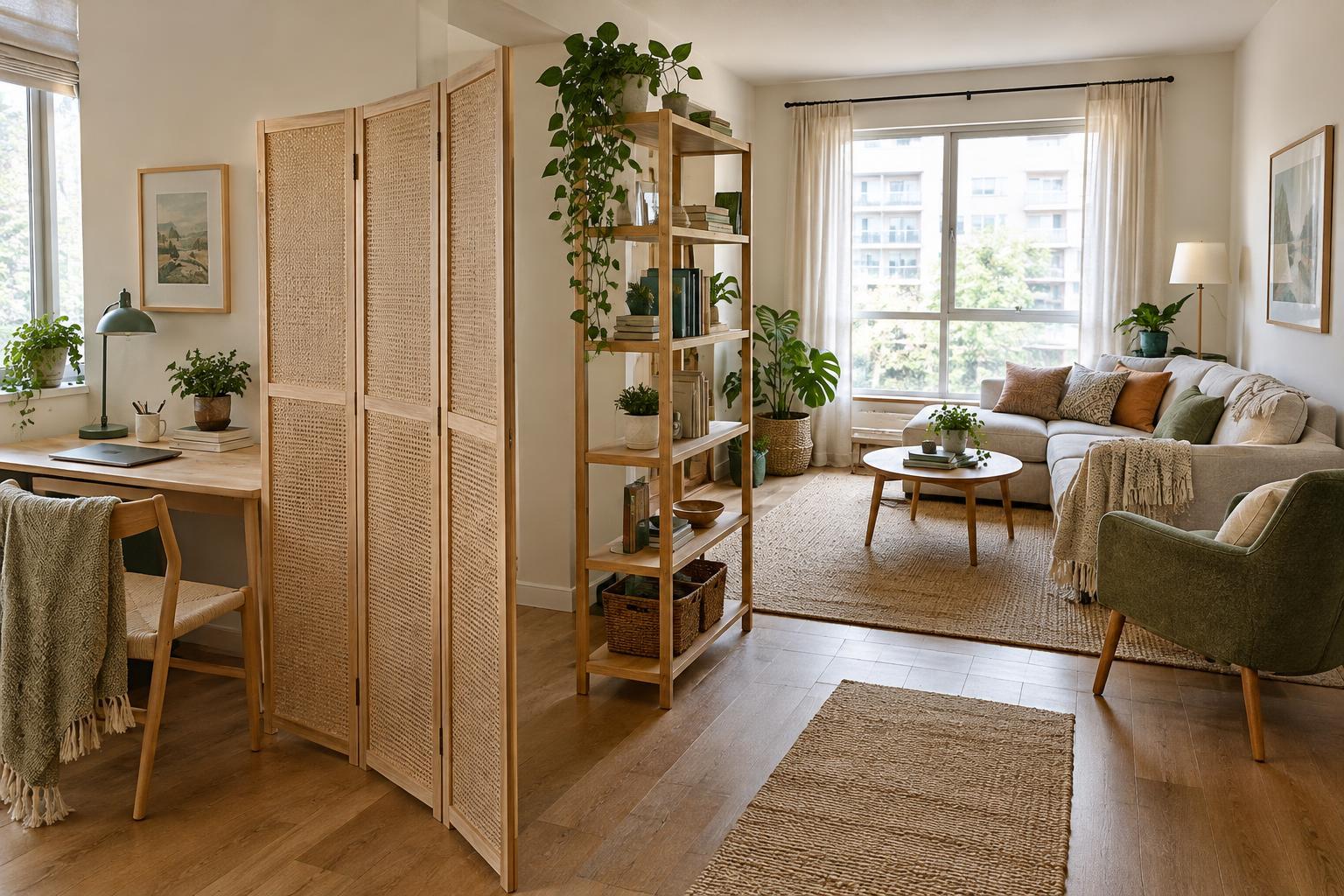
A folding screen is useful when the layout changes often. You can unfold it beside a desk during working hours, shift it to hide a guest bed, and fold it away when you need more floor space. Its panels can stand in a shallow zigzag, which usually gives them a steadier footing than a straight line. That shape also takes up floor area, so measure the space available in front of and behind the planned boundary.
Screens come in solid and more open designs. A solid fabric or wood panel offers more visual privacy, while an open weave or slatted panel can let daylight through. Neither is likely to block much conversation or household noise. If calls are the main concern, position the desk farther from shared seating where possible and use the screen primarily to reduce visual distractions.
For a modest budget, consider whether a secondhand screen can be cleaned, repaired or covered with new fabric. Check its hinges, panel edges and feet before buying. A screen that wobbles when gently moved may be frustrating in daily use, particularly in a busy walkway.
When a freestanding divider earns its footprint
A freestanding divider is a broader category: it might be an open shelving unit, a clothes rail with a curtain, a planter stand or a purpose-made partition. These options suit a boundary that will stay in roughly the same place. An open shelf can separate a living area from a work corner while holding supplies on one side and everyday objects on the other. A curtain can be drawn when privacy matters and pulled back when the room needs to feel open.
The trade-off is footprint and upkeep. Storage dividers can gather clutter on both faces, and a heavily loaded unit may make a small room feel crowded. Keep frequently used items at a comfortable reach and leave some sections open if you want light to pass through. Follow the maker’s instructions for assembly, loading and stability; if a unit requires anchoring, it may not suit a no-fixings rental or a layout you plan to change regularly.
Compare the full cost rather than the price of the main item alone. A rail may also need a curtain and suitable fabric, while shelving may need baskets to hide small items. If you already own a sturdy, appropriate piece, rearranging it first can help you test the idea before spending more.
Protect light, access and the room’s sense of space
Put the tallest or most opaque divider where it will not cut the room’s main source of daylight off from the area that needs it. A lower shelf or open screen can suggest a boundary without making either side feel enclosed. In a multipurpose room, try placing the divider perpendicular to a wall rather than across the whole room. That can create a work nook while leaving a clear route around it.
Keep doorways, windows you need to reach and normal walking paths usable. Avoid placing a lightweight screen where a door could strike it or where someone is likely to catch a corner while carrying laundry. Consider pets and children, too: a movable panel that is convenient for adults may be easy to knock over. If the arrangement makes the room feel cramped, shorten the boundary or move it closer to the activity it is meant to screen.
Test the arrangement before committing
Live with a temporary version for a few days. A clothes rail, existing shelf or taped floor outline can reveal whether the proposed zone is large enough for a chair to pull out and for someone else to pass behind it. Try the room in its different modes: working, relaxing, cleaning and hosting. Notice whether you naturally move the divider or start walking around it.
Choose a folding screen if easy repositioning and compact storage matter most. Choose a freestanding divider if you want a more settled boundary or useful storage and can spare the footprint. In either case, the most successful option is not necessarily the one that hides the most. It is the one that gives each activity enough separation while keeping the whole room comfortable to use.