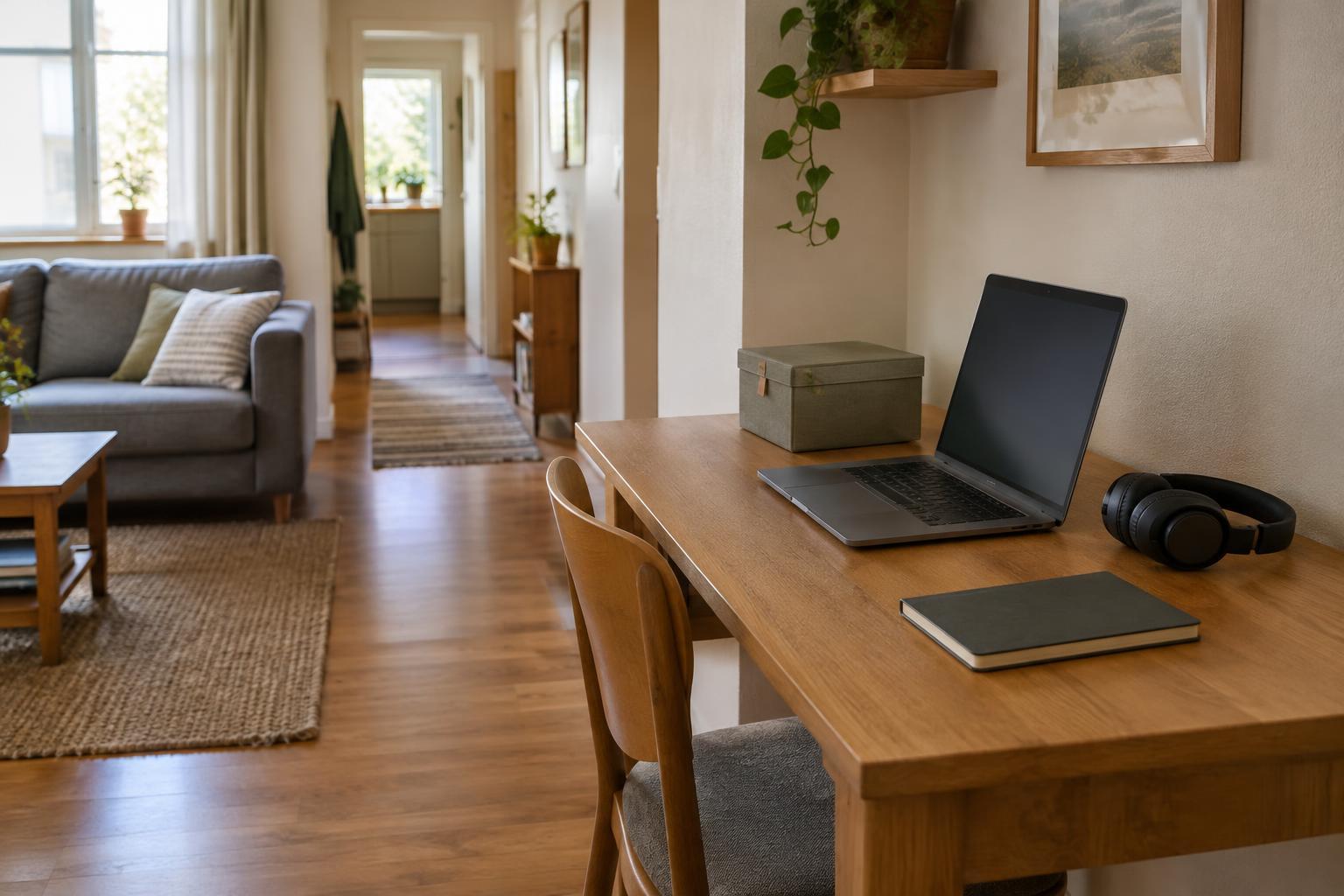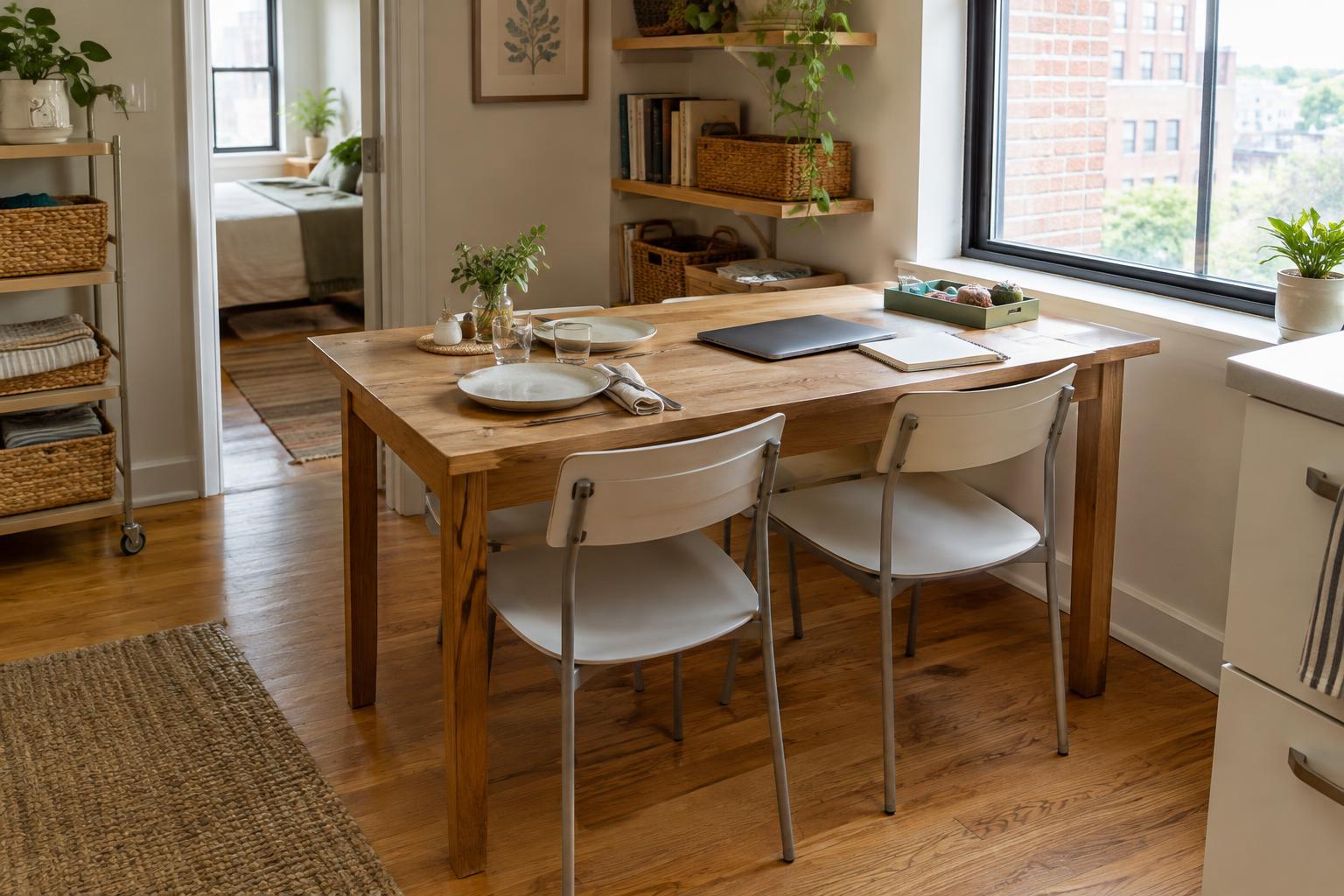
Start with what the room needs to do
A compact room can look appealing in a photo and still be awkward to live in. Before choosing paint or cushions, list what happens there on an ordinary day. A living room might also be a workspace, a play area and a place to dry laundry. Notice which doors need to open, where people walk and what must stay within reach. Decorating around those needs is more useful than trying to make the room look as empty as possible.
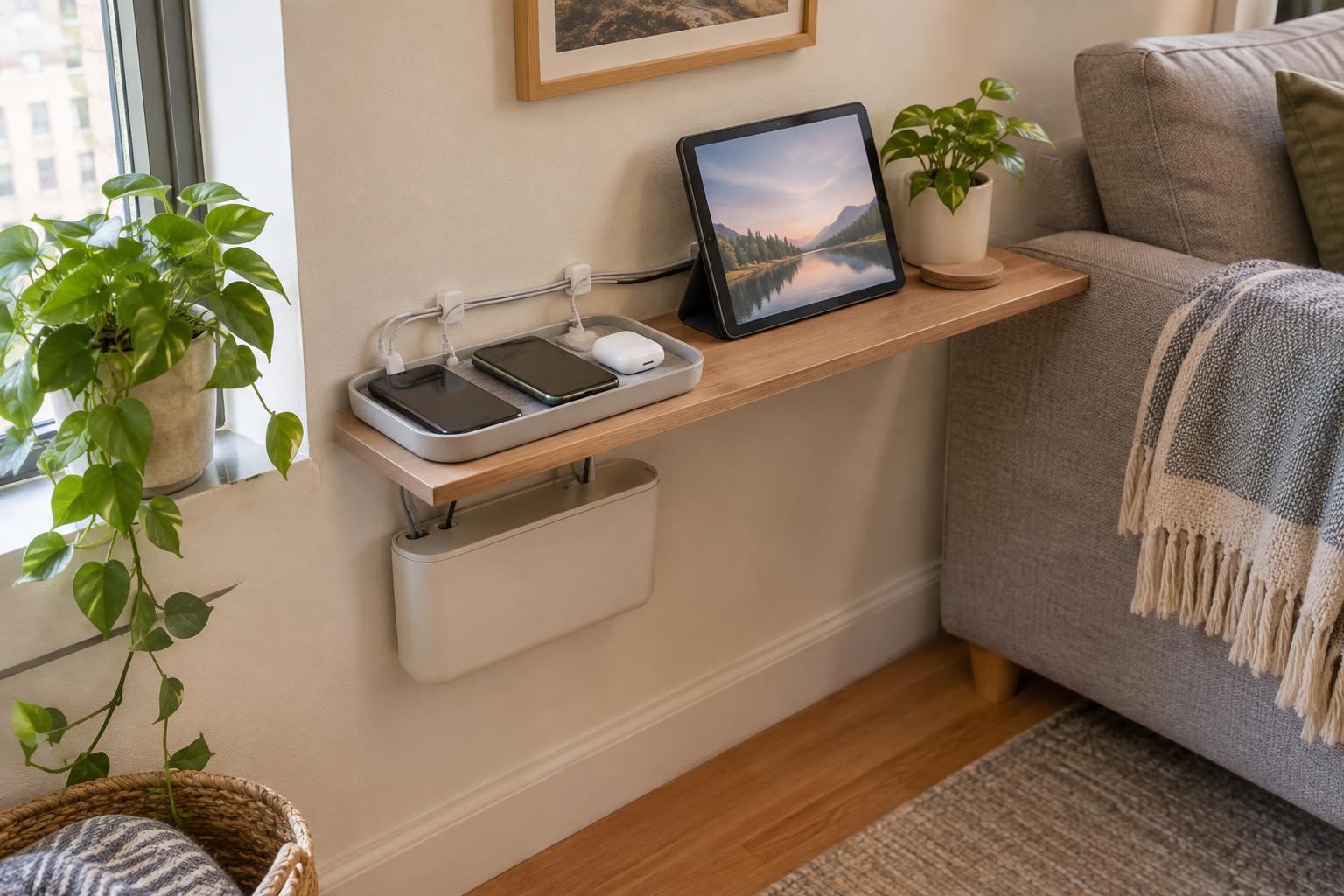
One common mistake is adding decorative pieces before deciding where everyday things will go. If papers, chargers or toys always land on a side table, a new vase will only compete for space. Clear one surface, give those items a nearby home, and then decide whether the surface needs decoration at all. This costs nothing and makes later purchases easier to judge.
Choose art for the wall, not just the price tag
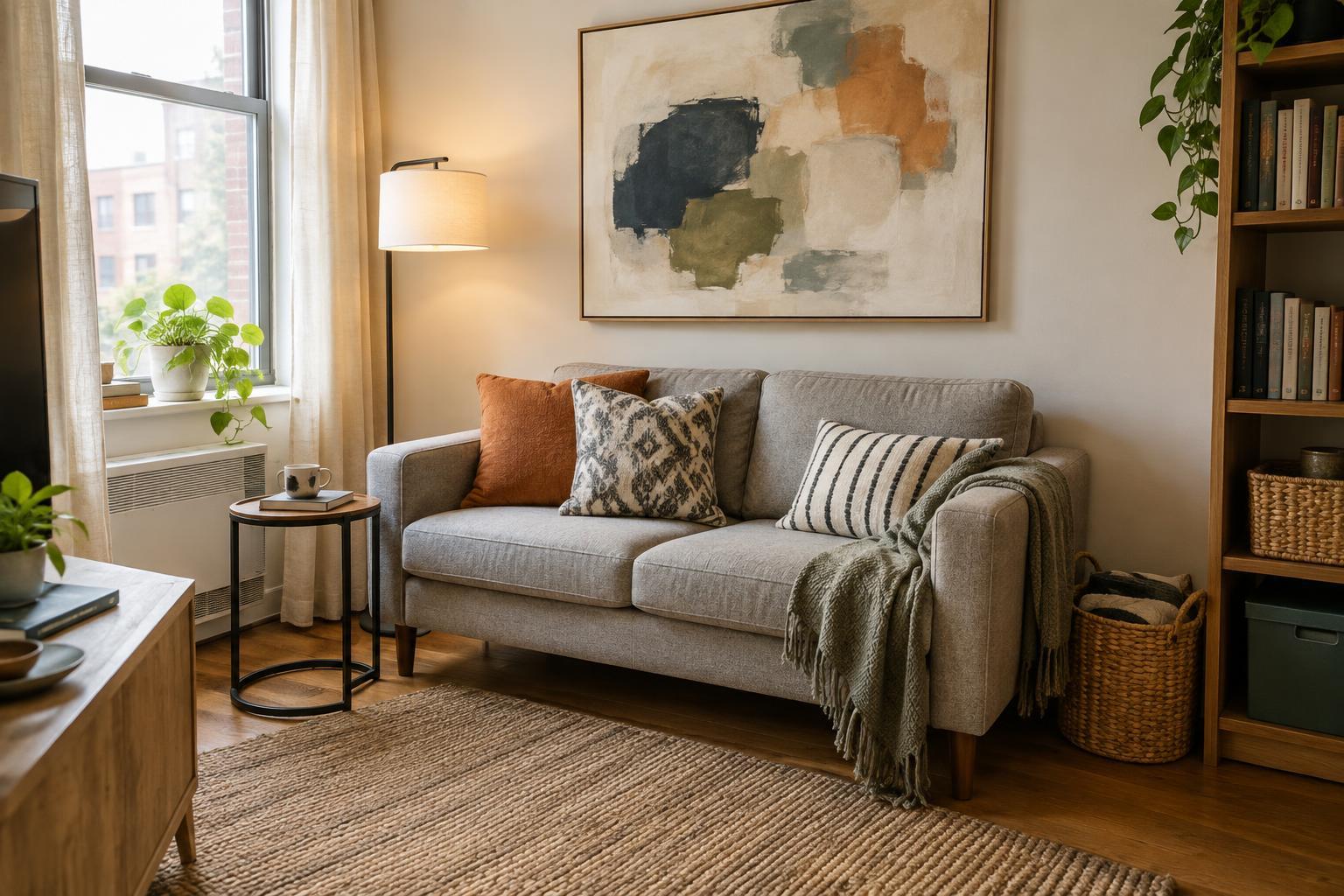
A small print hung alone above a sofa or bed can look stranded, even in a small room. The issue is not that the art is inexpensive; it is that its size does not relate to the furniture beneath it. Try a larger piece, or arrange several smaller pieces as one group. Leave reasonably consistent gaps between them so the group reads as a single feature rather than scattered objects.
You do not have to buy a large framed print to test the idea. Tape paper cut to the approximate size of the proposed art onto the wall, then step back and look from the doorway and from your usual seat. You can also move art you already own into a group. Hang it where you can enjoy it without craning your neck, and check that it will not interfere with a door, lamp or fold-down desk.
Give patterns room to work together
Several patterns can make a room feel personal, but too many unrelated ones may make it feel busy. This often happens when a patterned rug, bold curtains, printed bedding and several cushions are bought separately. Before replacing anything, identify the pattern you want to keep as the main feature. Let larger surrounding surfaces be quieter, and repeat one or two colors from that feature elsewhere in the room.
If you enjoy mixing prints, vary their scale instead of choosing several equally bold designs. For example, a broad striped cushion can sit beside a small botanical print if the colors connect and the sofa behind them is plain. A room used for work as well as rest may benefit from a calmer view near the desk. You can test that balance by removing a few patterned accessories for a week, then adding back only the ones you miss.
Avoid both visual clutter and overly cautious choices
Painting everything white is not the only way to decorate a small room. Light colors can feel fresh, but a darker or warmer shade may also work when it suits the available light and the mood you want. A frequent mistake is choosing a paint color from a tiny sample without seeing it at home. Paint a sample board and move it between walls; look at it during the times you normally use the room before committing.
The opposite mistake is filling every open spot because the room feels unfinished. Too many small ornaments, narrow shelves and accent colors can break the space into competing pieces. Try repeating a few materials or colors, and leave some wall and tabletop space clear. If your budget is limited, editing what you own can have more impact than buying another set of accessories.
Check scale, light and daily use before you finish
Small rooms do not require every item to be miniature. A collection of tiny tables and chairs can create more visual interruptions than a few well-chosen pieces. Measure the room and the paths through it before adding furniture, especially if the space changes function during the day. A substantial lamp or mirror can be useful, but it should not block storage, reflect an untidy work area or make a walkway difficult to use.
Finally, do not rely on one overhead light to do every job. A desk light for focused tasks and a lamp for softer evening light can make the same room more comfortable without changing its layout. Before spending money, try moving a lamp you already have. The best finishing check is simple: can you sit, work, tidy up and move around comfortably? If so, the decoration is supporting the room rather than getting in its way.