Start with the space around the window
Curtains can change how a small window reads without changing the window itself. The aim is to frame the opening so that more glass stays visible when the curtains are open. Before buying a rod or panels, measure the window frame, the wall above it and the clear space on both sides. Note anything that limits your options, such as a nearby corner, cabinet, radiator or light switch.
Think about what the curtains need to do as well as how they will look. A bedroom may need good light control, while a home-working nook may benefit from panels that reduce glare but leave the window easy to open. If furniture sits close to the wall, check that you can reach the curtain and draw it without pulling against a desk or shelf.
Place the rod above the frame
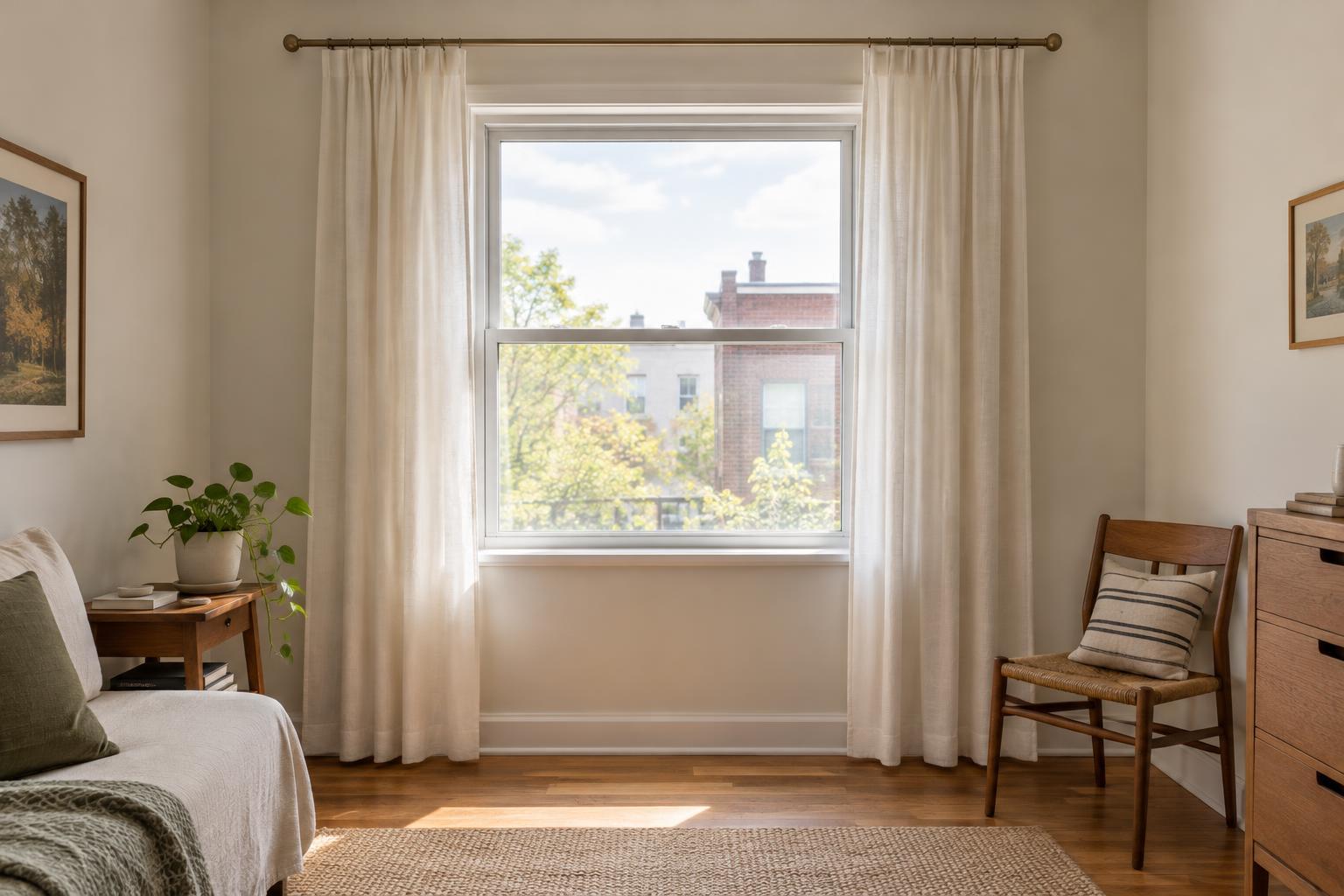
Mounting a rod directly on the top edge of a small window frame can make the opening look shorter. If the wall allows, try placing the rod roughly 4 to 6 inches above the frame. That draws the eye upward while leaving enough space for the curtain heading to hang comfortably. In a room with little wall above the window, choose a position that fits rather than forcing a standard measurement.
Before marking holes, hold the rod or a strip of painter’s tape at the proposed height and step back. Check how it relates to the ceiling, nearby doors and other windows. Measure the finished curtain length from the point where the fabric will hang, not just from the top of the rod. Rings, clips and different curtain headings can all change where the fabric begins.
Extend the rod beyond the glass
Width matters as much as height. A rod that ends at the window frame leaves open curtains bunched over the glass. Where wall space permits, extending the rod about 6 to 10 inches past each side gives the panels somewhere to rest. This can reveal more daylight and make the framed area appear wider. Use less extension if a corner or piece of furniture is close; a balanced arrangement is more useful than an exact number.
The fabric needs enough width to cover the window when closed and still look relaxed rather than stretched flat. As a starting point, choose panels with a combined flat width of roughly one and a half to two times the span they must cover. Fuller styles may need more fabric. Check the product measurements carefully: a package may list the width of each panel or the width of a pair.
Choose a length that fits the room
Floor-length curtains create a continuous line that can help a compact room feel taller. Panels that just touch the floor are usually easier to keep tidy than fabric that pools there, especially beside a desk or in a busy living space. If the floor is uneven, a small gap can look more intentional than a hem that drags on one side. Measure in more than one place before choosing a length or hemming the panels.
Shorter curtains are sensible when a radiator, worktop or frequently used storage sits below the window. Keep fabric clear of heat sources and anything that needs regular access. In a tight corner, a simple panel that stacks to one side may work better than a matching pair. Choose the opening direction based on where the spare wall is, rather than assuming both sides must be identical.
Test the layout before you drill
A few minutes of testing can prevent misplaced holes. Mark the planned rod ends and height with removable tape, then check the view from the doorway and the main seat in the room. Make sure the curtains will clear window handles and open fully. If you already own panels, hang one temporarily to check its drop and how much space it takes up when gathered.
Use brackets and fixings suited to the wall and the weight of the curtains, following the hardware instructions. A lightweight rod may suit a simple fabric, while heavier lined panels need firmer support. If drilling is not an option, an inside-frame tension rod can provide privacy, though it will not create the same wider-window effect. The best result is one that looks balanced, lets in the light you want and works with the room every day.