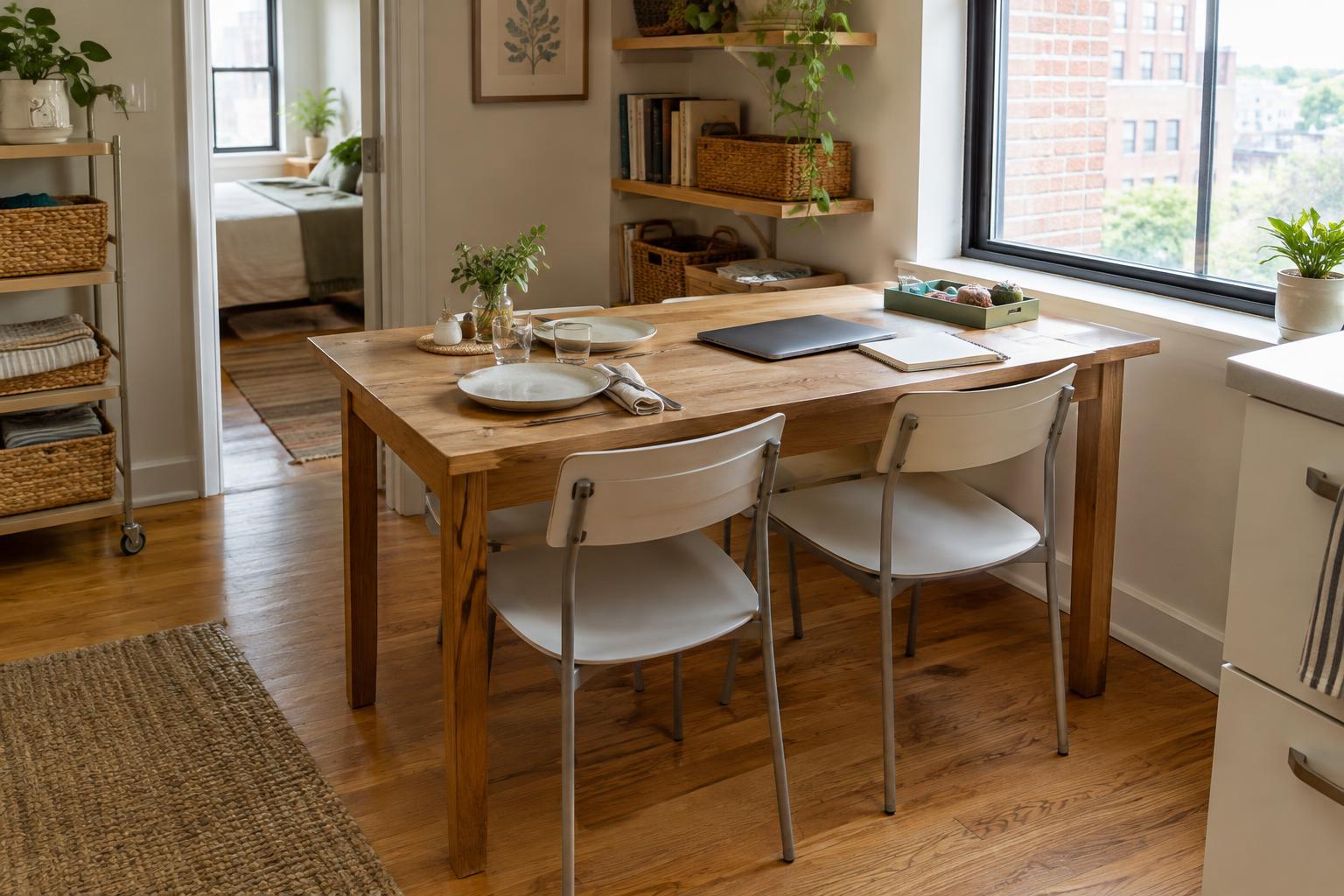
Start with what the room needs to do
Before shopping for a modular sofa, list the jobs your room handles. A living room might also be a home office, a play area or the only place guests can sit. Note which activities happen daily and which are occasional. The best everyday arrangement should take priority; an occasional movie night does not need to determine where every piece lives all week.
Sketch the room from above and mark doors, windows, radiators, outlets and furniture you intend to keep. Then draw the clear paths you use to cross the room. A sofa configuration may fit on paper yet make a doorway awkward or block access to a desk. Think of those walking routes as space you need to preserve, not spare floor waiting to be filled.
Measure the pieces and the spaces around them
Measure the wall lengths and the open floor area, then check the dimensions of each sofa module rather than relying on the overall dimensions of a display layout. Include arm widths, seat depth and the space a chaise occupies when turned toward the middle of the room. Mark likely positions on the floor with painter’s tape or sheets of paper. Walk around the outlines, open nearby doors and pull out any desk chair or dining chair you use there.
Also check how the pieces will get into the home. Measure tight doorways, turns, stairs and lifts before ordering. Separate modules can be easier to move than one large sofa, but a deep seat or rigid corner piece can still be difficult to carry through a narrow turn. If the manufacturer provides assembly and delivery dimensions, compare both with your measurements.
Buy modules for more than one layout
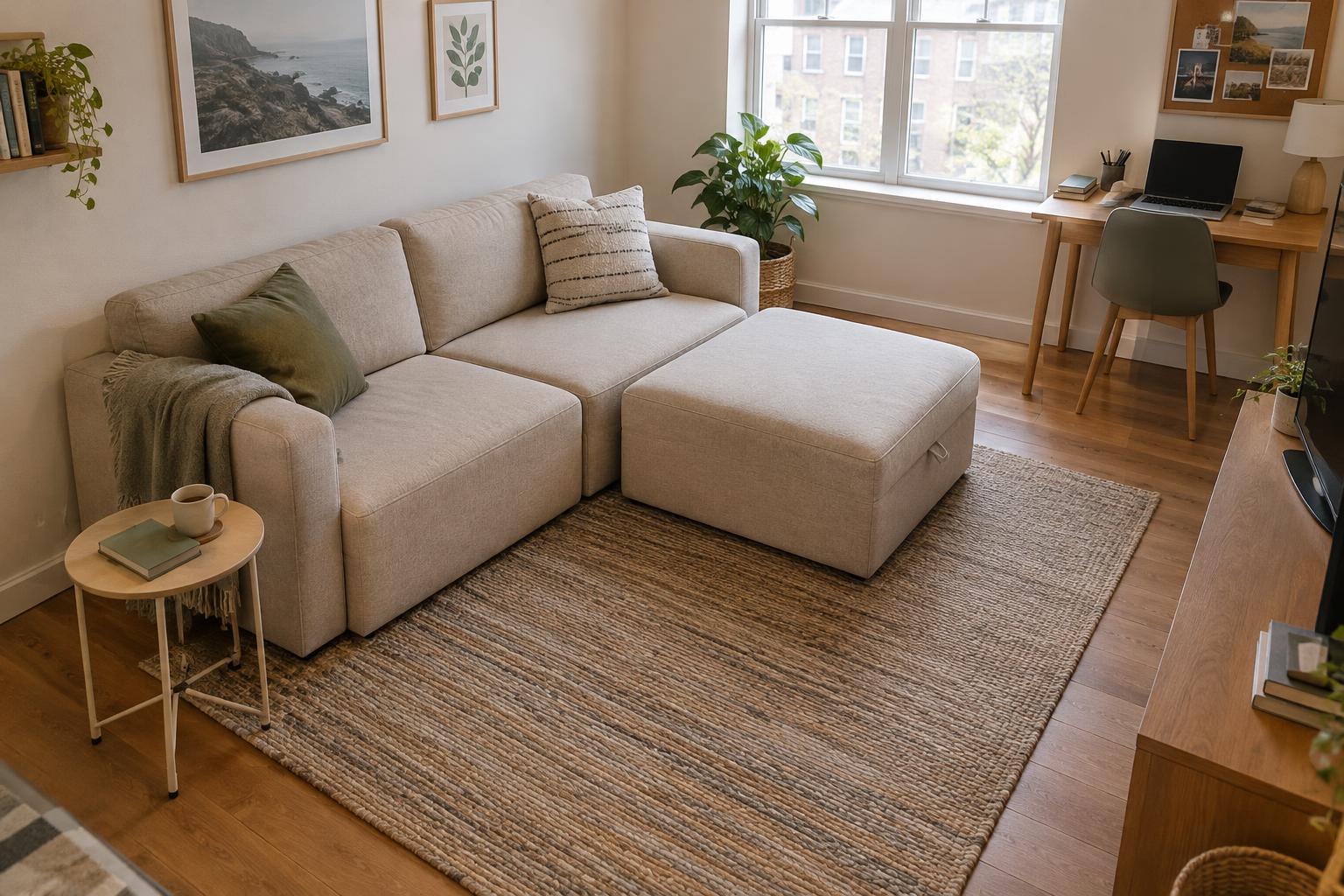
Choose two or three layouts you could realistically use, then identify the modules common to all of them. For example, a pair of seats and a movable ottoman might form a straight sofa for daily use, while the ottoman can create a chaise for a quiet evening or serve as an extra seat for visitors. That may be more useful in a compact room than a fixed corner arrangement.
Check the less visible details before committing. Some modules connect only in certain directions, and an armrest may be fixed to a particular side. Ask whether individual pieces can stand securely on their own and whether their backs and sides are finished for open placement. If you hope to add pieces later, do not make that possibility essential to your plan: ranges and fabrics may change. Buy a layout that works with the modules you can get now.
Set a budget for the complete usable setup, including any connectors, delivery fees and a suitable cover if one is needed. If money is tight, start with the smallest arrangement that meets your daily seating needs. An ottoman or extra seat can be a later purchase only if the first arrangement remains comfortable without it.
Test the layout against everyday routines
Once the sofa is in place, try the simplest layout for a week before adding more furniture around it. Sit in each position, check whether you can reach a lamp or side table, and see where bags, laptops and blankets naturally end up. If the room doubles as a workspace, make sure changing the sofa arrangement does not cut off a desk chair’s movement or put seating in the way of task lighting.
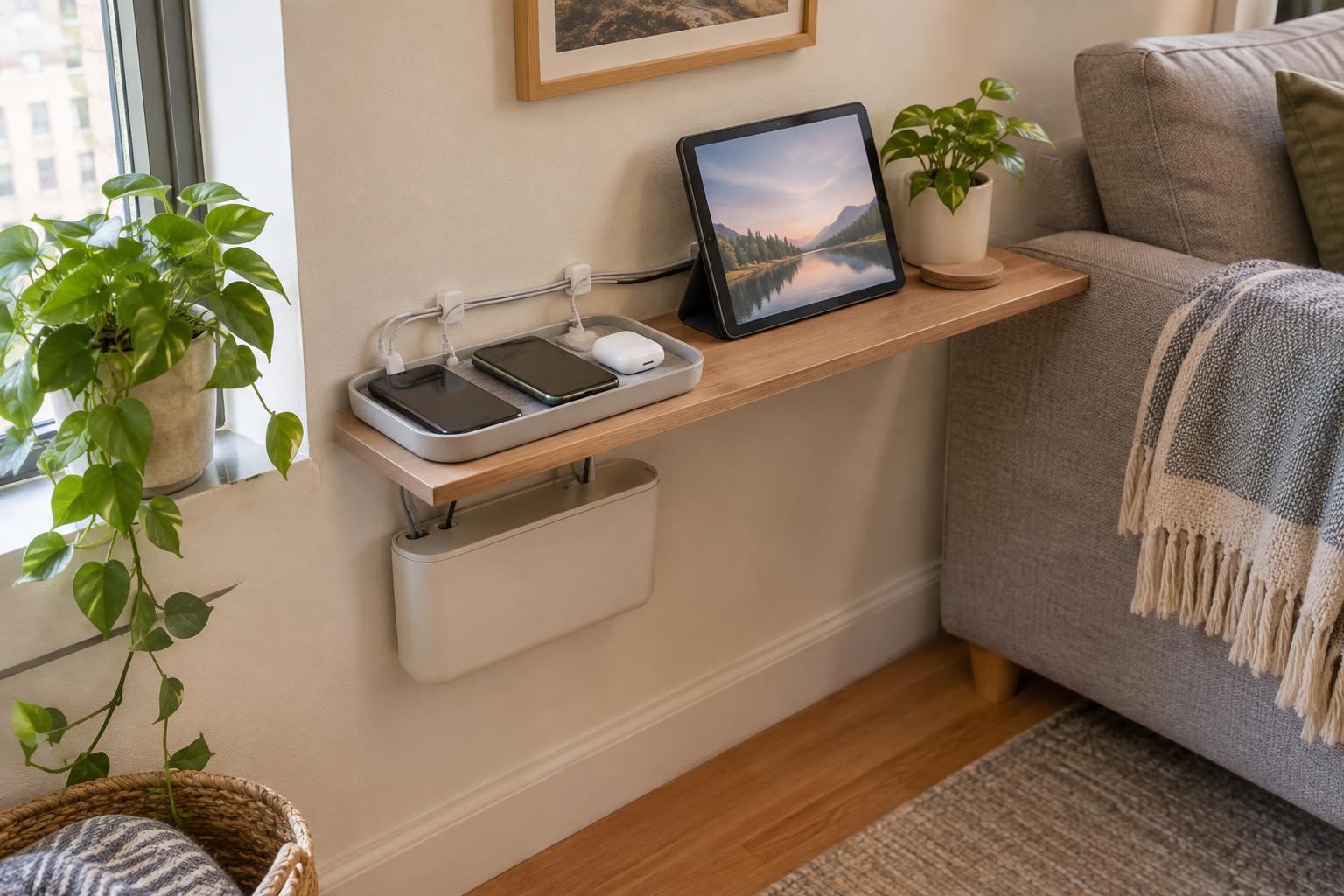
Keep the supporting furniture flexible, too. A small movable table can work with several sofa shapes, while a large coffee table may leave only one practical arrangement. A basket for throws or a narrow shelf beside the sofa can handle everyday clutter without relying on storage inside the modules. If you do choose storage seats, check that their lids can open in the layouts you plan to use.
Make changes easy, not constant
A flexible layout should be simple enough to change when your needs change, not require rearranging every evening. Keep a sketch or photo of each configuration that works, including where the table and lamps go. When you move the modules, lift rather than drag them if your flooring or the sofa feet could be damaged, and check that connectors are properly secured afterward.
Plan for ordinary upkeep as well. Look at the care instructions for the fabric, consider whether covers can be removed, and leave enough access to vacuum around and beneath the pieces. Over time, you may find that one arrangement suits most days and another helps when guests visit or a work area needs more room. That is a successful modular plan: a comfortable default with a few useful alternatives.