Check the fabric before treating the stain
The safest first step is to find the care label, often tucked beneath a cushion or on the underside of the seating. Follow the furniture maker’s instructions if they are available. A W code generally permits a water-based upholstery cleaner; S points to a dry-cleaning solvent; W/S or S/W generally allows either type; and X usually means vacuuming only. These codes describe cleaning methods, not a promise that every product or stain treatment will be safe.
If you cannot find a label, treat the fabric as delicate. Vacuum loose dirt, then test any proposed cleaner on a hidden area and let it dry fully before judging the result. Watch for color transfer, fading, a water ring or a change in texture. Be especially cautious with velvet, silk, antique upholstery, loose dyes and furniture with unknown padding. For those pieces, stopping after dry removal and asking an upholstery cleaner may be less risky than experimenting.
Set up a gentle first response
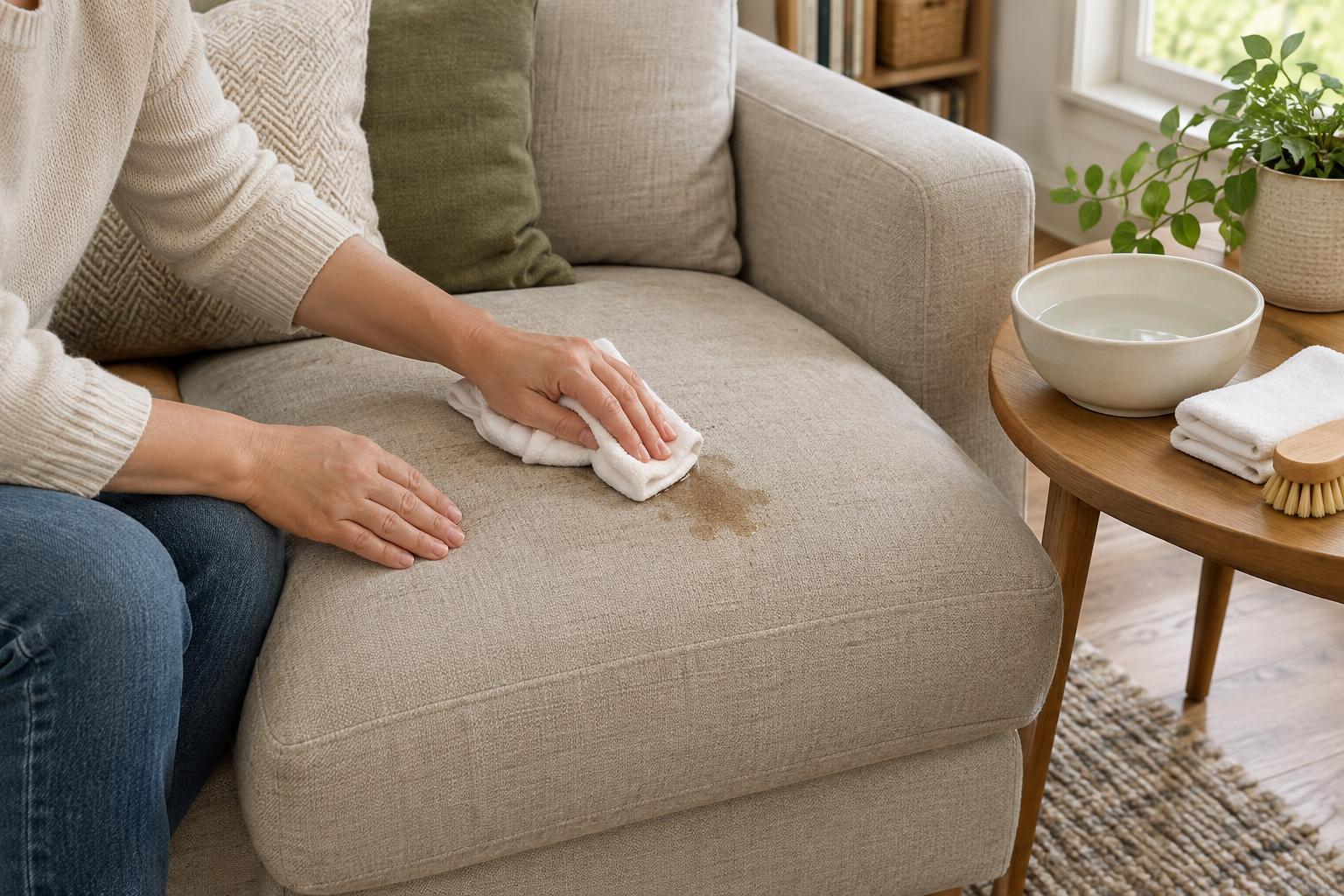
Act promptly, but do not scrub. Lift crumbs or other solids with a spoon or dull edge, working from the outside of the mark inward. Blot liquid with a clean, absorbent white cloth, turning to a dry area as it picks up moisture. Rubbing can push a stain deeper or roughen the fabric; a colored towel may transfer dye.
For seating marked W or W/S, a small amount of mild, clear detergent diluted in water can be a reasonable starting point if the maker’s directions allow it. Put the solution on a cloth rather than pouring it onto the seat. Dab lightly, then use a second barely damp cloth to pick up residue. Blot with a dry cloth and allow the area to air-dry completely. Keep cushions uncovered and avoid sitting on them while they dry. Do not soak the fabric: moisture can reach the padding, leave a ring or dry slowly in a compact room.
For S-coded upholstery, do not substitute water for a solvent-based method. Use only a product intended for upholstery and follow its label, including ventilation and safety directions. If you do not have the right product or are unsure how to use it, leave the stain alone after blotting and seek help. For X-coded fabric, stick to the permitted dry care rather than spot-cleaning with liquid.
Match the approach to the spill
For a fresh coffee, tea or soft-drink spill, blot first and resist the urge to spread cleaner across the whole cushion. On water-cleanable fabric, work with a lightly dampened cloth in small passes, using a tested mild solution only if plain water is not enough. Recheck the spot after it dries; a mark that looks gone while damp can reappear.
For greasy food, lift any remaining food without pressing it into the weave. Blot what you can with a dry cloth. Grease may need a cleaning product suited to both the upholstery code and the stain, so avoid adding water indiscriminately. For tracked-in mud, letting it dry before gently vacuuming or brushing away loose soil can prevent a larger smear. Only then consider a tested spot treatment if the fabric permits one.
Pet accidents and strongly colored spills can be harder to remove fully, particularly once they reach the cushion filling. Blot promptly and check whether an upholstery-safe product is compatible with the fabric’s care instructions. Avoid mixing cleaners or applying household bleach, which can damage color and fibers. If an odor persists after the surface dries, repeated surface wetting may make matters worse.
Prevent rings and know when to stop
A visible outline after cleaning may be residue, uneven moisture or a reaction in the fabric. Do not chase it by repeatedly saturating a larger area. First let the upholstery dry fully and inspect it in ordinary daylight. If the fabric allows water cleaning, a careful, evenly applied treatment of the affected panel may sometimes help, but a large or persistent ring is a good reason to consult a professional.
Stop if color appears on your cloth, the pile changes direction or texture, the stain spreads, or the cushion feels wet beneath the surface. Give cleaned seating airflow, and keep removable cushions in the position recommended by their care instructions while they dry. A fan circulating room air may help; high heat can be unkind to some fabrics.
For day-to-day upkeep, vacuum seams and seat surfaces regularly so loose grit is less likely to become embedded. Keep a few clean white cloths nearby for spills, and save the care information for your furniture where you can find it. A quick, fabric-aware response is usually more useful than a shelf full of stain remedies applied in a hurry.