Start with what the space needs to hold
Before measuring a shelf or drawer, decide what belongs there. Group similar items and notice how you use them. A basket for rarely used cables can be tucked farther back than one holding supplies you reach for every morning. In a compact room, the best organizer is not necessarily the one that fills every inch; it is the one that makes stored items easier to find and put away.
Clear the space and take a quick inventory. Set aside anything that belongs elsewhere, then estimate how many groups need their own container. If you are working within a small budget, measure and organize one troublesome area first rather than buying matching bins for an entire room. That gives you a chance to test what works before spending more.
Measure the usable space, not just the outside
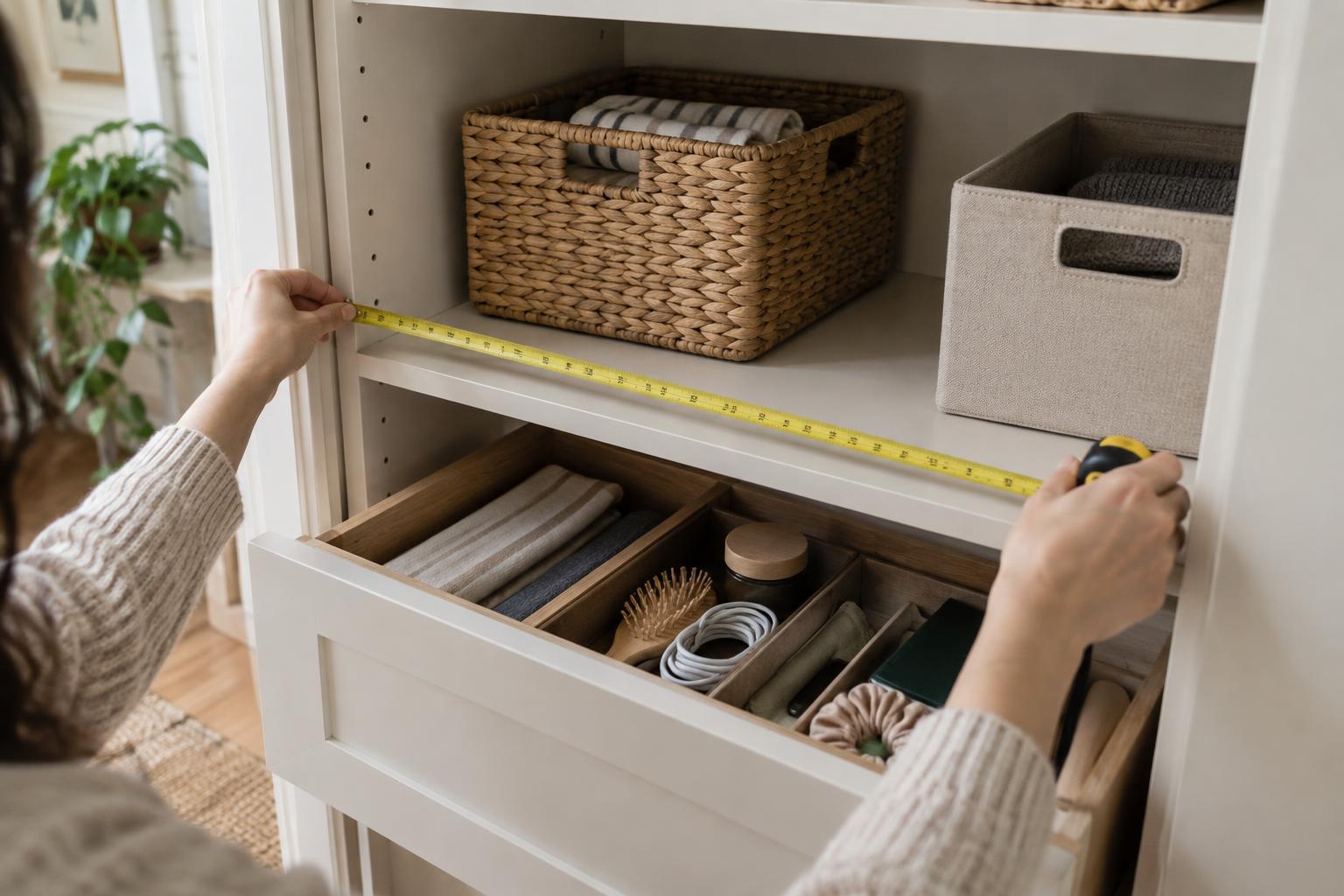
For a shelf, record the width between its supports, the depth from the front edge to the back, and the height to the shelf above. Measure at more than one point if the space looks uneven. Pipes, brackets, trim, or a sloping wall may reduce the space a container can actually occupy. In a cupboard, also measure the door opening: a wide basket is no help if it cannot pass through the narrower opening.
For a drawer, measure the inside width, front-to-back depth, and height from the base to the top edge. Then check the space available when the drawer is open. Drawer sides, rounded corners, handles, and runners can all affect the fit. If you plan to use stackable trays, measure the total stacked height rather than the height of a single tray. Write the measurements down with a simple label such as “desk drawer, inside” so they do not get mixed up.
Leave room to lift, slide, and reach
An organizer that fits exactly may still be frustrating. Leave a little space around a bin so you can pull it forward without scraping the shelf. Leave room above it to lift out the contents, especially if it will hold tall bottles, folded towels, or folders. On an upper shelf, consider whether you can safely grasp the container from where you normally stand. Handles may help, but they also add to its overall width.
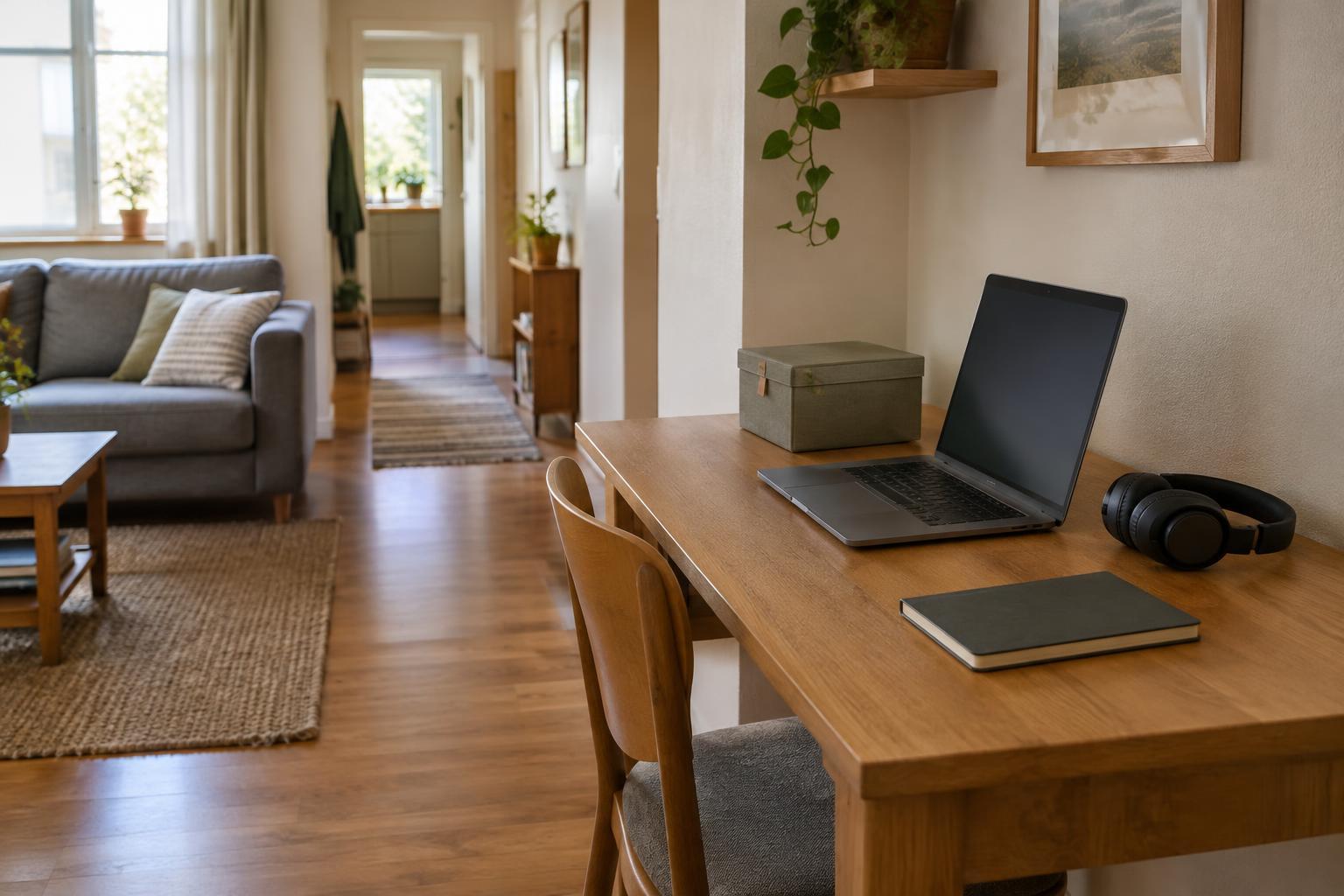
Check how the room works around the storage space. Can the cupboard door open fully beside a desk? Can a drawer extend far enough when a chair is in place? In a multipurpose room, measure clearance in its normal setup, not only when furniture has been moved out of the way. A container that requires you to shift a chair every time you use it is unlikely to make the room feel more orderly.
Compare product dimensions carefully
When shopping, compare the organizer’s external dimensions with your available space. Its internal dimensions matter too: thick walls or a tapered shape can make a basket hold less than its footprint suggests. Check whether listed dimensions include handles, lids, feet, or hooks. If that is unclear, choose a smaller option or confirm the details before buying. Adjustable drawer dividers can be useful, but check their stated range against the drawer’s inside width.
Take your measurements and a note of what the organizer must hold. For example, a narrow tray might fit a desk drawer but not accommodate the notebook you wanted to store in it. If you are buying several containers, try one first where possible. A cardboard box cut or folded to the proposed footprint can also help you picture how much shelf space a new bin will take.
Test the arrangement before committing
Place everyday items where they are easiest to reach, then assign the remaining space to less-used items. Try the organizer in place with its contents: open the drawer, remove the basket, and return everything as you would on an ordinary day. If items catch on the shelf above or the drawer will not close comfortably, change the arrangement before adding more containers.
Finally, keep the measurements somewhere accessible, such as a note on your phone or a label inside a cupboard. Include any lesson that numbers alone might miss: “door hinge blocks left side” or “leave space to lift basket.” That small record makes future purchases easier and helps you choose storage that suits the room instead of forcing the room to suit the storage.