Start with the places people already use
Labels work best when they describe a storage system that makes sense without them. Before printing or writing anything, notice where household members naturally put things down and where they look for them. If spare batteries always end up near the desk, a labeled bin on a distant utility shelf may not solve the problem. Choose a home for each group of items that fits how the room is used.
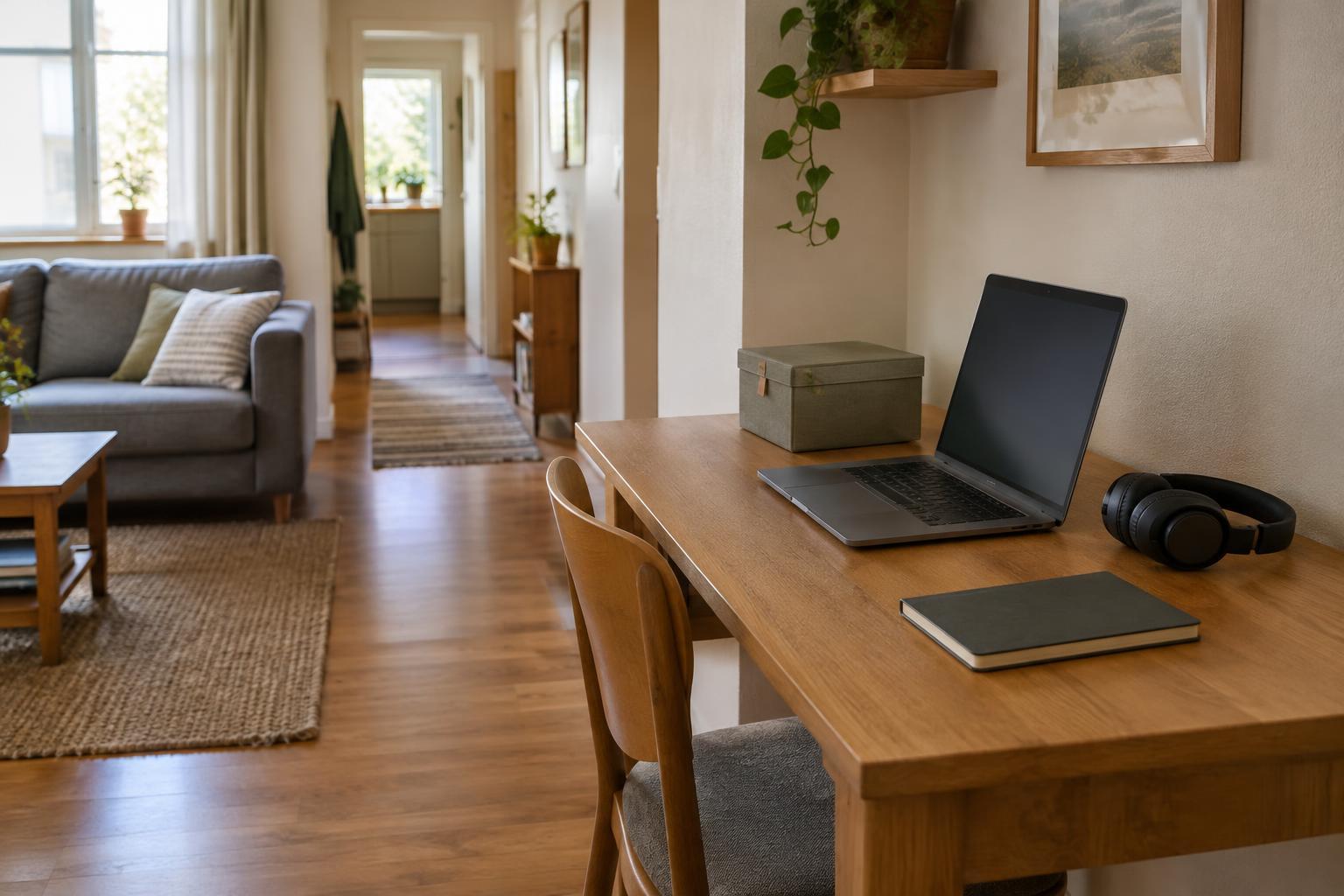
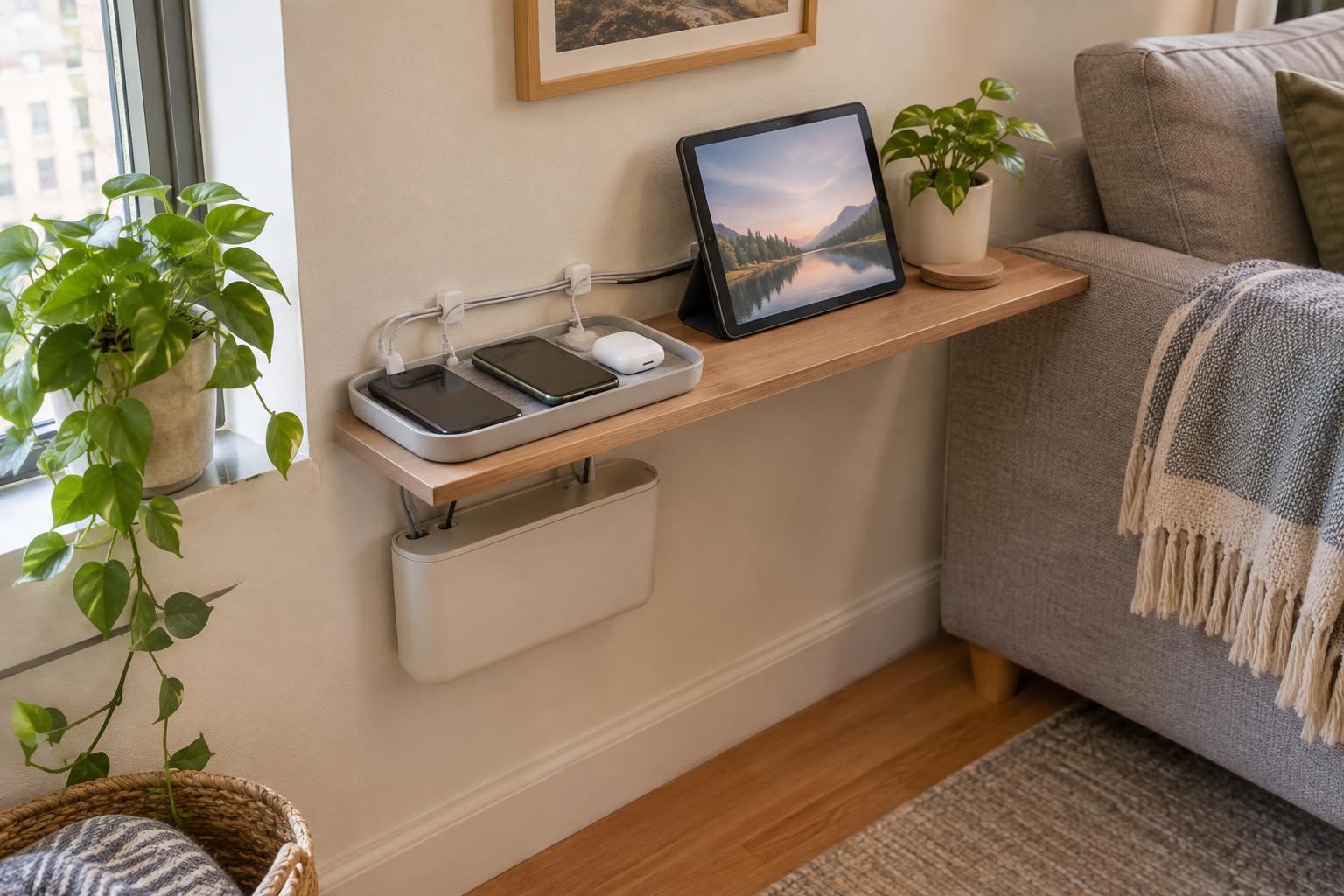
Begin with one shared area that causes repeated searches, such as an entryway cupboard, kitchen drawer, or shelf beside a work table. Take out obvious clutter, group similar items, and give frequently used things the easiest-to-reach spots. In a compact room, a single shelf may hold supplies for several activities; small bins or dividers can create clear boundaries before you add labels.
Use names that tell people what goes where
Write labels in the words your household uses. “Cables” may be too broad if one box holds phone chargers and another holds computer accessories. “Phone chargers” and “Laptop cables” make the next step clearer. On the other hand, labels such as “Blue USB-C cable for desk lamp” may be too narrow to remain useful when items change. Aim for categories specific enough to guide a decision but flexible enough for ordinary additions.
Test a proposed label by asking whether someone could put an item away without asking you. “Miscellaneous” rarely passes that test. If a bin genuinely holds unrelated supplies for one task, name the task instead: “Gift wrapping” can reasonably contain tape, tags, and ribbon. When a category keeps growing beyond its container, split it into two useful groups rather than stacking more things behind one label.
Put labels where they can be seen and used
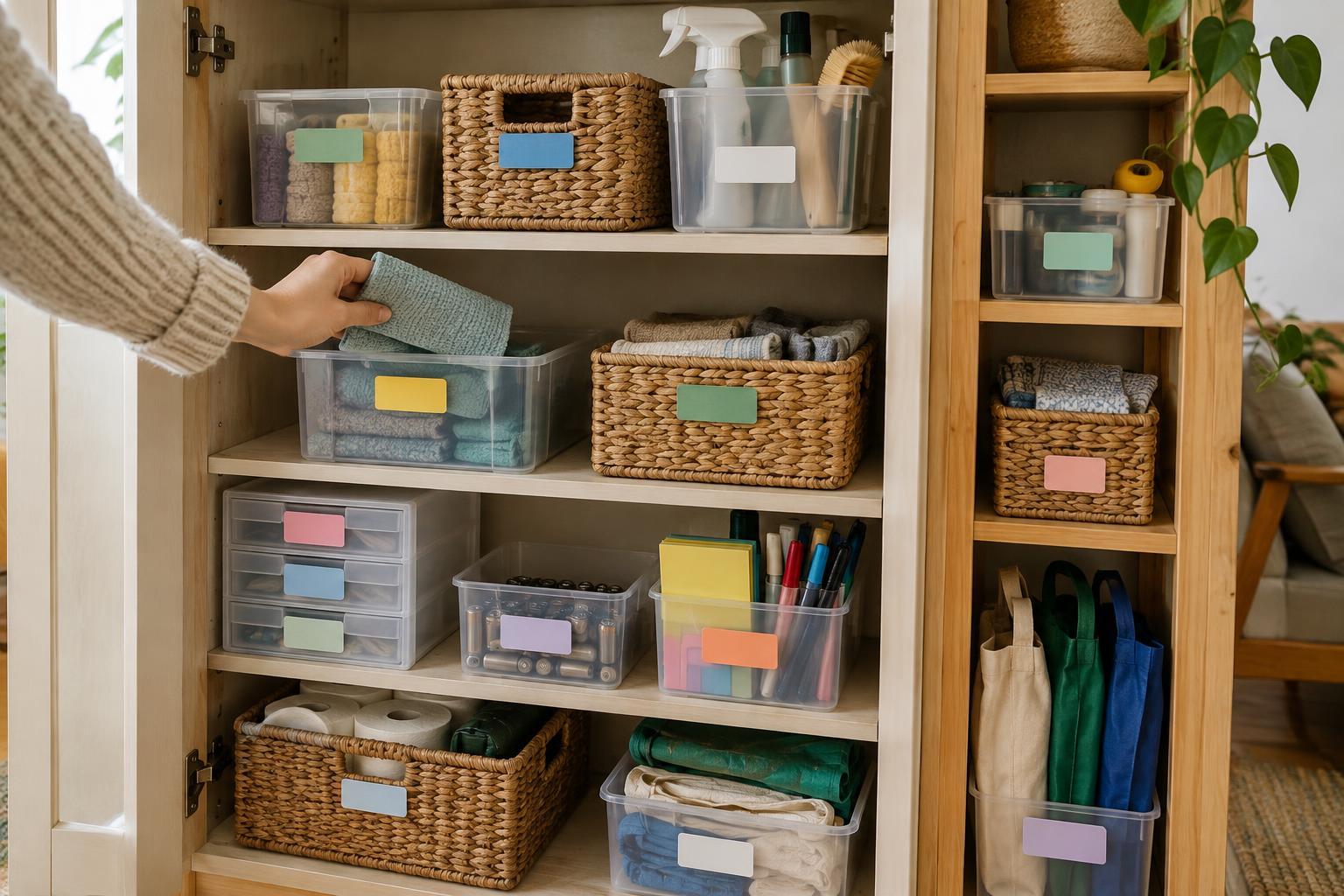
Match the label position to how the storage is accessed. Label the front of a bin that slides off a shelf, the top of a shallow drawer insert that is visible when opened, or the edge of a shelf when its contents are too varied for one container. If containers are stacked, front-facing labels are usually easier to check than labels on lids. Keep the writing large and legible from the distance at which someone normally chooses an item.
You do not need a label maker. Masking tape and a pen are useful while testing a layout; sturdier adhesive labels or simple hanging tags can come later. For clear containers, place labels so they do not hide the contents. In a home with young readers or people who prefer visual cues, a small, easily recognized picture alongside a word can help. Use one consistent style across an area so labels are quick to scan.
Make the return trip easy
A storage location needs enough room for an item to go back without rearranging everything around it. Leave a little open space in shared bins, avoid lids that are awkward to remove for everyday supplies, and keep heavy objects on shelves where they can be handled comfortably. If returning a pair of scissors takes several steps, people may leave it on the table instead.
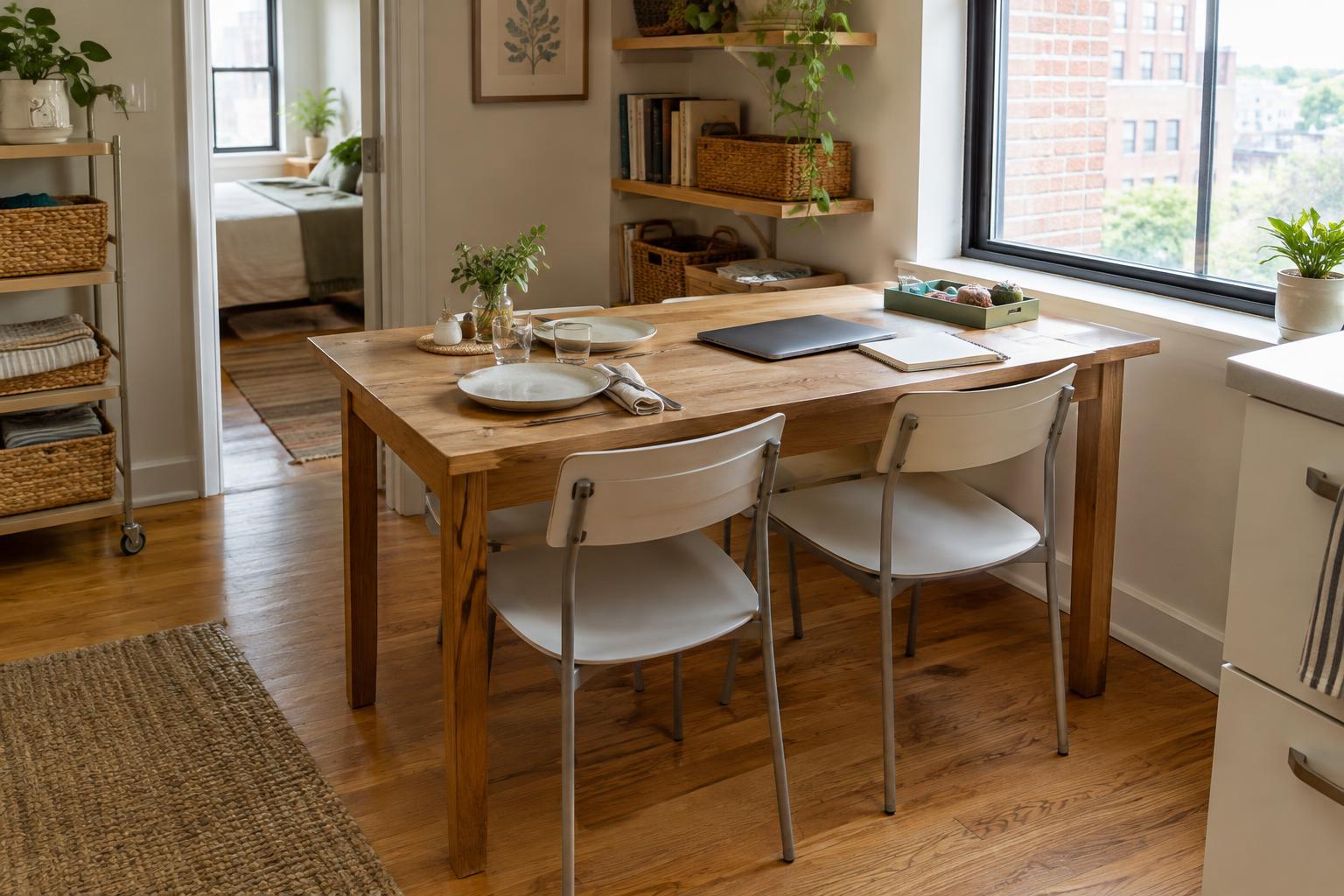
Think about items that move between activities. A portable caddy labeled “Daily work supplies” might serve a multipurpose table better than separate spots for every pen and notepad. Give the caddy a labeled parking place too. For borrowed items, a small “Return to cupboard” tray can provide a temporary landing spot, but empty it regularly so it does not become another mystery box.
Agree on the system, then adjust it
Invite the people who use the space to try the labels before making them permanent. Ask where they would look for a common item and where they would put it back. Their answers may reveal that a category name is unclear or a container is in the wrong place. A shared system is more likely to last when everyone can understand it without memorizing one person’s private organizing rules.
After using the area for a while, check for repeated trouble spots. If one bin is overflowing while another stays nearly empty, resize or regroup the categories. If a label no longer describes its contents, change it rather than expecting everyone to remember an exception. The goal is not to label every object in the home. It is to make the next search shorter and the next tidy-up easier.