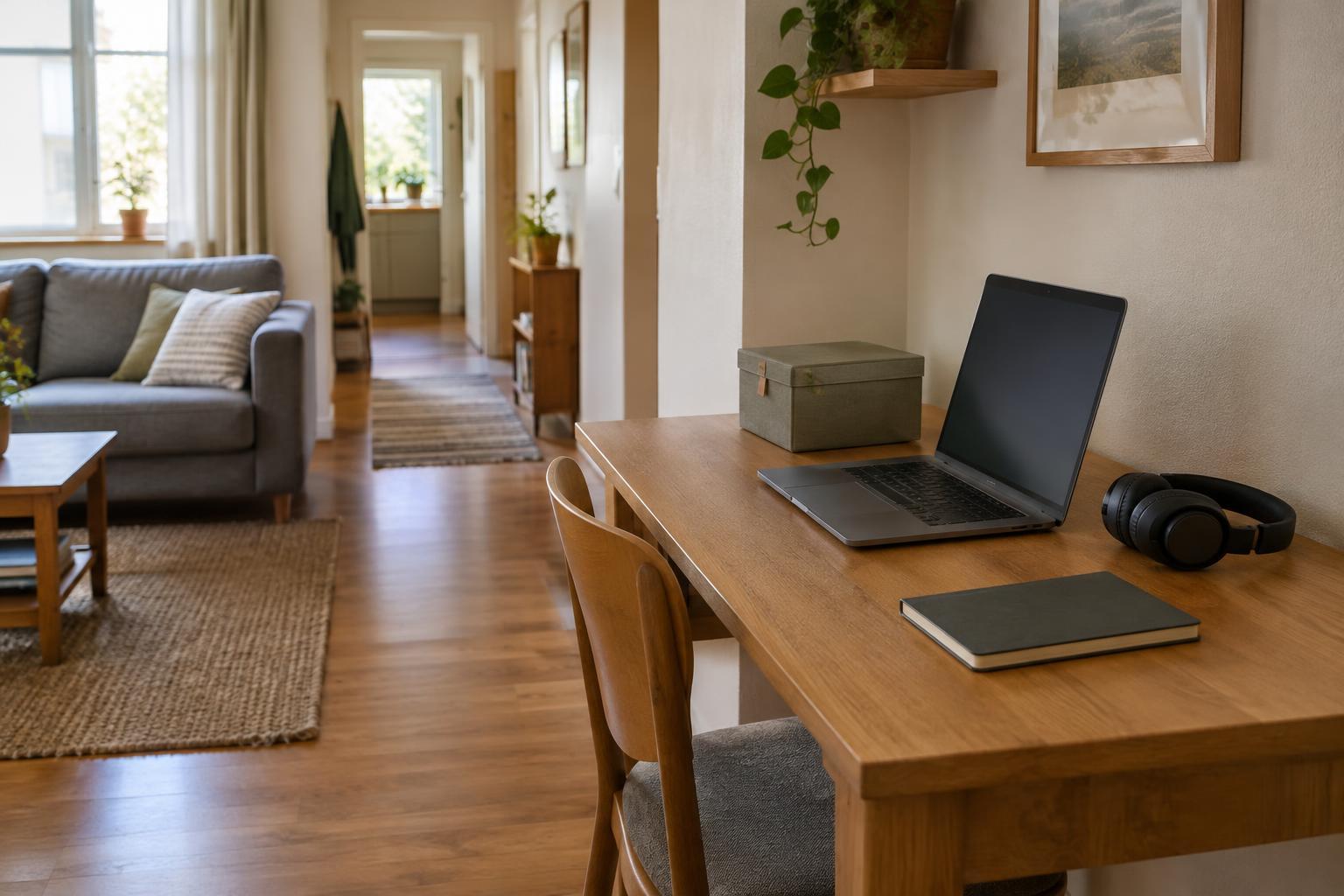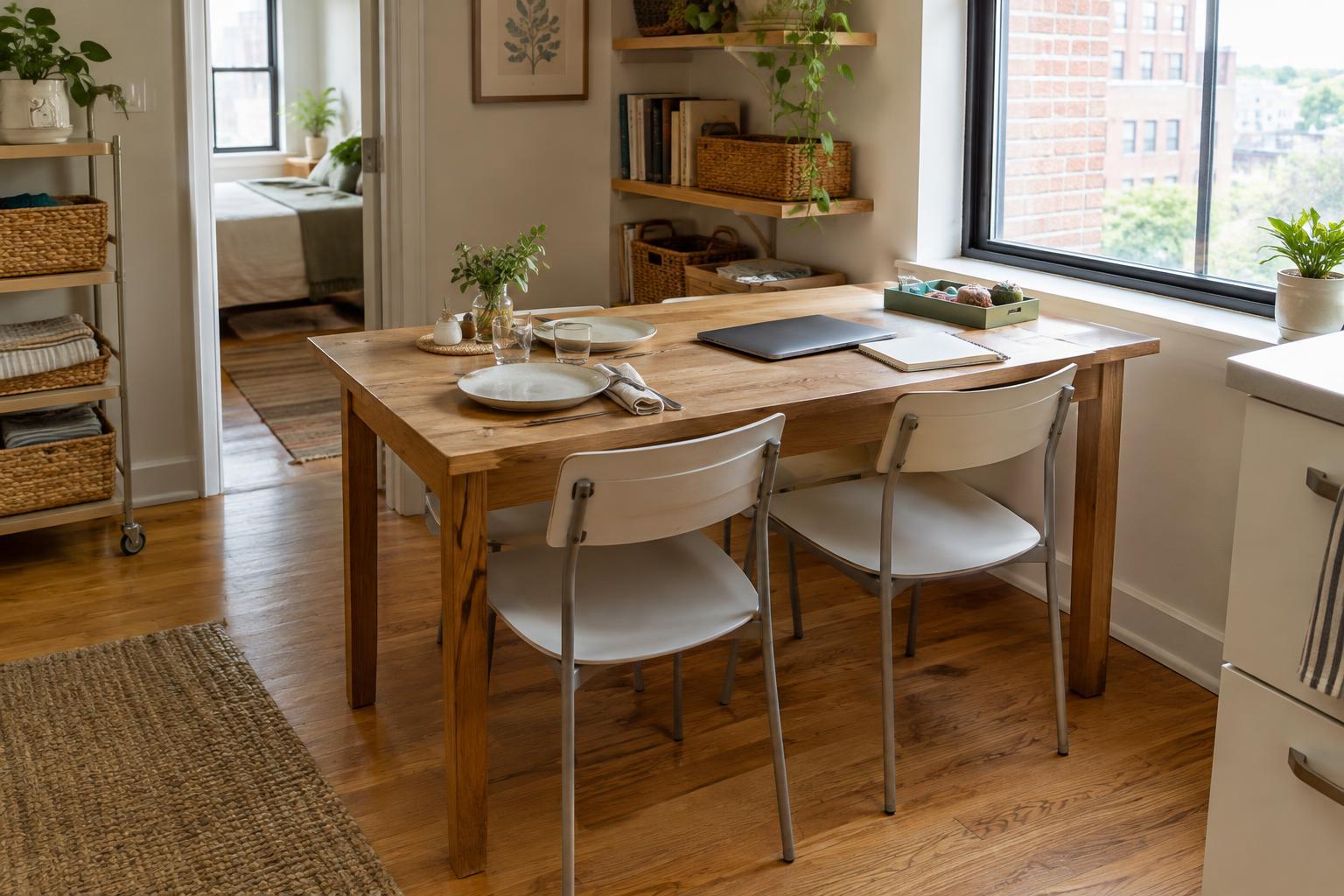
Start with what you need to store
The best storage choice begins with your belongings, not a picture of a finished room. List what needs a home, then sort it into three groups: things you use daily, things you reach for occasionally, and things you would rather keep out of sight. Mugs, work supplies or children’s books may benefit from easy access. Spare cables, paperwork and cleaning supplies are often simpler to manage behind a door.
Next, notice where each group is used. In a room that serves as both an office and a guest room, a small open shelf near the desk might hold current notebooks, while a cabinet takes care of spare bedding and equipment. Giving each storage area a clear job helps prevent an attractive shelf from becoming a catch-all.
When open shelves work well
Open shelves make frequently used items easy to see and put away. They can also occupy narrow stretches of wall where a freestanding cabinet would interrupt a walkway. In a compact kitchen, for example, one shelf for everyday cups may be more useful than several shelves filled with objects that need moving before you can reach what you want.
Their main drawback is exposure. Dust, cooking residue and everyday splashes can make open storage more work to maintain, depending on the room. Contents are always visible, too. If you like a calm-looking space, limit open shelves to items that are easy to arrange and quick to return to their place. Baskets can contain small pieces, but check that they do not make frequently used things awkward to retrieve.
Before adding wall-mounted shelves, consider what they will hold and whether the wall and fixings are suitable. Heavy books or stacked dishes call for more care than lightweight decor. If you cannot mount shelves securely, a stable freestanding unit may be a better option.
When closed cabinets earn their space
Cabinets are useful when a room has many small, mismatched items. A door can give a work corner, living area or entryway a quieter appearance without requiring every object inside to look coordinated. Closed storage can also reduce how much dust settles directly on the contents, although the cabinet itself still needs cleaning.
The trade-off is access and clearance. Check that doors and drawers can open fully without hitting furniture or blocking a route through the room. Measure the cabinet’s usable interior as well as its outside dimensions: a deep cabinet may hold plenty but make things at the back hard to find. Adjustable shelves, shallow containers or drawer dividers can help you use the space without piling items on top of one another.
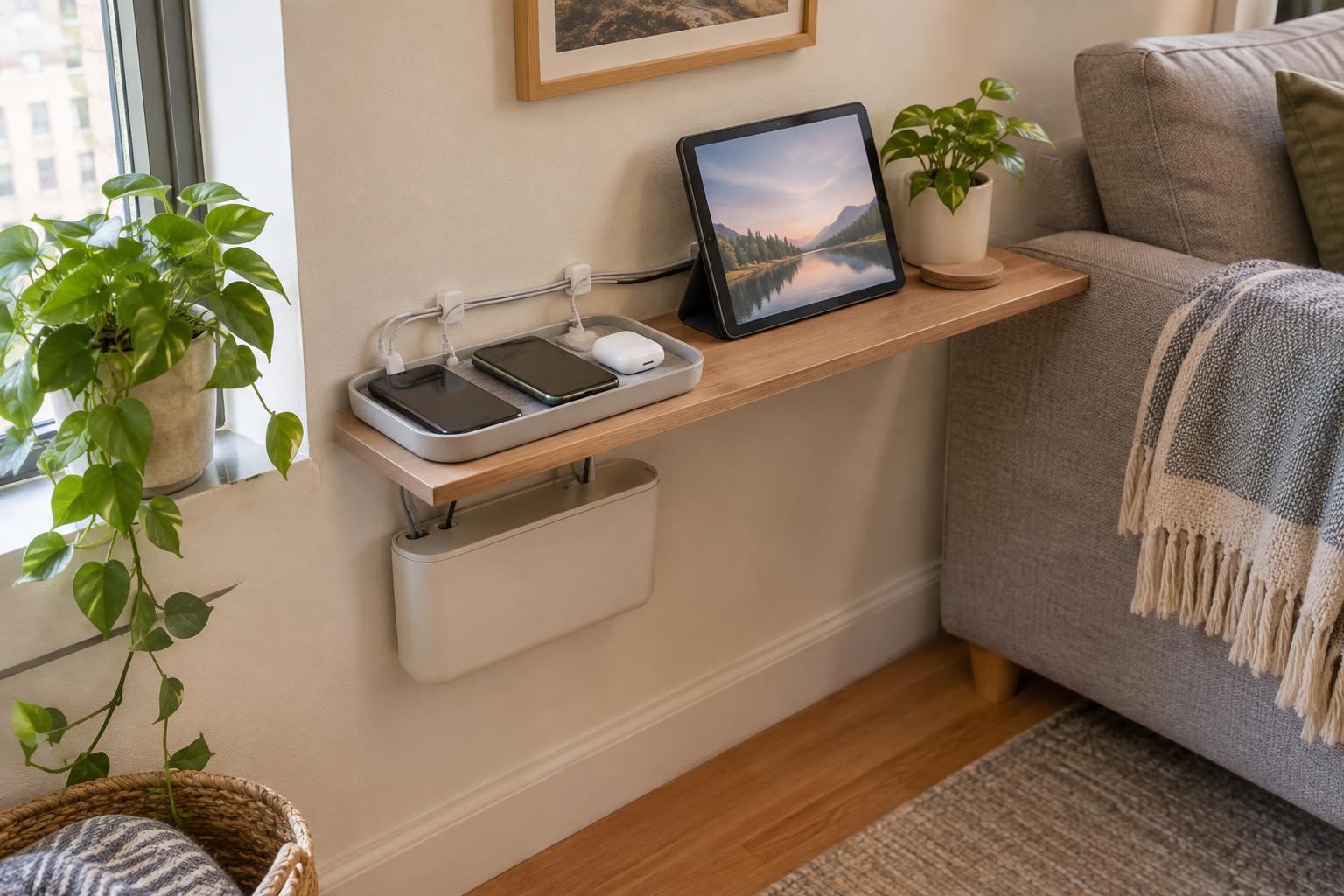
If floor area is scarce, a tall cabinet can concentrate storage in one footprint. In a multipurpose room, a low cabinet may do double duty as a surface for a lamp or charging station. Keep its top usable by deciding in advance what belongs there.
Choose a mix that matches your routines
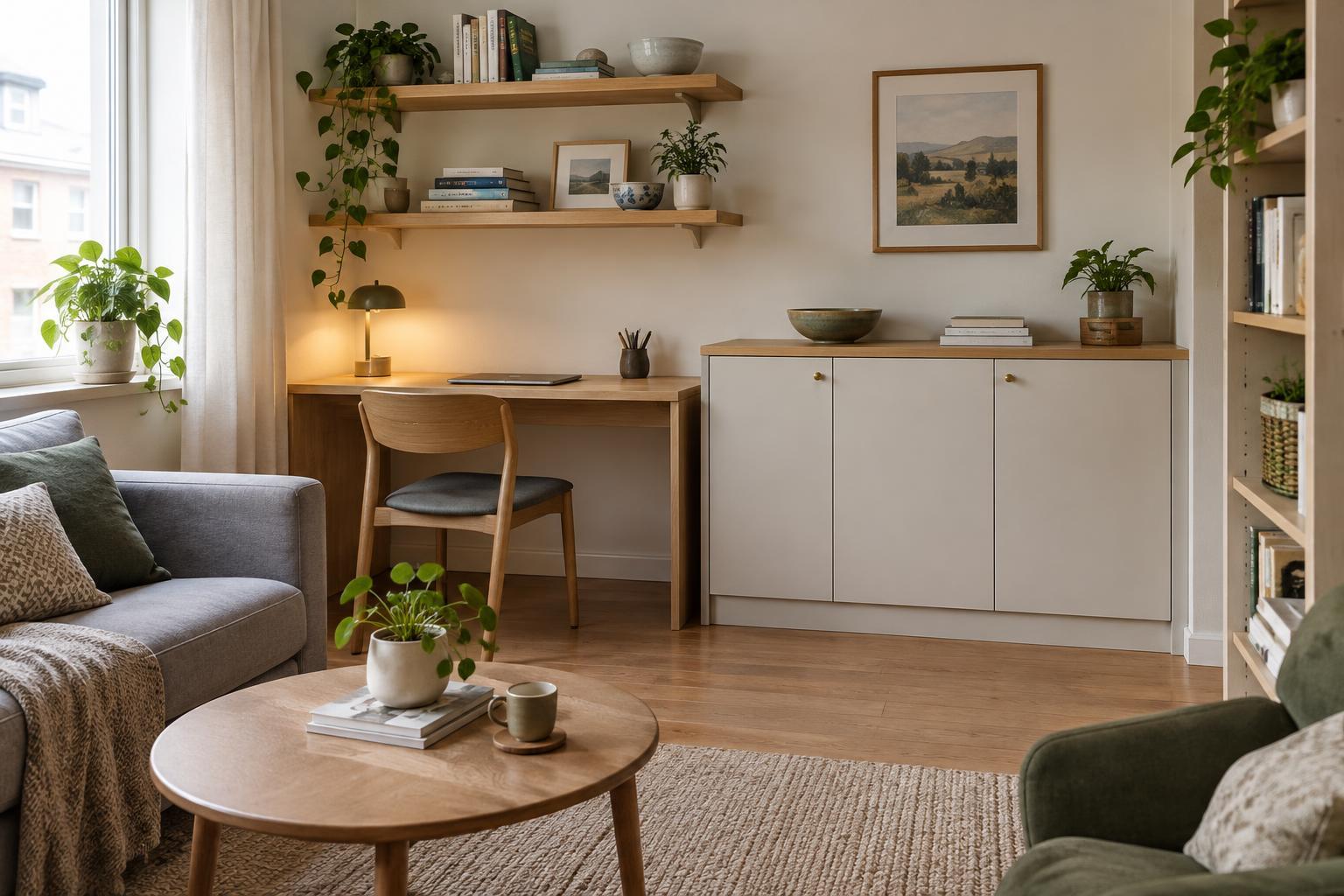
You do not have to choose one style for an entire room. A useful starting point is to leave daily essentials visible and give everything else a closed home. In a home-working area, that could mean an open shelf for the notebook and reference materials you use each week, with a cabinet for paper supplies, spare devices and items that otherwise collect on the desk.
Think about who shares the room. Open shelves can help household members find and return common items, but only if the shelf height is convenient for them. Closed storage may be preferable for belongings you do not want casually handled. Place heavier items low, keep routes clear, and make sure any tall furniture is installed or secured as appropriate for your household and the manufacturer’s instructions.
If you are unsure, test the arrangement before buying anything. Clear a shelf you already own, assign it a single purpose and see whether you can keep it useful for a couple of weeks. That small trial can show whether you need more visible access or more concealed space.
Make the decision without overspending
Measure the available width, depth and height, including room for doors to swing and for people to pass. Then check what you can improve with containers, dividers or a different layout inside existing furniture. Reusing a cabinet you already have may solve the problem more effectively than adding shelves to an already crowded wall.
If new storage is needed, buy for the items on your list rather than for empty space you hope to fill. Compare the total cost of shelves, brackets and suitable fixings with the cost of a cabinet, and account for any installation you cannot do yourself. A practical choice is one that fits your room, keeps important things easy to reach and leaves you with an upkeep routine you can realistically maintain.